
Your University: The FGCU Podcast
CSI: FGCU – Real-Life Forensics with Heather Walsh-Haney
In this episode of Your University: The FGCU Podcast, host Katie Cribbs sits down with Heather Walsh-Haney, Professor of Forensic Anthropology at FGCU, whose work supports medical examiners and law enforcement in the discovery, recovery, and analysis of human remains.
Heather shares the experiences that shaped her path to FGCU, where she helped build one of the country's first forensic studies programs. The conversation covers her partnerships across Florida, hands-on student training and the Buckingham Environmental Forensics Facility (BEFF) — all in a subtropical environment uniquely hostile to the biological evidence her field depends on.
Available on:


Available on:
Episode 4:
CSI: FGCU – Real-Life Forensics with Heather Walsh-Haney
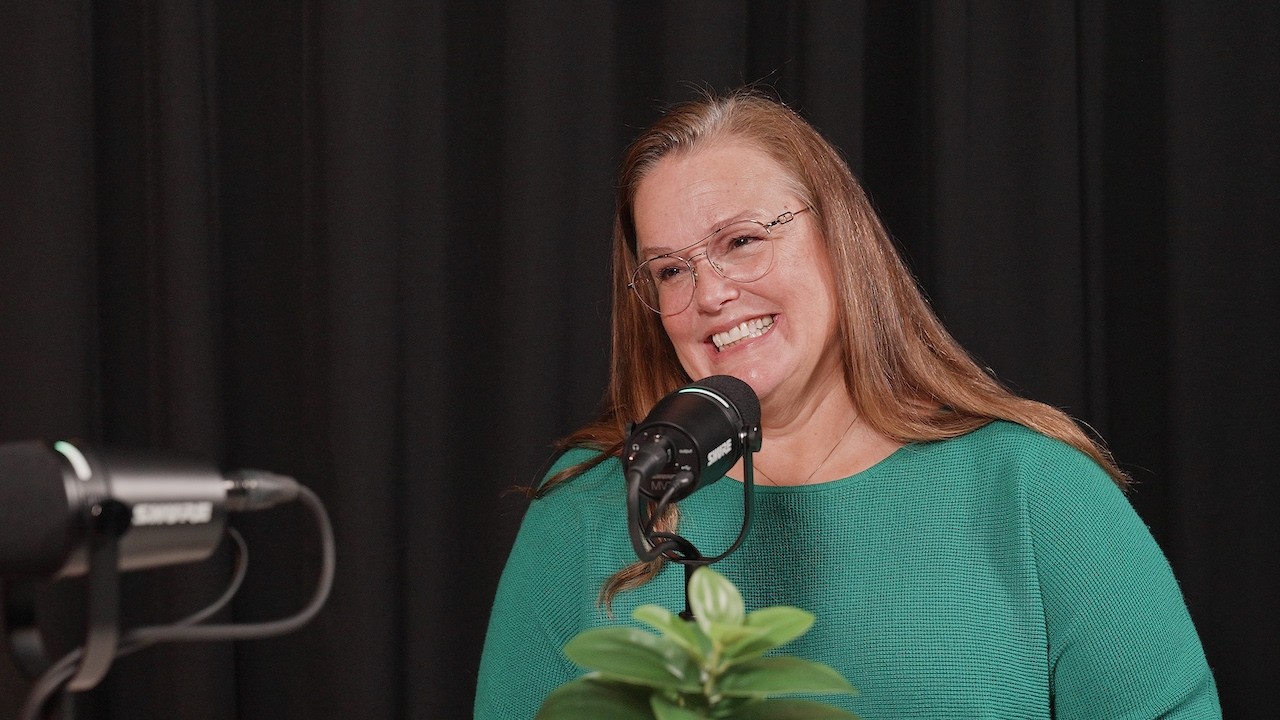
In this episode of Your University: The FGCU Podcast, host Katie Cribbs sits down with Heather Walsh-Haney, Professor of Forensic Anthropology at FGCU, whose work supports medical examiners and law enforcement in the discovery, recovery, and analysis of human remains.
Heather shares the experiences that shaped her path and explains why she came to FGCU in 2005 to help build one of the country's first forensic studies programs rooted in experiential learning and applied science. The conversation covers her long-standing partnerships with medical examiners and agencies across Florida, how students train through hands-on methods including python necropsies and decomposition research, and how FGCU's private human remains donation program and the Buckingham Environmental Forensics Facility (BEFF) support that work — all in a subtropical environment uniquely hostile to the biological evidence her field depends on.
-
Episode Guide
Toggle More Info01:06 Forensic Anthropology 101: Reading Bones for Answers
02:00 A Career Built on Empathy, Science, and Human Rights
04:55 Why FGCU & Southwest Florida: Building a Forensic Studies Program
08:14 Board Certification & What a Consultant Actually Does
09:30 Training the Field Team: Competencies, Callouts, and Real Casework Prep
11:39 From Pythons to Beetle Colonies: Hands-On Decomposition & Lab Skills
15:01 Donating Your Body to Science: FGCU’s Human Remains Donation Program
18:26 Inside the Buckingham Environmental Forensics Facility (BEFF)
24:59 Florida’s Environment vs. Evidence: Why DNA Isn’t Always There
28:21 Heart First, Science Always: Ethics, Reports, and Testifying in Court
31:26 The FGCU Legacy: Graduates in the Field and Bridges Across the State
33:47 Final Takeaways & How to Get Involved (Donations, Auditing, Contact Info)
-
Transcript
Toggle More Info[00:00:00] Heather Walsh-Haney: We all have stories to tell. And whether it's from the bones and teeth that I examine or from the words that are capturing who you are as a person from your family members, those stories go on and on. And that's the important part.
[00:00:22] Katie Cribbs: This is Your University, the FGCU podcast, where we talk to the people on campus making a difference in the Southwest Florida community and beyond. From research and the arts, to student success and athletics, we are uncovering the stories impacting you. I'm your host, Katie Cribbs.
And today, our guest has truly made an impact beyond Southwest Florida. Her work has taken her across the state, nation, and around the world. Prof. Heather Walsh-Haney started Florida Gulf Coast University’s forensic studies program. As a board-certified forensic anthropologist, she’s built this program into an experiential learning lab.
Heather, welcome to the show!
[00:01:08] Heather Walsh-Haney: Thank you. I'm honored.
[00:01:09] Katie Cribbs: Well, I just want our viewers to know this is not a true crime podcast today, but we are going to talk about death. This is a part of what you study, so maybe you can start off with telling us, what is forensic anthropology?
[00:01:23] Heather Walsh-Haney: Forensic anthropology is the study of human remains and our intersection with crime.
My job is to cull as much information about the macabre things that happen to us as being human beings, and to do it in a way that is scientific, that it is empathetic, that I understand all of the stakeholders that are involved, but yet I'm always learning and ready to accept more and to also know that, and impart to the families that I talk to and the students that I talk to, that death is part of life. And we go full circle in this career.
And it stands for human rights, because, in fact, the way that we judge human rights in countries is the respect and the care for the dead. And with that in mind, being a forensic anthropologist is just that. It is understanding human rights and showing that respect and care for the dead.
And then my responsibility as an educator is to make sure not only that students understand, but that family members and all those I interface with, from state's attorneys to defense counsel and medical examiners.
[00:02:36] Katie Cribbs: What drew you in? Because I understand that at a very young age, your family, unbeknownst to them, may have encouraged you to take this path in life.
[00:02:45] Heather Walsh-Haney: They did. So, the Walsh family encouraged me to, have a love of reading and books and libraries and museums. My mother and my maternal grandmother were armchair anthropologists. My father was in law enforcement, both county and federal. My grandfather was a Marine Corps colonel. He was an FBI agent before the Bureau was called the FBI. He was hand-chosen by Hoover to be one of the original G-men.
These two wonderful men and my grandmother and mother really helped shape me. I really thought I wanted to be in the military. And then, the reality of being bossed around constantly and/or shot at, I thought, ″Yeah, that's not quite for me." And my love of books and other cultures and visiting the Field Museum really took me away into the world of Margaret Mead and Ruth Benedict and early female anthropologists, Jane Goodall, Dian Fossey.
And I really felt that I would be an anthropologist, but I also loved law enforcement, and I didn't quite know how those things would come together. But it was really a passion of reading and a passion for going to museums where you have early experiential learning.
[00:04:03] Katie Cribbs: So, you came to Florida Gulf Coast University back in what, 2005?
[00:04:09] Heather Walsh-Haney: I did.
[00:04:09] Katie Cribbs: And you stuck around?
[00:04:11] Heather Walsh-Haney: I did.
[00:04:12] Katie Cribbs: Yeah. So, what drew you to Southwest Florida? I know some of the things. It's interesting for people in your field. This area specifically is interesting in itself. And then what caused you to stay?
[00:04:25] Heather Walsh-Haney: I was drawn to this field because FGCU was starting a forensic studies program, and it wasn't a program that I'd heard of before. In fact, we were really one of the first in the country to start a forensic studies program, and what I loved about it is that it made social sciences an important part of the curriculum, but yet also had forensic scientists who had been out in the field. And this merging of social science and the biological and physical sciences drew me in right away.
This was a location where the teaching focused on experiential learning, storytelling, and theory and practice. And I was courageous enough to say, I'll be on the ground floor, and I'd love to really help create a program like that. And lo and behold, almost 22 years later, we have a successful program like that. But I will say, ties to the community were so important. Dr. Marta Coburn is the chief medical examiner in Collier County, and she had known me since I was an undergrad.
And when I had seen the announcement for the university and who they were hiring, I had contacted her, and she said, "Heather, if you come down to FGCU, I respect your mentor and you so much that I'm going to create space in my medical examiner's office with permission of the county commission, and we're going to let you create a space here just like you experienced with Dr. Maples, and I'll help fund it, and we'll help teach your students. And the caveat is that you have ties to that university because we see FGCU being a cornerstone of elite education, and we want to really bridge that gap."
And now that office is full of graduates of our program, and 22 years later, I still work with her and the sheriff, and we've grown this deep community partnership.
[00:06:27] Katie Cribbs: Well, I do want to back up a little bit because in the beginning, when I introduced you, I included you are a board-certified forensic anthropologist. You are a scholar and a practitioner. And you came here because they wanted scholar practitioners. You have, I don't know, two or three full-time jobs in reality. Because you're in the classroom, you're teaching that next generation over and over and over for over 20 years.
[00:06:51] Heather Walsh-Haney: Yes.
[00:06:51] Katie Cribbs: And then you are a consultant to… now these are your words, you're a consultant for law enforcement agencies and ME offices from the panhandle to the Keys.
[00:07:02] Heather Walsh-Haney: Yes ma'am. I am.
[00:07:04] Katie Cribbs: So, what does that mean? You're in the classroom, but now you're being called to serve communities all throughout the state, sometimes it's national or international. But what does that mean for your program and for you when you get called out? And what are you doing when you get called out?
[00:07:18] Heather Walsh-Haney: It means what I do is modeling for our students what the life of practitioner really is because I have been called out on Thanksgiving. And I’ve… many times, one time, my team and I were called and, by private jet, we were flown to another state to respond to a case. And that, students need to be prepared for and to know that they have to communicate with their families so that they have the support in place to know that it’s not an 8:00-to-5:00 job and it’s not Monday-through-Friday and that we have to love what we do and be dedicated to it and yet still find balance.
[00:08:04] Katie Cribbs: Through the years, you have developed relationships and standards where you have built a program where you have allowed some undergraduate students and a lot of your graduate students to be a part of your team that gets called out. You have an FGCU van.
[00:08:20] Heather Walsh-Haney: Yes.
[00:08:20] Katie Cribbs: You all load into that van. You go to a potential crime scene, because not all of them are crime scenes. They need your expertise to say what potentially happened and what is your expert opinion. And you go out, and I'll get calls from the media saying, "Why is FGCU over in West Palm or Jacksonville?” How did you build up that reputation to allow your students to come with you? And how do you train those students to work with you and learn at the same time?
[00:09:49] Heather Walsh-Haney: Not to get mired in all the vocabulary, but all of our students that we have go through a panel interview. They have level-two background checks, which is very high with certainty that they don't have anything in their background that could hurt a case.
And just to backtrack a little bit, I was an undergrad researcher, and I accompanied my mentor as an undergrad. And even when we go back to 1996, for the ValuJet Air tragedy, that plane hit the Florida Everglades from the Miami International Airport at the speed of a bullet.
My mentor was called in to assist the Miami Office of the Medical Examiner, with whom I consult now. And I was there as an undergrad, and I was his scribe. I helped the graduate students go through body bags and look for juvenile material. So, there is a precedent for it. But I knew that things had to change because the board certification has changed by the American Board of Forensic Anthropology, and I knew that, in keeping with FGCU's model, I had to make sure that the students were passing certain competencies.
The students have to take particular classes like forensic anthropology and human osteology. And they have to get letters of recommendation, they have to pass those level-two background checks. And then my team, we take these students through competencies. And a competency is a practical-based assessment of their ability to do specific tasks. We have to have them go through an assessment and a competency where we seed soils to make sure that they're finding what we want them to find. We have multiple-choice and essay tests that they have to take and pass.
One of the things we have done for the last 10 years is I've worked with the Conservancy of Southwest Florida. And I have the students meet with Ian and his team at the Conservancy. They do a necropsy that makes sure that they can handle dealing with the dead. And the students do deeper dissections where they set up the python bodies into the sizes of basic human rib cages, and then they put them in our beetle colonies.
And so, we have D. maculatus beetles, and that's a fancy word for saying, "These are beetles that will not bite the living. They're not interested in us living, but they love decomposing tissue and skin." And it just makes sure that they understand the smells of decomposition, that they can handle the colors of decomposition, that they can handle the surprises that we find in a death scene. And then as they pass these competencies, then they get to do a little bit more. And that can be going out on a scene. And then through those processes, we also bring them into our own Buckingham Environmental Forensics facility. That's probably what you were waiting for. My circuitous route.
[00:11:39] Katie Cribbs: So, the students that go out with you and that are chosen for your team, that have passed these competencies, that you know are ready to accompany you on these journeys, they have this great training. And one of the reasons you're able to provide this training in the lab and outside, and you can explain what these labs look like, is because of donors. And these donors aren't your normal donors. They're not giving dollars, they're giving something even more priceless, themselves after death.
[00:12:16] Heather Walsh-Haney: Yes.
[00:12:16] Katie Cribbs: That is just truly altruistic. Tell us about that.
[00:12:21] Heather Walsh-Haney: I was blessed in that an early student that I had here at FGCU, Tanya Scotece, was a funeral director and had decided to come back to university. And she's gone on, and she's doctor now.
And she had taken my fragmentary human osteology class and the forensic anthropology class, and she had said, "Doc, you have got to have a donation program because I have so many people locally that ask me about it, and we're sending them to the big universities. And people from our community don't necessarily want to go to those big communities, those big universities. They want to be here."
And so, she helped me set up paperwork and a way to explain private donation to families and helped me interface with different funeral homes and some of our most important… I guess important is not the right word, but most memorable donors have even been donors that have been faculty or family of faculty at FGCU. I don't have the words to explain how touching it is, and to have folks trust my team and me specifically. I take responsibility for these donors. And to know that we treat them with respect. We know their family history, sometimes families, and pre-donation paperwork that many folks fill out before they pass. And when I talk to them, I say, "My grandfather lived to almost 107. My hope is we'll get you just about that age as well."
[00:13:57] Katie Cribbs: So, some of those are skeletal remains that you've gotten donated, and students can observe those in the lab, use those in some of the lab work. And then some of the donors end up in Buckingham. I've been out to Buckingham. It is phenomenal. Tell us about that outdoor laboratory space.
[00:14:17] Heather Walsh-Haney: I love your words, the outdoor laboratory space. That's what it is, and it is helping us to understand all of the variables that impact how we locate a grave, how heat, moisture, our sandy soils, how fauna or animals that visit the site impact the burial. And we have donors specifically will say, "We'd like to be donated to FGCU's version of the Body Farm," because of the Body Farm at the University of Tennessee and Patricia Cornwell's, of course, very famous book.
Ours is called the Buckingham Environmental Forensics Facility, or BEFF. And we like that name because Body Farm is very macabre and you don't quite know what to expect. And for us, when one goes out to Buckingham, I think folks would be surprised about how peaceful it appears, and that everyone is buried.
All of our donors who choose to be out at Buckingham are buried. And the reason that I supported this is because for Florida, especially from about the middle of the state and down before you get to the Keys, which is digging would take an auger from the electric company to get through it, once you get through fill. People have an easy time burying decedents here. And the way that we can collect data to understand that and to quickly identify those graves is by simulation here at FGCU. And so, we simulate case experiences that I've had with our donors. And what happens is, while it's part of the forensic anthropology class where students will decide whether they want to dig up plastic skeletons or they want to dig up our donors…
[00:16:06] Katie Cribbs: Oh, there's a choice.
[00:16:06] Heather Walsh-Haney: They have a choice. Absolutely. I want to make sure everyone is emotionally healthy, and I don't want to cause trauma. I will tell you that nearly 100% of the students decide to choose to excavate a donor. But that excavation process usually involves law enforcement agencies who are also coming out. They want to see what we're doing.
Sometimes they'll calibrate their instruments, like their ground penetrating radar, on some of our burials. And it lets the students understand what they'll experience should they choose law enforcement and be in crime scene.
[00:16:43] Katie Cribbs: Yeah. I want to explain to listeners when you walk out there, I don't know what I was expecting. I was dressed entirely wrong. Heather, I don't know. But it mimics any kind of overgrown prairie, whatever, empty lot out there that you will see, scrub land in any part of Florida. It mimics exactly just any undeveloped land.
[00:17:07] Heather Walsh-Haney: Yes, it does.
[00:17:08] Katie Cribbs: You would never know what was out there until they talk to you.
[00:17:12] Heather Walsh-Haney: Yes. So, when you go out there, you'll see tall fencing and you'll see barbed wire on top. And, of course, there are signs posted that say there are cameras. We see you.
[00:17:24] Katie Cribbs: Weeds up to your waist.
[00:17:25] Heather Walsh-Haney: Weeds up to your waist. And then as you walk in we ask most people to wear boots, long pants. We talk about the importance of PPE. And this is the white bunny suits that you'll see folks don on TV shows. And we talk about the heat stress that is out there, and we tell them how they have to monitor everyone on their team for hydration. And then they'll… We will escort them out to the area where their burial should be located. But each burial has sensors on it. They have subterranean or buried sensors that are monitoring every type of the microbiome you could possibly think of. And then we have infrared and regular trail cameras on every burial.
Students have this experiential learning that would let them know they could handle it, they could handle the environment. And then right away, these fresh eyes of these students who are reading the latest textbooks, they start thinking of research ideas.
They're just popping out questions. "Doc, can we look at… What about this mushroom that I see? Is this the type of fungus that grows over burials?" And so, right away, they're coming up with novel and new ideas, at least for me and my team, and things that we haven't focused on. And so, it creates even another feedback loop where the students bring in fresh ideas.
[00:18:43] Katie Cribbs: I love that you used feedback loop because they start out learning everything they can, not only from the textbook, but then actually in the field in a safe place, and then they get this opportunity potentially to go out into the real world to work with you. And then they're interacting with the law enforcement and the ME's office and you or they're observing. And then everybody's talking to each other. You're bringing in new equipment or you're seeing their new equipment. You’re building the science, correct?
[00:19:16] Heather Walsh-Haney: Yes. It's contemporaneous. It is happening fast, this feedback loop.
[00:19:21] Katie Cribbs: I'm going to go out and say this, but you helped to really flip the script on a "we don't want kids to get in the way" or "students get in the way" to "we want the students to have this experience because they're going to become our colleagues and our coworkers." And from what I understand, they've really embraced it. I think I talked to West Palm, and they love this system.
[00:19:42] Heather Walsh-Haney: Thank you. They hire our students. When a case is brought to a forensic anthropologist, we're really the last stop. And I know now genetic genealogy is all the rage. But one of the things that we have to be able to do with genetics when you're taking them from bone and teeth is, A, you have to be able to compare it to somebody, which isn't often there. And B, and most importantly, you have to be able to get the DNA, and most of the cases that I work don't yield DNA.
[00:20:11] Katie Cribbs: That surprised me because we watch all of these CSI shows and true crime. And there's always DNA. So, when you told me there are times when there is none, and I was like, ″Get out. I watch TV."
[00:20:22] Heather Walsh-Haney: Well, there's a lot to unpack with the TV part. But the environment here with our sandy soils, our watery environment, it's subtropical, it destroys bone. But as we think about anthropology and as we think about the process of human evolution, you don't find fossils in tropical environments. Where do you find them? You find them in dry arid environments. And so, the subtropical environment of Florida wreaks havoc on human remains. That means that discovery of the remains quickly, excavating them with the latest technologies, and being able to tease out as much information as possible from the skeletal and dental tissues makes our job even more vitally important. And that's why I have a large caseload.
So, I do probably around 200 cases a year and testify several times per year. And I would love to say that I do all these cases because we're really great. But the fact is that there's a need for forensic anthropology in Florida. There are five of my dear respected colleagues who are in Florida as well. And with me doing so many cases, I'm sure they're very busy too. The time and the subtropical environment and being in an outdoor setting, it wreaks havoc with the human remains.
[00:21:37] Katie Cribbs: 100 to 200 cases a year? Okay. There are 365 days in a year.
[00:21:42] Heather Walsh-Haney: It seems odd that I would say it, but I do love what I do, and I am blessed. And to be able to do what I love and to be employed and employed in Southwest Florida and at FGCU, where they embrace experiential learning and they're not afraid of what I do, because some institutions would not want to have someone who specializes in death and the horrible things that people do to each other.
They wouldn't want to be associated with that. But being here at FGCU, they know that the stories that we tease apart from the science of forensic anthropology help to tell deep stories that help families resolve a case. And that's the most important aspect for me. And I think I've told you, Katie, I've had two brothers pass well before their time. One of my brothers died in Iraq, and another one of my brothers died on Fort Drum.
And in each of those instances, my family, they relied heavily upon me to work with the funeral directors, to read the autopsy reports, and especially when Nick died to really understand the pattern of the bullet that went through his neck. And I was there to help and to help put my family at ease and deal with the hardest things you can deal with in life. But I take that with me to every case and with every family.
I brought my personal experiences to forensic anthropology, which I think helped shape the program that I have, which is heart first and logic, science, and intelligence paving the way that we investigate a crime. And if we always think of the victims first, then everything should fall into place. And of course, what underscores all of that is transparency and honesty and knowing that I cannot exceed the bounds of science.
Because by having respect for science, I speak truth for justice, and I also ensure that the right evidence is brought into court and ensure that the right people are convicted.
Of course, I'm there for the victims, but I'm also holding law enforcement and medical examiners accountable because I will not exceed the bounds of what forensic anthropology can do as a science.
And I write my reports that way, filled with citations and with photographs, so that the medical examiner and the attorneys, or whoever is allowed to see that report, has a way to validate the science that I use in those reports.
And that idea of validation and upholding what the American Board of Forensic Anthropology has set out for me, and what the American Academy of Forensic Sciences ensures that I follow and transparency, ethics, all of that is built into my scientific model.
[00:24:48] Katie Cribbs: It's not only that, but it is the Florida Gulf Coast model now.
[00:24:52] Heather Walsh-Haney: Yes, it is.
[00:24:52] Katie Cribbs: It's Florida Gulf Coast University model. You've really expanded it. I know that it was your mentor's goal to get everyone that he's taught at least one person in the 67 counties, whether it's an ME's office or law enforcement office. You've now taken on that goal. How close are you?
[00:25:09] Heather Walsh-Haney: I have ways to go, but there are people retiring and these offices, as I mentioned, they are hiring in Florida. And so, my students are going everywhere.
I run into students on scenes and they're on the other side and they're working with me as a colleague and as a professional. And so, with that, I'm just so proud of this legacy.
[00:25:31] Katie Cribbs: I think, at one point, you said when your students graduate, they're pretty much immediately employable.
[00:25:36] Heather Walsh-Haney: They are. They’re immediately employable. Some have jobs before they graduate, which is another part of the students coming into the medical examiner and law enforcement agency because, as I mentioned, the medical examiner will say, ″Okay, Heather, you're bringing three students, so I'm going to have a little extra staff there." So, they're going to incur the expense to make sure that everything is monitored. But then the students and I get to meet more of the medical examiner staff. There's more conversations happening.
And even with law enforcement, there'll be a law enforcement right at their shoulder as we're doing a search and there's conversations happening.
[00:26:13] Katie Cribbs: So, you're building new mentorships.
[00:26:14] Heather Walsh-Haney: Yes.
[00:26:15] Katie Cribbs: They're now rubbing elbows and standing shoulder to shoulder with people in this actual field that they want to go into so they could become mentors with the students. They're learning directly. These are building bridges.
[00:26:27] Heather Walsh-Haney: We are building FGCU bridges everywhere.
[00:26:31] Katie Cribbs: That's great. Congratulations.
[00:26:34] Heather Walsh-Haney: Thank you.
[00:26:35] Katie Cribbs: Before we go, what is the one thing you want our listeners to take away about forensic anthropology or what you do at FGCU?
[00:26:44] Heather Walsh-Haney: That science is… And the science of forensic anthropology is important. We tie together the biological and physical sciences. And it's this merging of social science with the biological and physical sciences that makes for better practitioners because we are never losing sight of the ethics involved in the study of the human condition.
Some faculty who have graduate students, they'll say, ″Oh, so-and-so has a lot of opinions about the work that we're doing together." And I've said, ″Yes, graduate students are supposed to have a lot of opinions about it." And knowing that we don't have laissez-faire students at FGCU, we have students that want to be involved, and that they cherish time with faculty, and they cherish experiential and hands-on learning.
[00:27:33] Katie Cribbs: I think you put everything really well. But if you have a listener, a viewer that's listening in and they want to get involved in some way or they want to learn more about what Florida Gulf Coast University does and how they train their students, how can we get them involved?
[00:27:46] Heather Walsh-Haney: One of the largest ways that you could think about participating or helping or learning is, A, think about human remains donation. And you can contact me and I can send you our pamphlet and information about private remains donation.
[00:28:01] Katie Cribbs: But that is truly one of the best ways, because our students need to learn before they go out in the real world.
[00:28:07] Heather Walsh-Haney: They need to learn. And many of our donors have been teachers, and they want to keep teaching in perpetuity. And then the other aspect to think about perhaps even auditing a class, I know we have a lot of retirees here, but you may love auditing any of our forensic studies classes or justice studies classes.
[00:28:29] Katie Cribbs: We have a program. It's free.
[00:28:31] Heather Walsh-Haney: It's wonderful because they bring their stories and they ask interesting questions. And it also helps our students know the importance of the life cycle and that we all have something to give. We all have stories to tell. And whether it's from the bones and teeth that I examine or from the words that are capturing who you are as a person from your family members, those stories go on and on. And that's the important part.
And that’s an important message, is, as long as there’s breath within me, I will work to educate people to make sure that this career continues and I’ll work with medical examiners and law enforcement to know how important it is to employ people with my training because families need us.
[00:29:15] Katie Cribbs: Well, we definitely need you here at Florida Gulf Coast University. So, I really want to thank you for your service to the university, to the community, and beyond, and to our students.
Heather Walsh-Haney, professor of forensic studies and board-certified forensic anthropologist, thank you so much for being here today.
[00:29:34] Heather Walsh-Haney: It's my honor and pleasure. Thank you, Katie.
[00:29:38] Katie Cribbs: Thanks for listening to Your University, The FGCU Podcast. We’re proud of our connection with the Southwest Florida community and can’t wait for you to explore all we have to offer. Learn how to engage with us by visiting FGCU.edu/YourUniversity.
-
Show Links
Toggle More Info
Join 100K+ FGCU360 subscribers for monthly campus news, alumni stories & upcoming events.
Thank You for Subscribing