
Your University: The FGCU Podcast
From Hurricane Recovery to AI Innovation with FGCU's Mark Bole
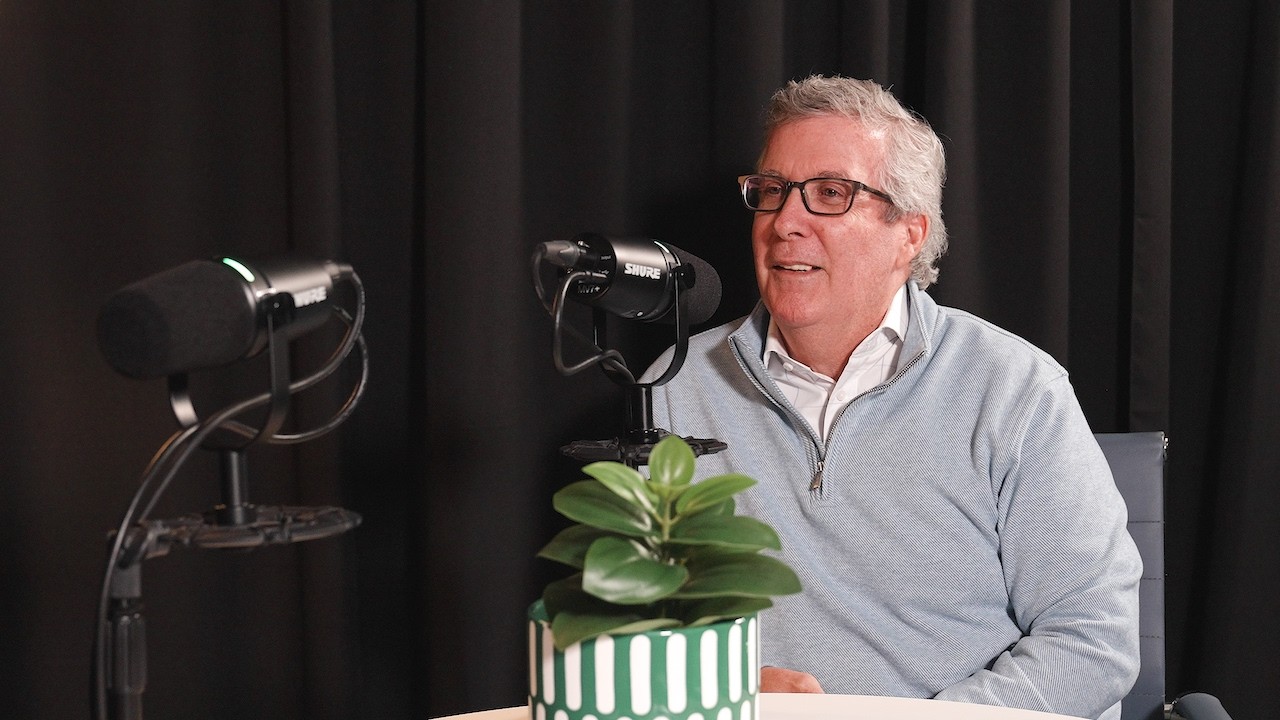
In this episode, host Katie Cribbs sits down with Mark Bole, instructor at FGCU's Daveler & Kauanui School of Entrepreneurship, whose career spans multinational investment firms, a Luxembourg startup launched during the 2008 financial crisis, and a CEO role before he found his calling in the classroom.
Mark shares how a 2006 brain tumor changed everything, what drew him to teaching entrepreneurship, and how he's now leading the Ain Technology & Design Hub — putting students to work helping Sanibel businesses recover from Hurricane Ian with AI, and training the next generation of entrepreneurs to drive change across Southwest Florida.
Available on:


Available on:
Episode 9:
From Hurricane Recovery to AI Innovation with FGCU's Mark Bole
In this episode, host Katie Cribbs sits down with Mark Bole, instructor with the Daveler & Kauanui School of Entrepreneurship at FGCU, whose career spans multinational investment firms, a Luxembourg-based startup launched during the 2008 financial crisis, and a CEO tenure before finding his calling in the classroom.
Mark shares how a brain tumor in 2006 changed everything, what drew him to teaching entrepreneurship at FGCU, and how he's now leading the Ain Technology & Design Hub — putting students to work helping Sanibel businesses recover from Hurricane Ian using AI, building real solutions for real clients, and training the next generation of entrepreneurs to be agents of change across Southwest Florida.
-
Episode Guide
Toggle More Info01:06 Welcome and Background
02:45 Launching in Luxembourg
05:22 From CEO to Teaching
06:32 NIL and Athlete Branding
08:38 Brandon Dwyer Success
11:28 Tech and Design Hub
13:25 AI Ethics and Business
15:05 Sanibel Solutions Dashboard
17:12 Workshops and Expansion
20:43 Vision for Student Interns
22:29 Making AI Practical
24:48 Closing Advice and Involvement
-
Transcript
Toggle More Info[00:00:00]Mark Bole: 2006, I got a brain tumor. My kids were four and six. And at that point, it was like, “Okay, if I'm going to start something, I better do it now.”
[00:00:16]Katie Cribbs: This is Your University: The FGCU Podcast, where we talk to the people on campus making a difference in the Southwest Florida community and beyond. From research and the arts, to student success and athletics, we are uncovering the stories impacting you. I'm your host, Katie Cribbs.
He was an international business owner, a local CEO. And now, he’s an instructor at the Daveler and Kauanui School of Entrepreneurship at Florida Gulf Coast University. As the faculty fellow for the Ain Technology and Design Hub, he’s betting on and backing the humans beside the AI helping to solve our communities’ problems.
Mark, welcome!
[00:00:59]Mark Bole: Thank you. Hello, Katie. How are you?
[00:01:01]Katie Cribbs: I'm doing well. Thanks for being here today. You have, kind of, done it all before coming to FGCU. You were working for multinational firms. You were your own boss. You've worked locally. You've worked overseas in Europe. What about entrepreneurship and running your own business really appealed to you?
[00:01:21]Mark Bole: First of all, every job I ever had—this is why I tell my students—I never knew how to do it when I got it. You learn by doing. And so, I wouldn't have predicted the path that I took or that I ended up on, but when I was going through the corporate world, I always, in the back of my mind, knew that I wanted to start something on my own.
And that was always there. And you kept putting it off. You get promoted in your corporate job, and you just keep putting it off. You get comfortable.
You're doing the country club and all that stuff, you know, and everything seems to be working. And then,
[00:02:14]Katie Cribbs: It was a life-changing, kind of, moment.
[00:02:16]Mark Bole: It was a moment that, and I didn't know it at the time, but I just had this sense like, “I need to do this now.”
And then I was working in Naples for an investment firm, had business in Europe, and I was over there a lot. And I teamed up with two people that I met in Luxembourg. One was from Denmark, and the other was from Luxembourg. And we decided to start an investment firm. And...
[00:02:36]Katie Cribbs: Now Luxembourg isn't, you know, widely known. People don't go all the time, "I'm going to go to Luxembourg for my vacation." It's France, Italy, all of these. So, why ?
[00:02:46]Mark Bole: Primarily because it's the financial capital of the world, even though it's as big as Naples, Florida, with 500,000 people. But that is where all the mutual funds, the international mutual funds, are domesticated. That's where they all are. And the bank that we were working with, the Naples firm was working with a bank in Luxembourg, and that's where I met the two people that we started the business with.
We kept our home in Naples and moved over there. We thought we'd be there maybe three or four years, ended up being six, and the kids loved it. They would come back for holidays, but sometimes they didn't even want to come back. They just really enjoyed it. And they went to an international school and met kids from all over the world. But it was really hard. We launched it in the middle of a financial crisis, like January 2008, and we were doing investments.
[00:03:26]Katie Cribbs: Yeah. That was not a good time.
[00:03:28]Mark Bole: It wasn't a good time, but it ended up being a really good time after everything got cleared. So, the first year, we were trying to hold onto what we had and build the business and hire the right team and getting everything in place. And then when the market finally turned in 2009, we did a lot better, and we expanded into Zurich. And then we came back in 2013, but it was incredible experience.
So, for me to take that into the classroom, it's really hard to even explain how difficult it was. It's if somebody would've told me we would've gone through everything we went through to, kind of, build it, I probably wouldn't have done it. And that's what you try to impart to the students. You try to say, "Look, this is the hardest thing you'll ever do."
[00:04:07]Katie Cribbs: It sounds insane.
[00:04:08]Mark Bole: It is insane, and no rational person should do it, but if you believe in it—and I do remember walking with my partner in February 2009. This was right before it started turning, the financial crisis started cleaning up a little bit in March, a little bit. Market started coming back. We're walking in Zurich, and there's no taxis, there's nothing happening, nobody walking. It felt like a dead zone, like there was nothing there.
And my partner asked me, she said, "Do you think we did the right thing?" And I said, "Hell yeah." And you just have to believe. But at the same time, you're taking so much risk that you just can't think about that. You've just got to go for it and see what happens. You’ve chosen that; now make the best of it and see...
[00:04:50]Katie Cribbs: You've got to go all in.
[00:04:51]Mark Bole: You've got to go all in. The people that we weren't managing money with, they were very mad at their old investment managers because they lost all the money. We didn't lose any. We were in there saying, "Oh, well, we'll be here when it turns, and we can help you through it."
[00:05:03]Katie Cribbs: So, it was a good marketing plan.
[00:05:04]Mark Bole: It became a marketing plan, just saying, "Yeah, those guys were bad. But when you're ready to get back in, we're here." So, we spent a lot of time on relationships. That was the key to the whole thing.
[00:05:14]Katie Cribbs: So, what made you say, "Okay, I now want to jump all into teaching." And coming here to Florida Gulf Coast University?
[00:05:21]Mark Bole: Well, I came back to the States in 2013, and I ended up helping a franchise business, had 400 different franchisees, and the two owners of the company asked for some help on the finance side. So, I did some work for them on that, and then they decided to hire me as CEO, and I did that—
[00:05:36]Katie Cribbs: You allowed to say who?
[00:05:37]Mark Bole: Yeah, it's Maximized Living. It was a chiropractic franchise. They were growing fast, but then they had some issues that needed to work through service and some other things, and I did some work on the finance side for them, and then they asked me to be CEO. So, I did that for three years. And I never thought I'd be CEO for a chiropractic franchise, but it was a lot of fun, a lot of great energy in the company, a lot of good people.
And then we did a financial buyout of the founders. And then I left at that point, and I worked with a guy named Tim Cartwright, who was… he was on the Foundation Board here. He was very involved with the school and entrepreneurship school, and he introduced me to Sandy Kauanui. And that's because I was really looking to teach. I just knew I wanted, just like I knew I wanted to start at some point. I just knew that I wanted to teach at some point, and I felt like this is the time.
[00:06:21]Katie Cribbs: So, it was a calling.
[00:06:22]Mark Bole: It was definitely a calling.
[00:06:24]Katie Cribbs: So, you got into NIL a little bit. And for people who don't know, can you explain what NIL is and why you started helping student-athletes here at Florida Gulf Coast University?
[00:06:34]Mark Bole: First of all, both my kids played college soccer. I played college baseball. I love sports. It's just a part of who we are and what we do. And then when NIL started being discussed...
[00:06:47]Katie Cribbs: Name, Image, Likeness, right?
[00:06:48]Mark Bole: Yeah. Name, Image, and Likeness, where players can now finally get paid. Athletes can finally get paid for posting and sponsoring businesses, whatever it may be.
I knew that we needed to be prepared. I thought FGCU had a real opportunity to do something special because we're in this community that's got a lot of wealth. It's a new school, but it's getting a bigger and bigger following. I thought if we could get the community behind it, we could really help the FGCU athletic department.
After it launched, we started having discussions about putting on classes. So, I put on a class for athletes for NIL that they could learn everything about building their own brand and marketing it and all that. And it was a lot of fun.
[00:07:29]Katie Cribbs: Because they're marketing themselves.
[00:07:30]Mark Bole: They are, and they don't know how. And you know, and they start saying, "Well, you know, I'm a D1 athlete." Well, there's a lot of D1 athletes, so what's unique about you and what is special about you? And so, the class became one of really searching for what unique things they have outside of basketball, outside of soccer, that make them who they are.
[00:07:51]Katie Cribbs: The differentiator.
[00:07:52]Mark Bole: The differentiator, and it really helped them understand their own past a little bit. We started getting into what they want to do when they get out of school, and the class became more of that, but also teaching them how social media works and how affiliate marketing works and all that.
It was a lot of fun. We did that for three years, and then we, as a special topics class, or three semesters, I think, but we never did, were able to make it a full class. We do have a creator economy class now where athletes can join with other students, and they can learn how it works as well there. So, I love it.
[00:08:24]Katie Cribbs: You've done some one-on-one, too.
[00:08:25]Mark Bole: I've done a little bit of one-on-one. It's like, I guess I got to talk about Brandon a little bit.
[00:08:29]Katie Cribbs: I was going to ask, because we have a little bit of a social media superstar, Brandon Dwyer. And his whole... I thought this was ingenious. His whole shtick , my road to one because he had never made a point in a game. Can you explain how? Did you help him figure this out? Did he come to that?
[00:08:49]Mark Bole: I mean, Brandon built his brand, okay? Brandon came into me as a freshman, came into my office as a freshman, and I worked with a lot of different athletes, so I can see him coming in, but he kept coming back. And I'd be reviewing his TikTok, and he had very few followers. He had a couple thousand or whatever, and he was doing, he was working on day 17 of a day in the life of Brandon Dwyer. And I'm sitting, and they're just boring. They're just like, "Okay, you get up, you eat breakfast, you go to the..." It's like, he goes, "Well, I want to get to day 20." I said, "Stop."
And we started figuring out, like, what he liked to do, what—and he likes to be goofy. He likes to make people smile. He loves basketball. But he had a personality that wasn't coming out. And so, after, it probably took us about six weeks, and we ended up writing some things, like, four or five things on the board, and a lot of them he's doing today, but he just ran out of the office and went off and did it.
And I periodically would touch base with him. You know, I tried to work with him on what he is going to do after basketball and all that. I worked with Dakota Rivers a little bit too on his YouTube. But Brandon became someone that was really consistent with his posts and really consistent in, kind of, who he was. So, you know, when you see a Brandon Dwyer TikTok, it's Brandon.
[00:10:03]Katie Cribbs: Yeah
[00:10:03]Mark Bole: It's like, and you know it's going to be funny or goofy or whatever it's going to be. He makes fun of himself, but you also see a side of Brandon that is really serious, that he's really committed to basketball, even though he's like, you know, a walk-on and didn't have the point. So, everybody got behind who he was, and that's the whole story, and he just showed it on a consistent basis.
[00:10:23]Katie Cribbs: When he made his first points in a game, the crowd erupted. He was even on Good Morning America for it.
[00:10:30]Mark Bole: No. I mean, how can you not like Brandon? But he got to showing his real, authentic self in a situation that everybody dreams of, you know, any athlete trying to dream to go to D1 or whatever. And it's really hard. It's really hard to get there and survive and have it go on for five years, you know, and still be a great teammate, be coachable, and be ready for when you're out there. So, I love his story. I'm not going to take credit for Brandon, but...
[00:11:00]Katie Cribbs: But you know him, you've worked with him, and he is a success story at FGCU, and how he was able to build his NIL brand.
[00:11:09]Mark Bole: Yeah, exactly. The key things he did are exactly what I try to teach, you know: find out what's unique about you, and then be consistent and go do it and have fun with it.
[00:11:17]Katie Cribbs: Man, did he do it.
[00:11:18]Mark Bole: Yes. He did.
[00:11:20]Katie Cribbs: You are also a faculty fellow for the Ain Technology & Design Hub here at Florida Gulf Coast University. What is that? How did it come about? Can you explain the purpose?
[00:11:31]Mark Bole: It's, kind of, like every job I've ever had, didn't know what I was going to do when you start. We were given... Mark Ain, donor gave us $2 million to start something that would give students real-world experience.
The original idea was, well, we had to figure it I knew that our students could learn to do, we could do websites. I'd already been consulting and building websites and social media marketing. So, we started with that because I knew that we could do that immediately. A lot of Southwest Florida businesses don't know how to do online marketing, and that became, like, the first thing that we started doing.
[00:12:06]Katie Cribbs: So, it was a service that you saw was a need here in the community and said, "Okay, we can teach our students and let them also, kind of, shine, and get this real-world hands-on experiential learning while serving these businesses."
[00:12:18]Mark Bole: Yes. And it was doing things that I was teaching already in digital technologies and the creator economy class. And so, now we're applying it to businesses, and students can be part of it and learn and grow and get real-world experience. And they have to work with the clients from day one. They have to sell the idea, what we're doing, all the way through to follow up afterwards and getting referrals. So, they learn the whole process besides just the building.
[00:12:40]Katie Cribbs: So, it's like an agency, an in-house agency.
[00:12:41]Mark Bole: Yeah, we evolved into that, and we didn't know what we were doing, but it worked, and we ended up with 11 different projects in the first year.
But I'd also been consulting for a company called Trinity Commercial Group on AI integration, because I've been teaching AI as a co-founder since March of 2023, and that was right when it started. Because I knew students were going to use it, I wanted them to make sure to use it the right way. And so, I was learning while I was teaching it then. And when we got to 2024, 2025, it became really clear that businesses need to know how to use it.
And ethically, yes, I mean, the ethics of it, it's like learning anything.
[00:13:49]Katie Cribbs: So, you took the Ain Hub, and you started another project with it, which is super fascinating, and you've been helping an entire community that was just really decimated from Hurricane Ian. Can you explain Sanibel Solutions and how that came about?
[00:14:04]Mark Bole: Yeah, it's a few things that came together. One was the AI work, doing at Trinity Commercial Group, building it there, and then in 2025 and early on, AI switched a little bit from helping you write emails and marketing to actually building real solutions.
And so, that happened about two weeks before Brian Rist, who's one of our donors and just a huge supporter and a friend of mine, recommended to Sanibel, some of the community leaders there that they should talk to the Ain Hub about AI and what we can do.
[00:14:35]Katie Cribbs: Did you know he was doing this?
[00:14:36]Mark Bole: He had mentioned it a couple times, and it would be gone on for months, you know, where they were just not, they just didn't know what to do, and what we did. So, finally, two of them came in, Doug Congress and Eric Pfeifer from Sanibel. They were part of the Charitable Foundation of the Islands, and that supports a lot of the different nonprofits on the island. We're trying to put together a thing called Sanibel Solutions, which was a team of people trying to help Sanibel understand the recovery and where they were and all that. So, they came in...
[00:15:07]Katie Cribbs: And we're not talking about physical recovery, rebuilding buildings, but we're talking about marketing and getting the message out to people that we're back and come and visit us, and we're marketing ourselves again, correct?
[00:15:19]Mark Bole: Yeah, there's two parts. One, the Sanibel, they asked for a dashboard because they had information on the recovery, but it was all over the place, and they thought it was just going to take months and get software engineers and all that. And this is a meeting on March 19th, I remember it. They're just sitting there talking, and I'm sitting here thinking I could do this this weekend, you know?
And I didn't say that because they wouldn't believe it. And I just knew, I can't say that. But that weekend I did go build it and sent it to him. And it was a prototype of it. And now we need to go out and collect the data. 40 different metrics, everything about their recovery, housing permits, sales tax, bed tax, everything about...
[00:15:54]Katie Cribbs: And it's all there somewhere, but you just had to...
[00:15:56]Mark Bole: You had to bring it all together and show it. And now the city council, we present to the city council on the 31st of May, and they got launched on their websites, and now they're using it. We update it regularly. But that was one part. That was like, "Okay, here's the picture. We're 75% recovered, and the other part's going to be hard, but now we've got to support the businesses."
[00:16:16]Katie Cribbs: Okay, and students are with you every step of the way, correct?
[00:16:18]Mark Bole: Yes, they are. And they’re, well, for the dashboard, we actually went out and visited all the businesses. We went on the islands and took an eight-hour tour with Doug and his team and everybody else. And they got to meet all the businesses. And then for the dashboard, we got to speak at the Chamber of Commerce. They put us up, and with all my students, and thanked us for all the work.
And it was just... And they were meeting the mayors and everybody else, and they started developing these relationships with people on the island. Then we started thinking, "Okay, how do we help the businesses understand how to use AI to be more productive? How do we teach them what we're teaching our students?" Because now it gets into real work, like, what they're really doing, and they're struggling, they're small businesses. How do they market better? How do they run their operations better using AI?
And we started doing workshops, and the workshops went from eight people in Rachel Pierce's art gallery, you know, with no projector, just looking at my computer screen, to 185 people—Florida Trust sponsored this—to one workshop with 40 different businesses, 40 different nonprofits, and for six hours, and the students are at the tables helping them.
[00:17:24]Katie Cribbs: That seems like the entire island.
[00:17:25]Mark Bole: It was wonderful. I mean, it was fun, too. They were learning, they were getting over the fear, they were learning how to apply it to their own businesses, not just generic applications. It was, like, real specific use cases that can help them.
And so, we've done a number of those workshops. We've got four more scheduled for the summer, where we're going into more of the advanced phases of it, where they can really automate a lot of stuff, and we're going to teach them how to do that. Because we're trying to help them, even though the island is 75% recovered, the businesses need to survive this until, you know, right now.
What Brian Rist said, I think, was the most amazing thing after all the workshops was, you know, what you've given them is hope. And they didn't have that before because they were just still struggling to figure out how to make it through this.
[00:18:11]Katie Cribbs: Yeah, it's hard when you're just treading water.
[00:18:12]Mark Bole: It is. And this gave them the ability to know, and they couldn't hire people to help them, but they were getting overwhelmed with the work, and the customer base wasn't what it was before, even though it's coming back. And so, we had to get them something that gave them some type of hope that they could take advantage of this and now run a more productive operation, market better, and all the other things that make your business better.
So,
[00:19:01]Katie Cribbs: It's great student service-learning, too, because they're learning, the community's learning. We're all coming together. One of the things I really love about Southwest Florida is we all coalesce around each other in times of crises, and that's great to see that the students are now getting involved in that and really helping their neighbors.
[00:19:19]Mark Bole: Yeah, and it's not based on, like, when the hurricanes hit, a lot of people helped, and they still do, but at some point, you kind of forget about them a little bit, and you don't realize what's really going on. You just think, "Oh, Sanibel is coming back, but it'll be fine," until you get there and say, "We can really help."
The one thing I'm trying to teach our students is solve problems. Identify problems in Southwest Florida, and use AI and your own brains to solve them. And so, now we can apply it to any situation, I think, in Southwest Florida. We should go in with the idea of, like, let's really understand the problem. Let's figure out how students and AI can help solve it. That's a bigger plan than just a...
[00:19:57]Katie Cribbs: You're not stopping just at Sanibel?
[00:19:58]Mark Bole: No, we're not.
[00:19:59]Katie Cribbs: You want to really widen it.
[00:20:01]Mark Bole: Well, what I do, I have five students from the entrepreneurship school, and what I want to have at some point here, if possible… The last month, we've got three new clients that are really important clients that hired us to do AI integration for their companies.
And these are really, really important companies that have hired us on multi-month jobs. And so now the students are embedding themselves in the companies and working with the marketing team, or the sales team, or the operations team, or the accounting team to use AI to make their processes better. That is huge.
[00:20:35]Katie Cribbs: Yeah, because they're getting to jump right in without leaving college yet.
[00:20:40]Mark Bole: And they're building skills. They're building a network. They're building confidence. What I hope to see is, like—and I try to teach this in my classes—but what I really hope to see is, like, every one of our students becomes an agent of change in the companies, understanding how to use AI. So, when they can go to the companies that are confused on how to use it, they can help right away. So, the plan for the Ain Hub, this is a—how about not a plan yet, but a dream—is that, "Okay, let's look at this. We've got a university with really good students across all of our colleges.
So, what if I had five from the school of education, five from engineering, and five from business school and healthcare, and we bring them in as interns just like we do with the entrepreneurship students? And now they go out and help schools and help educate, you know, healthcare, and go in and work on projects specific in their own domain.”
[00:21:32]Katie Cribbs: Transferable skills.
[00:21:33]Mark Bole: Transferable skills. And now we teach them how to do that in the Ain Hub, and now we get jobs out there that, while they're in school, to be able to go execute and do it while they're learning. That's the goal, and I think it's possible. I think it's right in front of us.
[00:21:49]Katie Cribbs: I think the sky's the limit.
[00:21:50]Mark Bole: I'm not sure where the Ain Hub goes, but I have an idea where it can go, if we can get everything put together.
[00:21:57]Katie Cribbs: It's going to be big.
[00:21:58]Mark Bole: It's going to be big for one reason: Southwest Florida has problems. They don't know how to use AI, and our students can help. And if we can do that, then everybody wins.
[00:22:06]Katie Cribbs: I love that. You have a philosophy. I'm reading it from your resume that you sent over: “Make AI understandable, show where it fits in real business, and measure the impact.” How is that going so far?
[00:22:20]Mark Bole: It's going great. There's a lot of people talking about AI in an abstract way. And there's a lot of consultants and advisors that are out there talking about it. And I'm not as interested in that as I am in how is it going to make me more productive or improve the processes I'm doing right now?
And that is the key to this whole thing. I've never fallen in love with technology for technology's sake. It is about how do we use it to make things easier, better, more effective. And AI is a tool for that. It's literally going down to every single job is made up of tasks and workflow. AI now is, the capabilities have improved so much just since November that now we can match the tasks up to the person and help them identify where AI can help them save an hour a day, two hours a day. And now they can use that time for talking to customers or whatever it else.
[00:23:14]Katie Cribbs: Keeping that human element in.
[00:23:15]Mark Bole: Yes. This is doing the stuff that is tedious, and everybody knows could be done better, so you can free yourself up to have the human connection, and then getting information that you need to understand your customer better, so you can have a better conversation. That can happen.
So,
[00:23:53]Katie Cribbs: Do you have a love-love relationship with AI? Love-hate relationship?
[00:23:57]Mark Bole: It's funny, because now when I use it, I don't even use a keyboard anymore. I push the button on my computer, and just talk to it using Whisper Flow, which is a cool tool.
But I'm at home, like, talking in my chair. My wife thinks I'm talking to her, and then when I am talking to her, you know, she thinks I'm talking to Claude. So, it's like, you have to have a balance. But the most important thing about this that has helped us train the students is the fact that I've been trying to stay up on all the changes every day that happens with AI, and that has been, like, exponential changes, like every three months. But you test it. And that experimentation is what I love. I love the fact that I can play with this.
[00:24:39]Katie Cribbs: Before we go, what do you want to leave our listeners with today about Florida Gulf Coast University, what we're doing here, and maybe how they can get involved?
[00:24:49]Mark Bole: Yeah. The ultimate goal here is I want to focus on the students because it's really… You've heard about entry level jobs being hit right now, being dampened because of the threat of AI and everything else like that.
And so, our students are coming to school and they're reading about this. And what I'm trying to do is say, "This is your opportunity. This is your opportunity to get the skills, to get the knowledge of how to use it, instead of being afraid of it, and you become the agent of change when you go work for a company. You go in on day one and help them understand it."
What I think is really interesting is that you take somebody new out of school, and they've got a blank slate. They don't work like they did for 20 years, like a lot of people that I'm talking to in the companies. They can come in and say, "Well, how about if we do it this way?" And all of a sudden, the work starts changing. They're learning from the person with the expertise, the domain expertise, the company expertise, but they're helping them understand how to use AI to make it better.
So,
[00:26:04]Katie Cribbs: Thank you so much. We are sending out agents of change across Southwest Florida and beyond. Mark Bole with the Daveler & Kauanui School of Entrepreneurship here at Florida Gulf Coast University. Thank you so much.
[00:26:16]Mark Bole: Thank you, Katie.
[00:26:20]Katie Cribbs: Thanks for listening to Your University: The FGCU Podcast. We’re proud of our connection with the Southwest Florida community and can’t wait for you to explore all we have to offer. Learn how to engage with us by visiting FGCU.edu/YourUniversity.
-
Show Links
Toggle More Info
Join 100K+ FGCU360 subscribers for monthly campus news, alumni stories & upcoming events.
Thank You for Subscribing