

Your University: The FGCU Podcast
De-Influencing and Smarter Shopping with Gina Tran
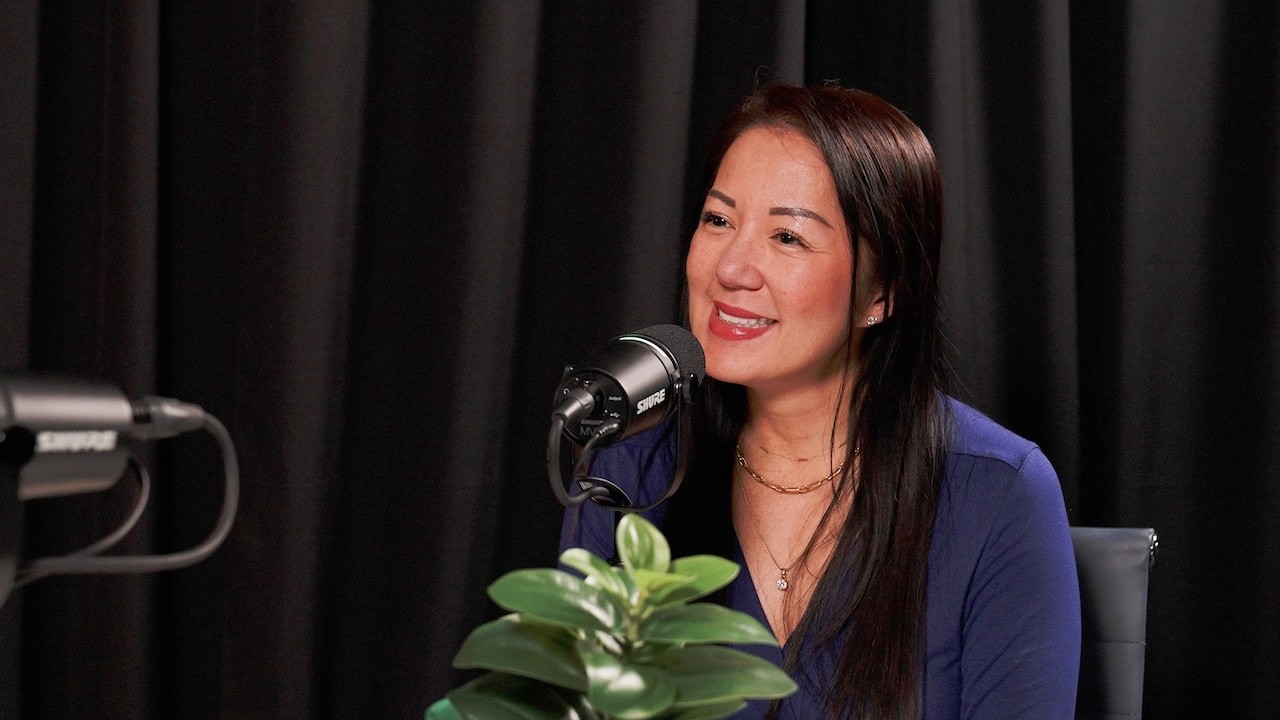
In this episode of Your University: The FGCU Podcast, host Katie Cribbs sits down with Gina Tran, Associate Professor of Marketing at the Lutgert College of Business.
Gina discusses her transition from engineering to marketing, the science behind consumer behavior and what social media trends like de-influencing can teach us about spending more thoughtfully. She also shares how real-world industry experience informs her teaching and research.
Available on:


Available on:
Episode 3:
De-Influencing and Smarter Shopping with Gina Tran
In this episode of Your University: The FGCU Podcast, host Katie Cribbs sits down with Gina Tran, Associate Professor of Marketing at the Lutgert College of Business.
Gina discusses her transition from engineering to marketing, the science behind consumer behavior and what social media trends like de-influencing can teach us about spending more thoughtfully. She also shares how real-world industry experience informs her teaching and research.
-
Episode Guide
Toggle More Info01:01 Journey from Engineering to Business
02:47 The Science Behind Marketing
03:28 Early Career and Industry Experience
07:01 Transition to Academia
10:58 Consumer Behavior and Influencer Trends
19:07 Research and Student Engagement
20:05 Community Involvement and Social Media Insights
28:41 The Role of AI in Marketing
30:00 Final Thoughts and Conclusion
-
Transcript
Toggle More Info[00:00:00] Gina Tran: I have to go where the consumers are. And so, they’re on social media. So, I'm on social media, lurking, observing.
[00:00:14] Katie Cribbs: This is Your University, the FGCU podcast, where we talk to the people on campus making a difference in the Southwest Florida community and beyond. From research and the arts, to student success and athletics, we are uncovering the stories impacting you. I'm your host, Katie Cribbs.
We are sitting down with Florida Gulf Coast University associate professor Gina Tran who explains how her research on consumer behaviors can make us all smarter shoppers. Before making the move to academia, she helped big-name brands sell items some of you may have in your homes right now.
Gina, welcome to the show!
[00:00:56] Gina Tran: Thank you. Thank you for having me. I really appreciate the invitation, and it's quite exciting to be here, so thank you.
[00:01:01] Katie Cribbs: So, Gina, I have one big pressing question for you at the beginning of this interview. I guess it's something that goes like this: how does someone who graduates undergrad with a degree in chemical engineering and bioengineering end up in the college of business?
[00:01:20] Gina Tran: Actually, a lot of business professors have engineering backgrounds, and I'm one of them. So, when I went to university, the university I went to is a true liberal arts university, and there's not a college of business, college of management at the undergraduate level.
And so, my parents really wanted me to go to medical school. And the best engineering to study for medical school is chemical engineering. And at that time, my university did not have bioengineering as a major, so that was my minor or focus area, if you will. And so, I majored in chemical engineering and minored in bioengineering with the intent of going to medical school. And obviously, that did not happen, and I'm happy that it happened that way. But yes, that was the original intent in majoring in engineering.
[00:02:02] Katie Cribbs: Yeah. Okay. So, that's interesting because when I saw that, I'm like, "Wow, they could not be more opposite." But according to you, a lot of people in the business college have some engineering background. Can you explain that?
[00:02:15] Gina Tran: Yes. So, I have had professors that studied engineering. One studied aeronautical engineering in undergraduate. And then I've known other people who've studied civil engineering or mechanical engineering, and also gone into marketing as well. And so, the quantitative skills that you've gained in engineering studies, like taking differential equations, vector calculus, will actually be used for the statistical classes that you take in the Ph.D. program.
And it actually helps you learn, like, things like coding and how to run modeling analyses. And so, that's the basis of some of the research that I do.
[00:02:47] Katie Cribbs: Okay. That leads me into my next question, is that I think a lot of people, especially with the advent of social media, we all feel like we're our own marketers and we know exactly what we're doing. But marketing is more than just a feeling, there is a science behind it.
[00:03:03] Gina Tran: Absolutely. So, I definitely consider marketing a social science. And so, there is a science behind it. You can run hypotheses, test them, and see if they come true or not. And then you can test different ideas against each other, and see which one does better as far as the outcomes that you're looking at. And so, marketing definitely is a social science. I consider that true.
[00:03:25] Katie Cribbs: Before you started your life in academia, you were working outside and had a really, really interesting start in your career. Can you talk about some of those things that you did?
[00:03:37] Gina Tran: Definitely. So, I did engineering internships, and so I worked on the chemical production side, where we produced a high-density polypropylene and polyethylene. And these are things that make like plastic water bottles, the Ziploc containers, Little Tikes toys. And so, these plastic pellets are a byproduct of the gas production process, the gas that we put in our cars. And so, those plastic pellets are made, and they're shipped off to Ziploc and Little Tikes toy company to make the toys and the Ziploc containers that we use to store our food.
And so, I did that. I worked in the engineering side, and I also worked in the research and development side. And then, so that is looking at things like using the certain chemicals to make the plastics clear and stay clear because that's what we as consumers prefer. So, I've done that. And then I also finished my degree after the internships, and then I worked in the oil and gas industry. And I worked for Columbia Energy Group in the DC area. And with them, I actually did marketing, but on the business-to-business side.
And there I did strategic initiatives and looking at market development, how to use the assets the company already owned to make more money for the company. And the assets are selling gas, as well as pipeline space. And at that time, Wi-Fi was relatively new thing. And then there was using the pipeline to lay down wire to actually bring internet to people's homes. And so, that was one way to use an asset that was new, innovative. And so, that was part of my department.
[00:05:06] Katie Cribbs: You were literally connecting people.
[00:05:08] Gina Tran: Yes, it was very interesting to work in that area. And then, from there I earned a master's degree and I earned a master's degree in industrial technical merchandising and fabric analytics. And out of there, I worked in corporate world, and I worked for Neiman Marcus online as an associate buyer. And I also worked for Michaels Incorporated as an associate buyer for baskets and small lawn decor, home goods, the decorative things you might put on your bookshelf and your desk.
[00:05:36] Katie Cribbs: What were some of those sayings on those decorative items?
[00:05:40] Gina Tran: Things like live, laugh, love, for example. That was very popular. The little travel gnomes, flamingos people put in their lawn. That was part of my category. And at that time, Michaels sold Baskets, and that was part of my category. So, those are the standard baskets, like the laundry basket. Then there were baskets that, like wicker baskets, you store things in, and then there's Christmas, Hanukkah baskets. And of course, we can't forget Easter baskets. So, that was all part of my category.
[00:06:05] Katie Cribbs: So, when I drive by, and someone has… I don't know, is it a flock of flamingos? I don't think that's right, but when I see those flamingos in somebody's yard, they could have been put in the stores by you.
[00:06:17] Gina Tran: Absolutely. They could have been. The flock of flamingos, we'll go ahead and go with that, were very popular. People loved those. They sold out. Yeah.
[00:06:24] Katie Cribbs: Okay. I might have to have someone Google that really quickly. Because I don't think it's called flock of flamingos. And I don't want our bird experts to call me up after this podcast and tell me I'm wrong. What is a flock of flamingos called?
[00:06:39] Gina Tran: Oh, I feel like we should have known that, flamboyance.
[00:06:41] Katie Cribbs: Flamboyance. That is, that's such a cool term. So, just to reiterate, if I'm driving by and I see a flamboyance of flamingos on somebody's lawn in Florida, you may have had a hand in putting them on those shelves for that person to buy.
[00:06:54] Gina Tran: Yes, definitely.
[00:06:55] Katie Cribbs: But that's so interesting. So, you had this great career that spanned multiple industries. And then what made you want to go back to school again and enter academics?
[00:07:07] Gina Tran: When I was in my master's program, I had some very strong mentors, and they encouraged me, including the dean of the school at the time. She encouraged me to pursue a Ph.D., and she told me that that was what I really needed to do. And so, I hemmed and hawed a little bit at the time. And I thought to myself, I really wanted to try to work in corporate merchandising.
And so, I went ahead and did that for about four years. And so, I enjoyed it, but I did find that I missed the research side of things, and I got to dabble in that with my master's program and that degree in learning how to be a researcher. And so, I decided to leave my job and go back to school full-time. And then, so, I did the Ph.D. program after that.
[00:07:44] Katie Cribbs: Do you think it makes you a more effective professor having a career outside of academia?
[00:07:52] Gina Tran: Absolutely. So, it lends me a little bit of street cred, if you will, that I have corporate experience, and I can bring in examples of ideas that are theoretical to the students right now from the books that we read, and information that we read. And then, so I can tell them, ″Well, that's in theory, and this is what it looks like in practice. An example is this, another example is this." And that helps them, I think, better understand it rather than just saying, ″The theory is this, the definition is this."
[00:08:23] Katie Cribbs: One of the things we talked about before is helping connect the students to what they could do with their degree. And those real-world examples that you bring in is super important, but you go one step further and you bring in people from the outside world, still working in the industries, to show them what their life could be like with their marketing degrees or with their business degrees. Can you talk about some of those people you've brought in?
[00:08:48] Gina Tran: Yes. So, I really enjoy bringing guest speakers into the classroom. For one, I learn from it, and then two, my students learn from it, and then they get ideas about what they could possibly do, what career aspirations that they don't even know about before. And so, recently I've had Bianca Benner, she's an FGCU alum, three times, she came to my class and spoke to my students about her role as a sourcing manager for Soma Intimate Apparel.
And then also the amount of teamwork, communication, coordination is necessary. And she emphasized that. And so, when the students groan, when they hear about team project, or group project, the biggest groans come out. But I want them to know that this is real life. You are always working with people. If you're calling, you're zooming, you're emailing, you're messaging, you're working with people. And then some students will say, ″Oh, but Dr. Tran, I want to own my own business."
That's great. Don't you need clients? Don't you need customers to have a successful business? There has to be some inflow of cash. So, you need clients and customers. So, you're working with people. So, they're like, ″Oh." I'm like, ″Yes." So, you still have to work with people to successfully satisfy their need as well as continue your business as an entrepreneur, as a business owner. So, I point that out to them, that working with people is central to almost everything that we do.
[00:10:08] Katie Cribbs: I love that. It is. Everything. Everything you do.
[00:10:11] Gina Tran: Thank you.
[00:10:13] Katie Cribbs: One of the things that you study that I find super interesting, our consumer behavior. So, why we do what we do as consumers, and how to make us smarter consumers? And you just had a research paper published about de-influencers. And I think we all understand what influencers do, they go on, they say, ″look at my amazing life," and "I have my amazing life because of these products." And then they make money off of what they show. And people buy it and click on it. So, what is the de-influencer movement?
[00:10:45] Gina Tran: De-influencing movement is a new trend, and it's a trend that gives us information about different things that we can do. One is we don't have to buy the exact thing that's being shown by the influencer. Maybe there's a dupe that works just as well, but costs a third of the exact thing the influencer's showing. In addition to that, some de-influencers are showing you the reality of their lives, that not everybody lives in white marble homes with perfect white couches, that there are shoes strewn about, there's a sweater hanging on the dining chair, and somebody left their glass of milk out.
And so, they're showing real life so that we know we don't have to live perfect lives to feel worthy. So, there's that de-influencing trend. There's also de-influencers that remind us that we are enough as who we are, that we don't need to dress, have our homes, wear makeup like influencers to feel like a valuable person, and that we need to be better and think about saving our money instead of spending it.
Whereas the influencers, they're actually getting items for free to review and to show and to recommend. And so, they're reminding us that you're not an influencer. Is this really in your budget? Maybe you should save your money. And then there's some de-influencers that tell you, like, ″Stop and think about things before you purchase it."
Do you have enough shirts? Do you have enough shoes? Do you have enough Stanley Cups already? And if you do, then maybe you don't need to purchase this, save your money. Or some say, instead of buying fast fashion, do your research. Look at companies like Patagonia, for example, and buy the quality item that will last you for many seasons to come, instead of buying the fast fashion that will… The seams will rip, in the first couple months.
[00:12:26] Katie Cribbs: So, you'll spend more on the front end, but you'll save in the long end because you don't have to keep replacing the cheaper fashion.
[00:12:35] Gina Tran: Exactly. And in addition to that, some of these companies are more sustainable, and they will replace items for you or repair items for you. A JanSport will repair the backpack, and if they can't, they send you a replacement. Patagonia, I think, does that with coats and maybe some other offerings as well.
[00:12:49] Katie Cribbs: So, what did you learn? I know we were talking about it, and at the end of the research, maybe you saw a glimmer of hope. Maybe social media could be used for good.
[00:12:59] Gina Tran: Absolutely. So, social media gets a lot flak for encouraging bullying, negative behaviors, over-materialism. And so, I think that social media can be used for good things as well. And so, the whole idea that someone being there to remind you, like, ″Do you really need this? If you do, do your research on the company and maybe you don't need it, and you can save your money instead, that you have a full life already, that you don't need that white couch, you don't need another shirt on top of the 20 you already have to be a better person or to feel like a better person."
[00:13:33] Katie Cribbs: What are the top questions that I, as a consumer, should be asking myself before I make my purchases? You've been studying this for a while, so what have you learned and how can you help me become a smarter consumer?
[00:13:44] Gina Tran: Okay, so there's a couple things that you can ask yourself. First, you can start with: Do you really need this? Do you have things at home that you can already use instead of buying a new thing? And if you decide that you do need this because it's replacing something that has worn out, then consider this, like the company that you're purchasing it from, are they sustainably producing their goods? Are they doing the repair, replace, and do they stand by their products? Because if they do, then likely, they're going to be higher quality items. And so, you can keep it for a longer time and use it for many seasons.
And then finally, I also encourage you to think about, if you still want to buy it, why do I really want it? And what value is it going to add to your life? So, in the value equation, I like to look at benefits minus costs. So, what benefit is it bringing to your life and what cost is it coming to you at? So, there's financial costs, which is what we tend to think of most and first. But aside from that, there's other kinds of costs, like the cost of opportunity cost because you are not using that money for something else, like maybe saving for future if it's a vacation or retirement. There's also the idea that you'll have to store, clean, maintain the thing that you're thinking about buying.
So, is that cost going to be something that's less than the benefits you gain from it? And then, so you look at the value equation that way. And we don't sit down and do math and say ″Value equals benefits minus cost." But I think that in our minds, we have a mental math going on where we decide, ″Okay. It's too high of a cost in those ways, and the benefits are not enough. And so, therefore, I'm going to leave on the store shelf. I'm not going to bring out my credit card, my Apple Pay, and pay for it."
And then the flip side, when we say the benefits are high enough and the cost is low enough in the various ways, then we say, ″Okay, it's going to bring enough value to my life, so therefore I'm going to go ahead and purchase it."
[00:15:39] Katie Cribbs: I really like how you mentioned storage. So, for listeners out there who don't know about Southwest Florida. We don't have basements here. Our water table is too high. And so, when people come up north, a lot of their homes are bigger. They have basements, so they bring a lot more stuff with them, and so they don't have the room anymore, and so they really have to flip the script on their consumer behaviors.
Or rent storage space, which is very big down here. But that is something that is a real problem down here, is trying to… again, flip that script on how you were a consumer, maybe up north. And then when you come down here, you just don't have the space.
[00:16:20] Gina Tran: You’re right. And that's an interesting study in consumer behavior itself. Like, how are you a consumer here in Southwest Florida, and how have you changed, and what do you decide to hold onto, and what does that bring to you? What kind of value does that bring to your life, and how do you make that decision? And so, that's definitely interesting in itself.
[00:16:38] Katie Cribbs: That fascinates me. And I bet your students are fascinated by that, too. They're students, so maybe they don't have a lot of money to spend, they're spending money on their education. So, you do get a lot of students coming to you wanting to do research similar, and do you help them?
[00:16:53] Gina Tran: I do enjoy doing research with students, and it is a labor-intensive process, especially as we first get together and develop the relationship, and help the students learn. And so, I'm teaching them, like, how to think like a research, ask questions, how to find information online about what's been done in that area, so you don't replicate the study. Because you don't get credit for replicating a study already out there.
And so, teaching them how to do the basics, and I enjoy it very much. And this is something that I really believe in, and I think that students learning how to research and think critically is very fundamental to them being successful. Whether they choose to go the graduate school route or not, they can still do research in their careers. Because when you think about something's interesting, there's a potential problem, how do you find out more about it? And so, that's research. Not always in the academic sense, but it's still research. So, I get excited to do research with students.
[00:17:44] Katie Cribbs: Now, you also have an interesting connection with the community because you’ve had people from Southwest Florida audit classes. Is that correct?
[00:17:54] Gina Tran: Yeah.
[00:17:54] Katie Cribbs: Tell me a little bit about that. How does that work, and how do you feel about it?
[00:17:58] Gina Tran: I love it. So, I've had some people in the Southwest Florida area come audit my consumer behavior class as well as social media marketing. And so, it's always fun. I think that they bring knowledge and experiences that help the students be a little bit more well-rounded in their studies.
And then they don't normally do presentations, but one did do a brief presentation, and so it was something that he wanted to do. And so, he shared a little bit with students about his background and why he was interested in consumer behavior. And so, I thought that was fun. And he did not complete the team project with students, but he did offer advice and answer questions, which I thought was very helpful, too, for the students.
[00:18:37] Katie Cribbs: So, hopefully, they get something out of it by auditing the class, and then your students get a little bit out of it, too, maybe through a mentorship or some shared knowledge.
[00:18:45] Gina Tran: Yes, I hope so. And I think it's a fun experience, and they bring in, like, their knowledge, experience. The students, I think, gain something different from it with this person in the class that's not exactly like them, like, concerned about credits and grades, but interested in learning and eager to gain information.
[00:19:05] Katie Cribbs: All right, so why social media? Why do you like studying social media? Most of us say, we've got to put it away. It's too much. So, why do you dig in and study it?
[00:19:14] Gina Tran: So, Katie, when I first started in the Ph.D. program, it was 2010, and at that time, I wanted to go into marketing because I wanted to study consumer behavior. And I noticed that the consumers around me, whether I knew them personally or not, everybody was in technology. So, there are people who are looking at gaming online. There's people who game with their friends online, they game with strangers, they game to relieve boredom. So, I did a study on that, and I don't game. I'm just, I'm not built that way, and I don't game.
And then there was a lot of people on social media. And then at that time also the microblogs were getting popular, now known as X, and there was Tumblr, and there's other ones too. And so, I did a study on that too, comparing how marketers reach consumers through microblogs versus emails and which one was more effective. And so, there's so much technology around us. We love it. We're immersed in it, maybe a little bit addicted to it. And so, that's what drew me to social media.
And some of it is through social media. So, the Tumblr, X is social media. The gaming sometimes is done through social media, and sometimes it's through other platforms, but that's where the consumers are at. So, if I want to study consumer behavior, I have to go where the consumers are. And so, they're on social media. So, I'm on social media, lurking, observing. I'm not much of a participant, and I'm starting to post a little bit more now.
But most of the time I've been more of a lurker, just observing and being in the environment with the consumers and seeing what they're posting, what they're liking, what they're sharing, and the words they use, hashtags, emojis, pictures, reels they create. It's all very interesting to me. I'm fascinated by it.
[00:20:54] Katie Cribbs: I have to sometimes put my phone down because I'm getting these ads all the time. And like, ″Wow, that looks really interesting." But then I have to get off the social media, do the Google search for reviews, and find how maybe what I'm looking at isn't so interesting. But they're really good at marketing it, and listening to what we're saying or typing in, or the searches we're doing. Companies have really honed in on social media and how to use it to their advantage.
[00:21:19] Gina Tran: Most definitely, and you are being a smart consumer by doing the research and reading about it and then making your own decision. Instead of just saying, ″Okay, that influencer, she's beautiful, she's perfect. I need the things that she has. All of this.″
[00:21:33] Katie Cribbs: I mean, I want to buy it right away. Let's be clear.
[00:21:36] Gina Tran: And that's only natural. It's human nature. It really is. That's also interesting in itself because we… And I fall into this too. So, the idea that this one thing will change your life, change my life, and solve all the problems you and I have together. And so, we can be convinced, but then there's that rational side that makes you and me stop and say, ″We're going to do some research and read some reviews and check out what people are saying, whether it's positive, negative, or neutral, and then think critically about it and make a decision."
And so, that's some of the things that I am advocating for consumers to do when they see social media marketing ads, sponsored ads, as well as influencer marketing pieces.
[00:22:16] Katie Cribbs: Let's shift gears a little bit because another thing I really enjoy about FGCU is that a lot of our professors want to do good in the community. So, whether it's through research, your consumer behavior, you're helping me learn to become a better consumer.
And that's great, and you share it with the wider world. But one of the ways that you and your colleagues also share your knowledge is by saying yes to do interviews with journalists. We’ll get a call in and say, ″I'm looking for an expert in X, Y, and Z,″ and you will say yes to interviews. Why is that important to you?
[00:22:54] Gina Tran: One is that I enjoy sharing my knowledge with everyone else, and I also enjoy sharing it in a way that people can easily digest and understand it and then make use and implement that knowledge. And my academic studies, it's written in a way that's a little bit difficult to understand and to read. And so, being able to share it through news outlets and share it in shorter pieces of information that's actionable for consumers is something that matters to me, too.
Because that's part of consumer behavior, and so I enjoy doing that. It also makes me stretch myself a little bit and try something different, and encourages me to keep progressing as an individual and to try new things and different things that aren't always comfortable, if you know what I mean.
[00:23:38] Katie Cribbs: So, full disclosure, I deal with the media, and that's how we met. You are one of the experts that we have here, many experts that we have here at FGCU. And so, I've contacted you about some of these stories, and you get some really interesting ones to talk about. So, I'd like to play a little game. I'm going to read off some of the more recent ones that you have talked about with the media. And these are what the media has called them, they're stories. And then if you could pick one or two that you thought was just really cool and interesting to talk about, and let me know why. You ready?
[00:24:10] Gina Tran: Yes.
[00:24:10] Katie Cribbs: Okay. Here are some of the titles: The Great Lock-In Challenge, Naples Locals React to Cracker Barrel Logo Controversy, Loud Budgeting, Too Many Streaming Devices? How to Cut the Cord.
[00:24:25] Gina Tran: Okay. So, I do like that one, too many streaming devices. And I also like the Great Lock-In that you mentioned.
[00:24:31] Katie Cribbs: Cutting the Cord. What did you like about that one?
[00:24:33] Gina Tran: Too many streaming devices. So, I think that we get caught up in all the things that we have and we're not even using it. And so, streaming accounts was one of them. And so, that was interesting there because it showed me that along with physical, tangible things that we have and we have paid for, and we keep in our homes or in storage units, the streaming accounts, we have too many streaming accounts, but there's only so many hours in the day, so can we really utilize them all?
So, think about that and cut down on it, or have one streaming account at a time and enjoy it, fully use it. And then when you're done with all the shows or up to those seasons for those shows on that streaming service, then switch to another streaming service. But having so many streaming services, and not using it is a waste of the consumer's money.
And so, I thought that was interesting. Also, I noticed that there were students, university students here at FGCU, that also had too many streaming accounts, and they weren't always fully aware or using them. And that was surprising. Because like you, I tend to think that university students are typically on a budget, and I would think that they're a little bit more cautious and careful about where their money's going.
[00:25:42] Katie Cribbs: And some of the interesting things that have popped up because of this, there are actually services that you can pay for that tell you how many services you have and may not know about because you've signed up for them and are still paying for them.
[00:25:56] Gina Tran: That is interesting itself. Because I thought to myself, like, couldn't you just look at your credit card, debit card statements? Even if you have multiple, like usually most of us use one or two. Couldn't you look at the statements and figure it out yourself? But yes, you're right, that service does exist.
[00:26:09] Katie Cribbs: For a reason. We've touched a lot of topics. We've talked a lot about a lot of stuff today. What else have I left off the table that you thought was interesting or that people should know?
[00:26:19] Gina Tran: I want to share that we have a lot of AI usage going on. There's a lot of conversation about AI, and so in marketing, definitely you can use AI. I do provide some cautionary advice, though, to remember that your market offering, your brand still needs to offer value, and if consumers see or sense too much AI going on in your marketing, in your materials, in your packaging information, then their thinking and their belief in what your brand is may start to decrease.
So, that means that your brand reputation image may decrease in their mind. So, keep that in mind that AI usage can be helpful, but use it as a tool, not the end-all and be-all of your marketing campaign, your marketing program.
[00:27:03] Katie Cribbs: That may be able to help you maybe craft a strategy of some sort, or get your thoughts together and help organize something. But maybe when it comes to writing copy, or social media post, maybe you should put that real-life human element on it.
[00:27:17] Gina Tran: Absolutely. Or if you have them write it, definitely look it over very carefully, and vet it very carefully. Make sure that it conveys, communicates what you want it to, and then it's still true to your brand before you put it out there. Make sure that it aligns with your brand's values, and it communicates what you want it to, to the consumer.
[00:27:37] Katie Cribbs: Okay. Anything else that we haven't touched upon?
[00:27:40] Gina Tran: I just want to say that I love marketing, and I think that it delivers value to the consumer, the organization, the population, and society overall. And I know that sometimes marketing gets negative attention because some people think, ″Oh, marketing, it's all about sales. You're just pushing things." But the true marketer goes all the way back to the development of the market offering. So, when I say market offering, I'm saying anything that you can sell.
So, the true marketer goes all the way back and looks at it and says, ″Well, I have this idea, it will help consumers in this way, but maybe I can tweak some of the benefits, the experience, the service I'm offering." And so, that is the development. So, that is included in marketing. So, I just want to share that marketing is more than just sales. It is about communication, but marketing is also about development of your service, your experience, your product, and then it goes all the way through the phases of testing it, alpha testing, beta testing, to make sure that it works as it's supposed to.
Prototypes are developed, and all the way through looking at the business side of things, business case analysis, and then all the way through test marketing, and then fully launching the product. But all of that's included in marketing, not just the selling part at the end.
[00:28:52] Katie Cribbs: I don't know. I'm sold. I think I need to take some of your classes and learn more about it and become a better consumer.
Well, Gina, I really appreciate your time here today. I would encourage everybody to take a moment, think about their marketing plans.
[00:29:08] Gina Tran: You're welcome. I appreciate the invitation, and this is my first podcast ever, so it was a fun and exciting experience, so thank you.
[00:29:14] Katie Cribbs: Well, congratulations and thank you for being a wonderful part of our FGCU community.
Thanks for listening to Your University, The FGCU Podcast. We’re proud of our connection with the Southwest Florida community and can’t wait for you to explore all we have to offer. Learn how to engage with us by visiting FGCU.edu/YourUniversity.
-
Show Links
Toggle More Info
Join 100K+ FGCU360 subscribers for monthly campus news, alumni stories & upcoming events.
Thank You for Subscribing