
Your University: The FGCU Podcast
Inspiring Next-Gen Educators with Diane Kratt
Available on:


Available on:
Episode 6:
Inspiring Next-Gen Educators with Diane Kratt
-
Episode Guide
Toggle More Info02:11 FGCU Arrives in SW Florida
03:01 Working Through School
05:51 Why Teaching Chose Diane
07:09 Mentors Who Changed Everything
08:51 From K-12 to Higher Ed
11:46 Community Connections and Environment
17:14 Teacher Shortage Solutions
18:13 Paid Internship Options
21:55 Getting Students Hired Quickly
22:50 Classroom Tech and AI
25:04 Traditional Teacher Prep vs Alternative Pathways
27:22 Why Teachers Matter
28:03 Support and Get Involved
29:44 Final Thoughts and Conclusion
-
Transcript
Toggle More Info[00:00:00]Diane Kratt: I've never found anybody who can't name their favorite teacher. It may not be all of them, I wish it were, but everyone has somebody that they really enjoyed being around and felt valued by and cared for by, and it's usually one of their teachers.
[00:00:27]Katie Cribbs: This is Your University: The FGCU Podcast, where we talk to the people on campus making a difference in the Southwest Florida community and beyond. From research and the arts to student success and athletics, we're uncovering the stories impacting you. I'm your host, Katie Cribbs.
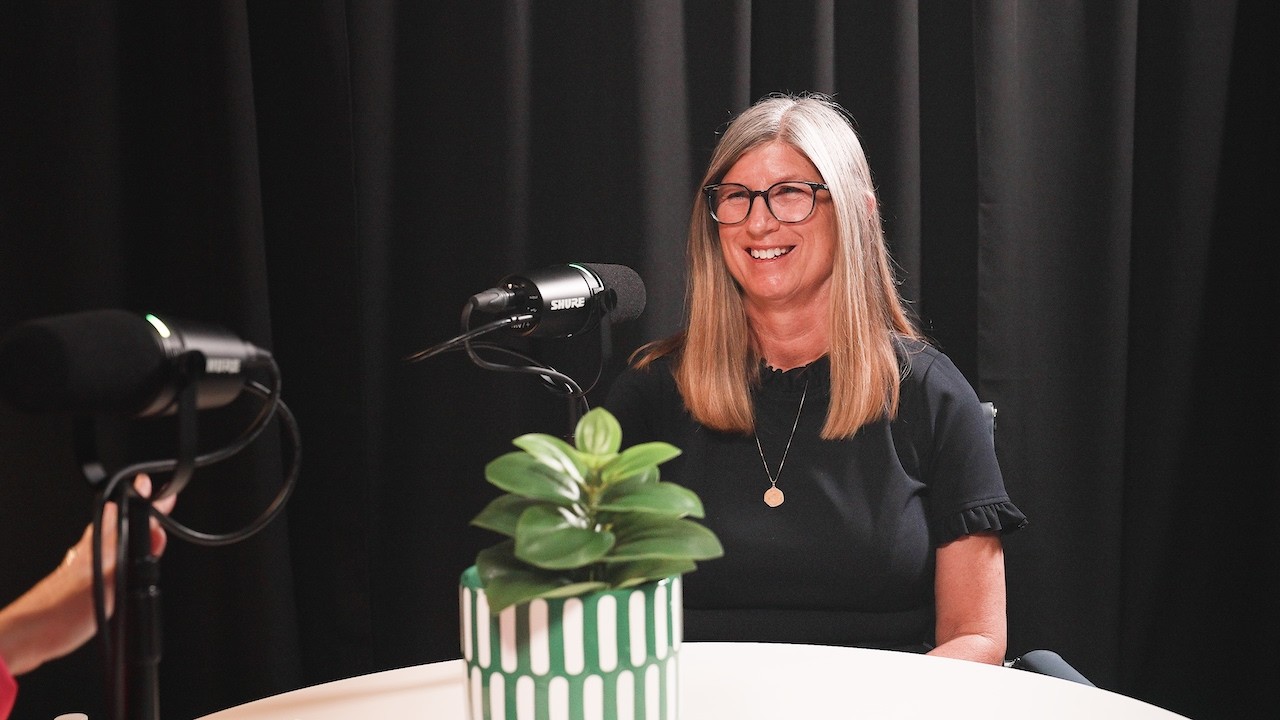
There's a famous quote, "Teaching is the greatest act of optimism." It's one that today's guest believes in wholeheartedly. After dedicating nearly two decades inside K-12 classrooms, Dr. Diane Kratt, Assistant Dean at Florida Gulf Coast University's College of Education, is now teaching our teachers.
Diane, welcome.
[00:01:10]Diane Kratt: Thank you, Katie. I'm really happy to be here.
[00:01:13]Katie Cribbs: And I want to say congratulations first off, because I think you're our first true native Southwest Floridian.
[00:01:21]Diane Kratt: I am. I was born right here in Fort Myers, Florida, at Lee Memorial Hospital.
[00:01:27]Katie Cribbs: So, you've seen a lot in your time here from the development that's happened over the many, many years. Is there someplace that you drive around now that back in the day you're like, "Wow, these were empty fields, and it looks nothing like [crosstalk 00:01:43]"?
[00:01:43]Diane Kratt: Yes. So, Daniels Parkway, which back in the day was a dirt road. We spent all of our time back on Daniels. We had horses there. We had dune buggies, motorcycles. I lived in the back of the villas, so we just casually walked back through the woods, got back to that area. We spent hours and hours and hours in the swamps and on the dirt roads. And now I can't believe it's a major thoroughfare.
[00:02:08]Katie Cribbs: Oh my. How times have changed.
[00:02:10]Diane Kratt: Yes.
[00:02:10]Katie Cribbs: And of course, FGCU wasn't here. And now it's a full university. What are your thoughts on that?
[00:02:16]Diane Kratt: Well, it was exciting when it was being built. I love the fact that it was an environmentally conscientious university, and there were a lot of talk about environmental things. I love that they chose the blue and green and the eagle for the mascot. I was, kind of, grounded in some environmental initiatives when I was younger, so I was excited about the university being built.
[00:02:38]Katie Cribbs: All right. We're going to come back to that in a little bit, but you are actually a first-generation college graduate.
[00:02:44]Diane Kratt: Yes. So, I have parents who did a little bit of schooling past high school, but no one had graduated from a college, especially a university.
[00:02:55]Katie Cribbs: And not only that, but then you went on to get your master's and your doctorate, and you were working the whole time, starting from the very beginning.
[00:03:02]Diane Kratt: It wasn't easy. I will say, though, that I had an opportunity to make it easier. I went to FSU when I first graduated from high school. And by the way, that wasn't something I did on my own. It was through a teacher in high school who really encouraged and supported me and helped me fill out the application and really pushed me to do it.
So, I went to FSU. It's a lovely university, but I was terribly homesick and came back home and finished up all my schooling here. There was a USF branch on the Edison campus, so I finished up USF. And you're right, once I came back home, I had to work full-time and put myself through college after that first year.
[00:03:45]Katie Cribbs: So, I want to clear something up for our listeners here. You said Edison, that's now Florida SouthWestern. And USF had to come in to help students who wanted a bachelor's degree. So, there was a big, big need to have a regional comprehensive university in Southwest Florida, but it just wasn't there at the time.
[00:04:07]Diane Kratt: Correct. If my memory serves me, I think there were three or four buildings that were USF, and it helped me a great deal because, as I said, I was working full-time. I went to school at nights. It gave me a bachelor's degree in teaching, allowed me to become a teacher, so it was very big help at the time. But there was definitely a need in this area to have a larger university, so people could have access just like me.
[00:04:32]Katie Cribbs: Right, and, you know, you were able to work your way through school. I'm sure it was tough, but does that give you a little street cred then with the students here at FGCU who also do the same thing? They're working, they're going to school, they're trying to take on as little debt as possible. Does that, kind of, make you more empathetic and give you a little of that street cred?
[00:04:52]Diane Kratt: I'd like to say, yes, I hope so. They probably think I'm ancient, but I have shared a little bit of my story with them at times when it was appropriate. So, I'd like to think that my story is a reality for other people and that they can do it, too.
[00:05:27]Katie Cribbs: So, your story, you worked your way through all of your degrees, and you worked locally through all of your degrees.
[00:05:34]Diane Kratt: Yes. 20 years of teaching and several years before that as a teacher's aide. And really, all of my degrees, I've been an educator the whole time. So, education has helped me get educated.
[00:05:49]Katie Cribbs: Who inspired you to get into the classroom and become a teacher?
[00:05:53]Diane Kratt: That's a great question. So, I have to say that I loved school and I liked my teachers, pretty much. It was something that I was, kind of, good at, so I could succeed in school, and that helped me want to continue with school. I had teachers in high school that very much encouraged me to continue. Like I said, one helped me with my application.
So, I thought at first when I went to college that I might want to be one of those professions, not just a teacher, but I thought about being a marine biologist because I love my marine biology teacher. I thought about being a psychologist because I love my psychology teacher.
And then when I was a teacher's aide at Suncoast, I was working with… her name was Denise Bochnovich at the time, now Fenicle, and she actually works with us at the College of Ed as a supervisor. I worked with her in a special education classroom, and I realized the connections and the relationships I made with the students every day, and the work I was doing with helping them learn was really where I needed to be. I could do that full-time and do all the things I love doing and be hopefully a little inspiring, like my teachers were for me.
[00:07:03]Katie Cribbs: And you said some of your teachers really helped you get your foot in the door and really visualize college. Did I hear that correctly?
[00:07:11]Diane Kratt: Yes, Coach Mike Brooks at Fort Myers High School. He was my psychology teacher and my history teacher, and he would give me a hard time sometimes about not putting forth as much effort as I should have, and I would tell him, "But why do I need to do this?" And he would say, "Because I told you so."
And he would share with me that, you know, education was very important and that he could see me doing a lot bigger things in life than, you know, maybe where I saw myself. And he said, "I can help you if this is something you might want to do." And so, I listened to him, and I'm glad I did.
[00:07:48]Katie Cribbs: That's something for a 16-, 17-, 18-year-old to listen to an adult finally. And that age is really difficult.
[00:07:53]Diane Kratt: But see, that's what teachers do, they help shape lives. That's one of the important factors about being a teacher.
[00:07:59]Katie Cribbs: And that's why education matters, right? You get the educators that make a difference. I think everybody in this room, if you're listening, someone has a teacher somewhere in their life that made a difference.
[00:08:13]Diane Kratt: I've never found anybody who can't name their favorite teacher. It may not be all of them, I wish it were, but everyone has somebody that they really enjoyed being around and felt valued by and cared for by, and it's usually one of their teachers.
[00:08:31]Katie Cribbs: And that's just one of the reasons why educators still matter, right?
[00:08:37]Diane Kratt: Yes. I think that they make a very big difference in our community. They strengthen society, strengthen our community, and they do that by shaping one life at a time.
[00:08:45]Katie Cribbs: So, you were in the K-12 system. What made you want to move to higher ed?
[00:08:52]Diane Kratt: So, it wasn't something that I had considered, but I had had interns at the time, and I enjoyed working with the interns. And I actually had an intern from FGCU. So, Dr. Jackie Greene was that intern's professor at the time. And she actually approached me about what I could do in the College of Ed, and I was taken aback, thinking, how would I ever do something in the College of Ed, and why me? And again, it was another educator who gave me that support and encourage and showed me that, you know, I can do things. So, I started out as an adjunct.
[00:09:34]Katie Cribbs: Yeah. It's emotional.
[00:09:35]Diane Kratt:
[00:09:35]Katie Cribbs: Because she believed in you. And she became a very close friend and mentor. Correct? Colleague, too?
[00:09:40]Diane Kratt: Yeah, we did a lot together. We were collaborators and partners, spent a great deal of time together. But after I adjuncted, there was a position, actually, it was her position. She was moving out of the field experience area and moving into more of a reading literature position. And so, I interviewed for her position and was hired, and it's been almost 18 years now.
[00:10:03]Katie Cribbs: Thank you for sharing that emotional tribute, because I think that's really important for all of the listeners out there, or the viewers, if you're watching it on YouTube, is that, you know, these moments, they touch and shape our soul and help create us and get us to where we need to be. And that was a beautiful story about one of your future colleagues really getting you to where you need to be, because now look at you. In the College of Education, it's an amazing journey.
So, you're here teaching future teachers at FGCU, and then all of a sudden, we start a doctorate program in the College of Ed. What made you want to take that on? You're a full-time working mom, you are busy in your life, and here comes this doctorate program here at FGCU. What made you say, "Yeah, I'll do it."?
[00:10:52]Diane Kratt: Well, I think the first time they started offering the doctorate program was actually my first year here, 2008. And again, Jackie Greene was starting it, and she was like, "Oh, you should do it." And I'm thinking, "There is no way." I had a child who was starting high school. I was starting in a new job. I didn't know what I was doing.
And although I had dreamed that it would be wonderful to have a doctorate, I just couldn't see it. But after being here a few years and working through everything, and my son then graduating high school, I believe I started in cohort three, which started, I want to say, 2012, the year my son graduated high school.
And so, at that point, I could see that it was possible, and I decided that I would, you know, try and see how it would go. Thankfully, I made it through.
[00:11:43]Katie Cribbs: And you're still here.
[00:11:44]Diane Kratt: Yes, still here.
[00:11:46]Katie Cribbs: All right, so here you are. You grew up in Southwest Florida. There was no comprehensive regional university. Over the years, you saw the community build it. It became from idea to reality, and then here you are years later, and you are an alum. And not only that, you're actually in the College of Ed.
[00:12:06]Diane Kratt: Yes. And had an opportunity to be a part of the growing of the college for the past 18 years.
[00:12:14]Katie Cribbs: So, really, students should be listening to you. You are case of don't ever give up on dreams, right?
[00:12:20]Diane Kratt: Absolutely. And I think it's even a case of know that there are dreams out there, big dreams, and they're for you. I don't know why I didn't know that.
[00:12:32]Katie Cribbs: Yeah, and I think you said something really beautiful when we were having a previous conversation, something about the way that dreams and connecting everybody together, and that's the university's job to do that. I don't know if you remember.
[00:12:48]Diane Kratt: Well, I definitely remember that
[00:13:16]Katie Cribbs: And one of the things I think is unique, like you said, this university was built by the community, for the community, and you have a really neat connection with one of the founding faculty members. Can you tell us a little bit about that connection?
[00:13:32]Diane Kratt: Certainly. So, I'm actually pretty pleased with the education that I received, even though it was a long time ago.
[00:13:40]Katie Cribbs: Not that long.
[00:13:40]Diane Kratt: Longer than some. So, one of the things that I was able to be a part of was an environmental aspect. I think I stated earlier that I had some connections.
So, in middle school, I was able to go to the Calusa Nature Center as part of my education. I think I went either once a week or once every two weeks. And then in high school, I was able to continue that in something called a Monday Group. The teachers at the time that helped with all of this environmental work were people that stayed in the community for quite some time and have worked here as well. And one of those persons was Bill Hammond. So, he is a well-known environmentalist, a very special man. I think they just had a celebration for him recently. But he was a teacher of mine. We were working...
[00:14:30]Katie Cribbs:
[00:14:31]Diane Kratt: K-12. I can't remember if he was middle school and high school or just high school for me, but I definitely know for the Monday group, our group was one of the first ones, if not the first one. We started the Bald Eagle Ordinance that lasted past the time that I graduated, but we were the initial group that started working on a Bald Eagle Ordinance under the direction of Bill Hammond. And so, when I saw that he was involved in this university and had all the environmental pieces to it, I felt connected to the university right away.
I couldn't wait for it to open. I was here at, like, an open house when it first opened. I sat in the classrooms and thought, "Oh my gosh, this is so fantastic." I thought about going back to school then, but I think at the time that it only had bachelor degrees. So, I was just like, you know, "How could I be involved?" But I didn't know how to be involved, so I just, kind of, enjoyed it at the time.
[00:15:25]Katie Cribbs: So, you didn't know how to be involved, it was just starting out, but it was there for you when you needed it with your doctorate.
[00:15:32]Diane Kratt: Yes, and also to provide student teachers in the classrooms. So, I was already getting some of those student teachers and saw that that was helping the community as well.
[00:15:42]Katie Cribbs: So, looking at all of those connections, it was there for you when you needed it, but you didn't realize how it would fit into your life when it just opened its doors in '97. But there it was for you. As a community member, you know, the idea of FGCU was to really embrace the environment, really make sure it was good stewards of the environment, and then to fill community needs. Do you think that the university has lived up to those aspects?
[00:16:07]Diane Kratt: I think so, yes. I'm hopeful that our community will continue to embrace it and to get to know all the things that the university offers, because I do think it's a fantastic addition to our community and very well needed. I do run into people who don't have that connection yet, and so I'm always, kind of, trying to spread the message, and I'm hopeful that they're going to find ways to connect with us as well.
[00:16:33]Katie Cribbs: Yeah, because they're building bridges, like we are building bridges with the community and vice versa. And I want to talk about some of that right now because if you've watched any sort of news over the last few years, teacher shortage is always popping up in the news. There's a teacher shortage nationwide. We don't have enough qualified teachers to get in the door.
And when I first met you, you and the College of Education were really working hard to try to tackle not only this national issue, but really a local issue as well. And you've done some really innovative things to try to get more qualified teachers teaching our students in the K-12 system here in Southwest Florida. Can you talk about some of those initiatives that you guys have put in place?
[00:17:16]Diane Kratt: Sure. We feel it's important to have teachers, no matter if there's a shortage or not. Teachers are very much needed in every society, and so we always want to have as many teachers as possible. But as we face this time where there was a shortage of teachers, we had to start really grappling at, you know, are there other alternatives or different things that maybe we hadn't thought of in the past to maybe attract more people or support more people and get them into teaching positions?
So, some of the things that we've done is we've helped our own bachelor's programs in the College of Ed by having internships that provide some kind of financial compensation. For a long time, people have done non-paid internships, and it's very hard because you have to work full-time sometimes, as I know to help make it through.
[00:18:08]Katie Cribbs: And then they expected you to be in the classroom for free-
[00:18:10]Diane Kratt: Yes.
[00:18:11]Katie Cribbs: ... learning, but also doing at the same time, right?
[00:18:13]Diane Kratt: Yeah. And a lot of our other organizations and businesses offer paid internships. So, we worked really hard at making sure that we had two options of paid internships. One would be a full-time paid internship where they got hired as a teacher of record by using the state of Florida's new internship temporary certificate. And then we also offer a paid part-time internship so that they can spend some of the time with their cooperating teacher and some of the time helping the school in various ways, like running intervention groups. It's all still learning, but they can actually be compensated for some of that time.
[00:18:53]Katie Cribbs: Was that a game-changer, you think, to keep more students in the College of Ed teacher
[00:18:58]Diane Kratt: I hope so. We're still working with the districts because we would like it to be where 100% of our students can have that paid internship opportunity. But I think it does help. Some of the people maybe left the College of Ed because they couldn't do a full-time internship if it wasn't paid, and they would maybe go to a different degree and think, "Oh, I'll just do teaching with an alternative pathway later on." So, I think it's a game changer for some, and I think it's going to continue. We need to keep working on that.
The other area that we've really worked hard on, and this is again with Jackie Greene as my colleague, is to create a pathway for people who are already working in schools who have an associate's degree, weren't able to finish for one reason or another, and would make great teachers.
And so, we created a pathway for them, which is a virtual pathway with shortened semester classes. And we also used grant money that was available through, like, workforce development with Kristen Vanselow's office, and we now have new scholarship money, working to help support more cohorts of it. And so, right now, we've got four cohorts of students that are becoming teachers and are going to fill those classrooms.
[00:20:15]Katie Cribbs: So, it's kind of like you. You were a TA while going through your bachelor's program, correct?
[00:20:20]Katie Cribbs: These are people already in the classroom, and some of these people, I think, I met someone with decades of experience, and she took part in this program to get her bachelor's to continue her education. Her daughter's a grown woman now and teaching on her own, but she decided this was her dream, and she wanted to take this opportunity. That's super inspiring.
[00:20:43]Diane Kratt: It is. As a matter of fact, we just had our first cohort graduate in December, and so I got to see some of them through the graduation ceremony, and they were so excited. They were, I think, happier and more fulfilled than even some of our younger students because it was a dream a long time coming.
[00:21:01]Katie Cribbs: That's just amazing. I love that story. And, you know, again, these are people who love education. They love the children that they're working with in the classrooms. It just makes sense.
[00:21:13]Diane Kratt: Yes. And it's a low-hanging fruit for the school districts to start looking at who is already doing this, and can we help support them so that they can do this full-time.
[00:21:23]Katie Cribbs: So, along with the internships and the Pathways program. Did I say that right?
[00:21:29]Diane Kratt: We call it SSPP, School Support Personnel Pathway.
[00:21:33]Katie Cribbs: Thank you for saying that. And then the FLIER Program?
[00:21:36]Diane Kratt: The FLIER is the paid internship, which is a part-time paid internship, and the STAR is our full-time paid internship program.
[00:21:44]Katie Cribbs: And so, with that, we're getting more students in the doors. They're getting fulfillment, and they're getting paid.
[00:21:51]Diane Kratt: Right.
[00:21:52]Katie Cribbs: And that's truly important because we do value their time.
[00:21:55]Diane Kratt: Mm-hmm. Yeah.
[00:21:55]Katie Cribbs: Are you finding that this is helping them also get jobs right away?
[00:21:59]Diane Kratt: I think really all of our students are very marketable, and the districts, and not only local districts, but I've even had people call me from out of state to tell me how fantastic our students are in a classroom setting. So, I think they're going to get jobs and be wonderful teachers, but I also think that it's even an additional way for the principals to see them in action when they're working there as well. And so, then it gives them even more opportunity to say, "Yes, I want this person."
[00:22:29]Katie Cribbs: And the districts love it.
[00:22:30]Diane Kratt: They do, yes.
[00:22:31]Katie Cribbs: Now, I want to talk about technology. You know, AI is out there, technology's moving so fast. I feel like the College of Education here at FGCU really has embraced a lot of technology as it's come out to try to train the teachers. Can you talk about some of those technologies?
[00:22:49]Diane Kratt: We do embrace it. There are things that we've been doing in the College of Ed for years now regarding a system called GoReact, where we have coaching videos where the students can submit their videos of themselves teaching. We can coach them through virtually and leave them timestamped messages. They can use that same tool over and over again to watch themselves and, kind of, look at what they're wanting to change.
So, that kind of technology we've had in place for many years. We've done simulations with different kinds of technologies and avatars, practicing with avatars on things like behavior management and parent-teacher conferences.
[00:23:28]Katie Cribbs: I've seen that. It was really cool to watch. It was real time, too.
[00:23:31]Diane Kratt: Yes.
[00:23:32]Katie Cribbs: And it was putting them in situations that it felt like real life. It was immediate interaction.
[00:23:36]Diane Kratt: Right.
[00:23:38]Katie Cribbs: But it wasn't putting them in the classroom. And you guys were throwing curveballs at them, too.
[00:23:43]Diane Kratt: Yeah, it's exciting to watch, and I know the students get a little bit nervous, but they will tell you afterwards that it was very helpful. We also have our intro to technology course that tries to give them a smattering of all types of technology and helps to showcase some of the fun, exciting things that technology can offer.
We look at AI and HI, you know, the human intelligence, and how it fits with AI because we don't believe that AI is going to replace teaching. There's a human component for education and teaching that is going to have to remain and exist. The relationships, the empathy. That human part is going to remain, but we do want to utilize AI in how to make things better and how to make things efficient.
[00:24:33]Katie Cribbs: And y'all are staying on top of it, right?
[00:24:35]Diane Kratt: Yes, we try our .
[00:24:37]Katie Cribbs: There's always going to be that human element, and we talked a little bit about if you have your bachelor's degree, whether it's in education or just in general, right? I have my bachelor's degree in communications, and so I could go in and become a teacher, essentially, right? What's the difference between me doing it, not having my bachelor's degree in education, versus somebody who does go through the College of Ed? What is that difference?
[00:25:04]Diane Kratt: The difference is that there's an alternative pathway to getting certified, and then there's a direct pathway through a teacher education program, and we offer the teacher education program.
We believe that if you go through an entire teacher prep program, you're going to be much more prepared. You're going to get all of the coursework, you're going to get your certification exams while you're in the program, you're going to have all of your field and clinical experiences, which is a lot. We spend a lot of hours in classrooms doing real work, applying everything that we're learning.
We feel like when you go through a teacher prep program, you definitely know by the end what you're getting into. And hopefully you love it. You know, hopefully, while you're in that teacher prep program, you're really developing the skills and the disposition to love what you do.
And so, when you step in, even though that first year is always difficult, it's a very challenging profession, you have the tools, you have the feelings of what you had in the past four years, and you know that you can persevere, and then after it's not so challenging, you can grow back to loving all the things that you're doing.
However, if you were to do the alternative pathway, like you mentioned, and the state of Florida offers this, they want more teachers in the field, and so they offer different pathways, it might work for some, but generally speaking, they don't have the same kind of preparation. They haven't been in the classroom as much. They don't have all those good memories to draw from, and the tools and the experience.
And so, when they hit that challenging first year, it can sometimes break them, and they feel like, "This is not the profession for me. I don't like this," and they're not able to bounce back and recover. And so, we'll see that many times alternative pathway candidates spend a very small amount of time in the classroom.
[00:27:05]Katie Cribbs: So, retention may be an issue versus someone who really learned how to manage a classroom, how to specifically teach children in a larger setting may have an easier time. And I don't say easy.
[00:27:18]Diane Kratt: , you're absolutely right. It is a retention situation.
[00:27:23]Katie Cribbs: Why do teachers matter?
[00:27:25]Diane Kratt: So, They're building a community through these individual people, and they're also setting up for long-term effects like progress, innovation, all the things that a society needs.
[00:28:03]Katie Cribbs: Sometimes I've heard this before, that, you know, "My kids have already gone through school. Why do I need to keep paying for school? My kids have already done it. I don't have any kids in the school system anymore." But I think that's not a great way of thinking because those children being educated right now, if they don't have the best in the classroom helping them, those are our future doctors, lawyers, people who are going to be taking care of you throughout life.
So, what do you want to tell those people who may be thinking, "I don't need to support education anymore? I've already done that support."
[00:28:34]Diane Kratt: I say, yes, you do. Please support it. I feel like we need to be putting more money, and not just in wallets of employees. I don't mean just wages. I mean, we need to be putting money towards all the things that education can be and all the things that it can do to help everybody. I'd like to see people not just support the community in school, but to support, like, the university, the teacher prep program.
[00:29:04]Katie Cribbs: And how else can people get involved? So, maybe their kids have aged out of the K-12 system. How can they really show their support?
[00:29:11]Diane Kratt: They're looking for people to come in and even just read aloud a story. So, volunteering is always an option in our schools. But I'll tell you the thing that I think would help the most is positivity, support. I would love to see people thank the teachers, value the work that they're doing every single day, not be quick to judge, and to start acting like education is as important as I believe it is.
[00:29:39]Katie Cribbs: It is. I value all of the teachers out there. I really appreciate it. What is the one message you want to leave with the listeners or the viewers today?
[00:29:49]Diane Kratt: Other than support education, I would just say be kind.
[00:29:54]Katie Cribbs: That's a great message. Be , support the educators, support our teachers, and if you want to learn more, FGCU is a great place to start.
Diane Kratt, thank you so much for being here today.
Thanks for listening to Your University: The FGCU Podcast. We're proud of our connection with the Southwest Florida community and can't wait for you to explore all we have to offer. Learn how to engage with us by visiting fgcu.edu/youruniversity.
-
Show Links
Toggle More Info
Join 100K+ FGCU360 subscribers for monthly campus news, alumni stories & upcoming events.
Thank You for Subscribing