
Your University: The FGCU Podcast
Transforming Healthcare in Southwest Florida With Dean Shawn Felton
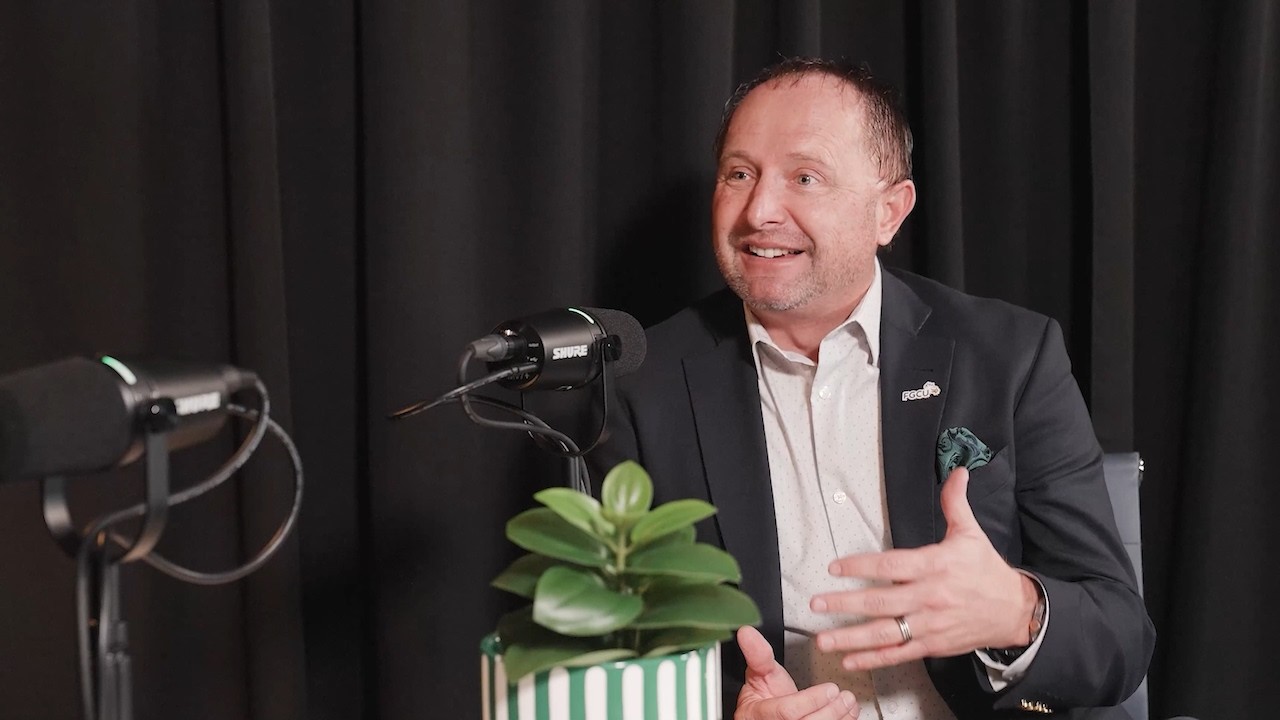
In this episode of Your University: The FGCU Podcast, host Katie Cribbs sits down with Shawn Felton, Dean of the Marieb College of Health & Human Services, to discuss the college's growth, community impact, and the technology shaping the future of healthcare training in Southwest Florida.
Shawn traces the Marieb legacy from Dr. Elaine Nicpon Marieb's first gift in 2012 to FGCU's largest-ever donation — $22 million from the Marieb Foundation — and how that investment is fueling a new 22,000-square-foot simulation center, immersive Disaster Day training, and the next generation of healthcare practitioners for the region.
Available on:


Available on:
Episode 7:
Transforming Healthcare in Southwest Florida With Dean Shawn Felton
In this episode of Your University: The FGCU Podcast, host Katie Cribbs sits down with Shawn Felton, Dean of the Marieb College of Health & Human Services, to discuss the college's growth, community impact, and the technology shaping the future of healthcare training in Southwest Florida.
Shawn traces the Marieb legacy from Dr. Elaine Nicpon Marieb's first gift in 2012 to FGCU's largest-ever donation — $22 million from the Marieb Foundation — and how that investment is fueling a new 22,000-square-foot simulation center, immersive Disaster Day training, and the next generation of healthcare practitioners for the region.
-
Episode Guide
Toggle More Info02:21 How Marieb College Got Its Name
06:04 Record Gift and AB10
08:43 New Building Expansion
11:01 Community Clinical Partnerships
14:39 Labs and Simulation Growth
16:51 Holograms and New Immersive Tech
18:59 Disaster Day Simulation
23:09 Shawn’s Background in Sports Science
26:45 Final Takeaways and Visit
-
Transcript
Toggle More Info[00:00:00]Shawn Felton: So, it's a living laboratory. And we would not be where we are without all of our clinical partners. It's a relationship that, as they invest their time in training our students, they're winning as well because they're coming to work for them at their hospital or not-for-profit organization.
[00:00:25]Katie Cribbs: This is Your University: The FGCU Podcast, where we talk to the people on campus making a difference in the Southwest Florida community and beyond. From research and the arts, to student success and athletics, we are uncovering the stories impacting you. I'm your host, Katie Cribbs.
The healthcare industry continues to be one of the fastest growing sectors in the nation. And here in Southwest Florida, it’s our region’s largest employer. Joining me today to talk about how Florida Gulf Coast University is preparing to fill those roles is Dr. Shawn Felton, Dean of the Marieb College of Health & Human Services here.
Shawn, welcome to the show!
[00:01:06]Shawn Felton: Katie, thanks for having me. I'm really a big fan of the podcast thus far. I know I got big shoes to fill after watching Win Everham come through, but I hope I can live up to the expectation. But really excited to be here with you all today.
[00:01:18]Katie Cribbs: I know. Founding faculty member, right?
[00:01:20]Shawn Felton: He was. I came in 2005, so a few years behind.
[00:01:24] Katie Cribbs: Yeah. And that's okay. We were still really, really growing back then.
[00:01:27]Shawn Felton: We were, and it's been really a lot of fun here at FGCU and to see the university grow. I just actually had lunch with Roy McTarnaghan a couple weeks back. We were reminiscing from all the days of him beginning the university to his support of me as a Faculty Senate President, Board of Trustees member, and it was just a lot of great reminiscing, and then Roy's just as sharp as he has ever been. So, it was a lot of fun.
[00:01:51]Katie Cribbs: And for people who don't know Roy.
[00:01:52]Shawn Felton: Roy was our founding president here at Florida Gulf Coast University. And if you walk around campus, you may find his name on one of our buildings, McTarnaghan Hall.
[00:02:01]Katie Cribbs: You may. Right, yeah. Definitely will.
[00:02:02]Shawn Felton: You may. You've got to find it. We'll do a scavenger hunt.
[00:02:05]Katie Cribbs: Yeah, and you should do a scavenger hunt because we do have a beautiful campus, and if you haven't been here, you need to get here.
[00:02:10]Shawn Felton: It is, wakes to one of the most beautiful things each day coming into campus. Just very inviting, and those days when maybe it's not the best day, you get outside, and you get right back in a great mood here at FGCU.
[00:02:22]Katie Cribbs: Well, speaking of names, we have a beautiful story behind Marieb College, the name. Can you go ahead and fill us in on how it became Marieb College?
[00:02:31]Shawn Felton: Absolutely. You know, it was a great opportunity. Dr. Elaine Nicpon Marieb, she was a textbook author, mostly anatomy textbooks, and she got connected to our university, your university, in 2011 as we were building the then-building Academic Building 8. We have a fun way of naming buildings around here at FGCU, AB8, moved to AB9, The Water School, and now we're moving into AB10. We'll get into that in a little bit.
But it was AB8, and then we moved in January of 2012. And shortly right after, she provided a $5 million gift, for scholarships for non-traditional students. And AB8 quickly became Marieb Hall. She continued to grow with us. Then again in 2017, she renamed the college to the Marieb College of Health & Human Services with another $10 million endowment gift. And she saw our potential. She went on to receive an honorary doctorate degree here from FGCU, and unfortunately, you know, she passed about a year after that.
But her legacy lives in everything we do each day. I tell the faculty, I tell the students, as you walk through Marieb College, you will feel her presence. Each year, we pause, just for a moment, to remember Elaine in what we call Marieb Day. We do a phenomenal art show. And then that morning, or actually that afternoon, we had a luncheon with many of her scholarship recipients, and you could just feel her presence. So, we, you know, we try to make Elaine proud each day. And I think we are, and it's really exciting for her vision with us. I mean, we were still, kind of, a startup health college back in 2012. And she saw our potential and she invested, so each day we try to make her proud.
[00:04:04]Katie Cribbs: Yeah, it's super interesting to me, someone who really had no connection to building this university up from the beginning, you know, before 1997, when it was just a glimmer in our eyes in Southwest Florida. But she heard about us. She came to check it out and she was impressed. She saw something.
[00:04:20]Shawn Felton: She saw that opportunity, that vision, and our outcomes. And she wanted to invest, and we are a much better college, much better university with her investment. And we thank her still today.
[00:04:31]Katie Cribbs: And I want to go back a little bit to Marieb Day. You said you brought in art, right, to help celebrate. We just had a student on here in art and biology, double major, and talking about how they really do intertwine. And it sounds like they really do in the Marieb College.
[00:04:48]Shawn Felton: They do. And we have a great faculty member, Dr. Valerie Weiss. She's a physician by trade, but she's also a medical illustration artist, and we've actually launched a minor this past fall, fall '25, in a medical illustration minor. And she had done this in the past as just a class, an honors course, and it really does connect the student with learning by being able to visualize.
It is really fascinating, these pictures that these students put into play anatomical imagery, and it's just absolutely beautiful. When we started this about six years ago, we had 30 pieces of art, this past week, over 130 pieces of art that is designed by the students. We provide awards for them, and it just is really a great connection between healthcare, art, and really what Elaine was all about.
[00:05:37] Katie Cribbs: And when you walk into Marieb Hall, you will see artwork.
[00:05:41]Shawn Felton: You see pictures of art that was in her textbooks, beautiful sandstone sculptures. And as I said, the building's beautiful. But it's really Elaine's legacy that we live each day as we prepare the workforce for Southwest Florida. We're all going to need healthcare sooner or later, and I just hope all the grudges that students have against me will be taken care of when they treat me out in our hospitals and clinics here.
[00:06:05]Katie Cribbs: I'm sure. So, I do want to continue on with the Marieb legacy a little bit because not too long ago, FGCU received its largest monetary donation in its history, $22 million again from the Marieb Foundation. Can you explain what that money's going to go to?
[00:06:27]Shawn Felton: We are really trying to move emerging technology, training our students for what they're going to face in healthcare today, you know, obviously with AI, training, we're really trying to be on the cutting edge so that our students are prepared for the workforce and really support Southwest Florida and beyond after that.
[00:06:43]Shawn Felton: So, when I went to them, you know, we were explaining this is where we need to go. And that's when the gift of $22 million is coming forward. And it will name AB10. But I think it just really shows the commitment once again of really carrying Elaine's legacy for almost 15 years now.
Next year will be 15 years since she was introduced to the institution and provided that first gift. And for them to continue to believe in what we're doing, and for it to be the largest monetary gift, I think says a lot about that support. But it also says what the Marieb College of Health & Human Services is doing for our community. Ensuring that we have the practitioners, both clinical and nonclinical, that's going to support everyone here in Southwest Florida for the place that we love, and make sure that we have the right healthcare as well.
[00:07:30]Katie Cribbs: We must be doing something right.
[00:07:31]Shawn Felton: We have a lot of great faculty and staff that helps out as well. So, yes, we are doing some good things.
[00:07:36]Katie Cribbs: So, let's back up a little bit because you mentioned AB10. So, when we take a look at the Marieb College, you've got rehab science, counseling, social work, health sciences, and the School of Nursing. Am I missing anything?
[00:07:51] Shawn Felton: You're missing probably one of the big ones is our Counseling and Psychological Services that supports the entire student body. So, typically, that is found in student affairs. When former President Martin was still here, CAPS was relocated into Marieb College, and we've built some really strong synergies around that. We've had some joint hires where we've been able to hire both a clinician and then also hire an academician as well. So, really, kind of, blending practice with education, having our students being placed in CAPS.
We're in the process. It'll be launched this fall, providing a new school of combining counseling, CAPS, and social work together. I've hired a new school director this past fall, Dr. Chih-Chin Chou. She comes to us from University of South Florida. So, once again, we're really trying to address the behavioral health needs, not only on our own campus, but across Southwest Florida where they're vastly needed as well.
We're quite busy now with a new building. We'll have some opportunities for growth as well.
[00:08:49]Katie Cribbs: And thank you for that transition because when you take a look at all of these departments and the growth and the need, not just locally but nationally, and then when you break it down locally, we do have a large retiree population. We do have a growing general population as well. The need for healthcare services is very large, and we've outgrown what we have.
[00:09:11]Shawn Felton: We are at capacity in the current Marieb Hall, and I have faculty and, you know, three or four in an office. They can't wait to move into the new building. We can't get that built soon enough.
But what it will allow us to do is it's truly an expansion project for FGCU and for our College of Health, great support, though, we would not be here without the great support of our legislation, especially our Southwest Florida delegation, both the Senate and the House. And special thanks to, you know, Kathleen Passidomo as Senate President, as she really navigated the opportunity for us to receive the funds for the building.
[00:09:44]Katie Cribbs: Because we're a public state university.
[00:09:45]Shawn Felton: We are, and we are putting your tax dollars at work very well. But it's been great support, and it's because of the outcomes. And it's really exciting that we're being able to produce the type of talent to stay in the area.
Many of our individuals stay in the area, both in the undergraduate and then graduate as students relocate here for grad school and our DPT program, our occupational therapy...
[00:10:07]Katie Cribbs: DPT.
[00:10:08]Shawn Felton: Doctor of Physical Therapy.
[00:10:09]Katie Cribbs: There you go.
[00:10:10]Shawn Felton: My bad. You know, there's more acronyms in higher education than anywhere, so, thanks there, Katie. But occupational therapy, our Doctor of Nurse Practice programs, our Master's of Counseling, our Master's of Social Work, they stay in the area and they find a home and they really contribute to our area to provide the healthcare that's needed.
[00:10:28]Katie Cribbs: Let's talk about that a little bit, because we are a regional comprehensive university, meaning we serve the community. The community came together before 1997 and said, ″We need a university in our backyard." They made it happen. How have you and your colleagues, on campus really gone out into the community to just, to really say, what are your needs? Are we meeting them? How can we pivot to make sure we're continuing to provide those needs? Because we partner with nonprofits, with for-profits to make sure that we are producing those healthcare practitioners.
[00:11:01]Shawn Felton: Yeah. You know, I think the biggest part is we need them as much as they need us as well. And, you know, we do a lot of didactic education, in the classroom, which is great, but our students are with those clinical partners almost more than they are with us at times, and with all of their clinical rotations, internships, field work experiences, whatever that particular program calls that clinical experience.
[00:11:24]Katie Cribbs: But all of it's intense.
[00:11:25]Shawn Felton: Very intense. And we would not be the college we are without those clinical partners. So, that's probably one of the biggest jobs that I have each day as well, is to maintain those relationships with the C-suites of our hospital organizations, all of the nonprofits. But it's not just me, I mean, our faculty, our clinical coordinators, our field work experience coordinators are out there as well making those connections, to where we have over 1500 clinical affiliations, across not just in Florida, but across the U.S., and internationally. We have a few in Puerto Rico and Mexico as well.
We have built that relationship, but I think we've also listened. If you look at all of our programs that we offer, it is in what is needed in Southwest Florida to fulfill the workforce needs. You know, nursing is an obvious one, but physical therapy, occupational therapy.
[00:12:12]Katie Cribbs: That's huge.
[00:12:12]Shawn Felton: We have built the programs that is needed by the workforce here. As you noted, the partnership with the not-for-profits, the other large organizations, our relationship with Arthrex has just strengthened over the last six to seven years. Very engaged with them, related to our medical device industry course that I still get to teach. They keep my teaching career alive here as dean.
But in seriousness, the opportunities that that class, that badge and micro credential that a student receives will guarantee them an interview with Arthrex.
So, to that point, as a regional comprehensive institution, we serve our region, our five-county region. We're doing great things here, and now we're becoming more statewide known and nationally known for what we're doing. And it's just a beautiful opportunity. I've been other institutions and other places, but the relationship that this university has with its local community is one that, I don't think, is paralleled anywhere.
And to your point, individuals knew we needed a higher education institution here, and we've grown together with our community, and it's been exciting to see that connection, you know, as you walk around campus here, there's not many alumni names on buildings. It's community partners that saw our opportunity, invested in us. And now, as a 28-year-old institution, we're giving back in ways that is making it the greatest place to live and work here in Southwest Florida.
[00:13:39]Katie Cribbs: And, you know, I didn't realize when I first came on board with the university that a lot of the instructors in the college, they give of their time and actually work within the community one day a week.
[00:13:53]Shawn Felton: Many of those are required from their own licensure requirements. Specifically, nurse anesthesiology, it requires you to maintain clinical practice.
But it also allows our students to be learning still from people that are practicing in their profession, you know, and they're very relevant. So, they're coming from the clinical experience right into the classroom. And not for nothing — we have several great adjuncts that are still in clinical practice that come back and provide those other experiences for our students as well.
So, it's a living laboratory. And we would not be where we are without all of our clinical partners. It's a relationship that as they invest their time in training our students, they're winning as well because they're coming to work for them at their hospital or not-for-profit organization.
[00:14:40]Katie Cribbs: Speaking of living laboratory, I think Marieb Hall has some of the best lab spaces on campus. Some, because we have amazing lab spaces all over our campus, and I...
[00:14:50]Shawn Felton: Yes. I'm a little biased, though, yes.
[00:14:52]Katie Cribbs: I'm not going to play favorites, but we do have cutting-edge technology in these, giving them that real-life experience before they go and treat actual live patients.
[00:15:03]Shawn Felton: Absolutely. And we've really evolved, you know, I can tell a little story, you know, when I got here in 2005, we had a hospital room. We had a hospital bed. We were sharing that between Nursing-
[00:15:16]Katie Cribbs: One.
[00:15:17] Shawn Felton: One. “A.” We were sharing that between nursing, physical therapy, occupational therapy. At the time, we had an athletic training program. That's where I came involved. That's my background, athletic training, sports medicine.
And we would get into this room and have to share. And we were in Ben Hill Griffin building. I remember carrying tables that folded up into classrooms, in now what's Merwin Hall. And we had moved desks out of the way and put the tables up to do orthopedic assessment.
So, to see how we've grown from a single room, and we were still training people greatly there, and we made it work, to where we've moved into Marieb Hall, as you alluded to, with all the dedicated lab space specifically designed for the training and the great education that the students are receiving, to now moving to AB10 as we design that building. The whole second floor is going to be designed to be a about 22,000-square-foot interprofessional simulation center. So, we're just elevating that even more, the training opportunities that the students will have.
I will be putting these educational resources up to anyone that has a medical school. It'll be beyond that. And we're just really thankful for all the supports, both from the philanthropic support of the Marieb Foundation, the state support. But, yeah, it's a really exciting piece, Katie.
[00:16:37]Katie Cribbs: Let's talk about some of that technology a little bit. You've got some really cool gadgets right now. I know you are going to get some more, and you're building out to then also, in the new building, not only put that newer technology, but then expand it as it becomes available.
[00:16:52]Shawn Felton: Absolutely. And I think, you know, one challenge that we talked about clinical partners is the training in the clinic side. You know, hospitals get very busy. It's another burden, training students. So, we're trying to do as much as we can to have them, you know, clinical-placement-ready, job-ready in the classroom.
So, one technology that we're really excited about, which we have purchased, we've got it crammed in rooms right now, is our hologram technology put out by Proto. And we have a studio where we can record individuals and then live beam them into the hologram.
But what's even more exciting is that out in a clinical setting, we'll be able to record patients that we see. Now, make sure that we're following HIPAA. We're not going to violate anything here, or patient's rights.
[00:17:35]Katie Cribbs: Right.
[00:17:36]Shawn Felton: But we'll be able to record these individuals and create a, if you will, a file system of patients so that every student that comes through nursing, physical therapy, occupational therapy will be able to be exposed to that same patient, where prior to this technology, we would have to bring that patient into the lab setting to be viewed.
And that can be challenging, you know, especially with some special populations, maybe individuals that have some, you know, antalgic gait or some challenges with walking or whatnot. And so, here, though, we'll be able to build a file system.
[00:18:08]Katie Cribbs: And you can go to where they are.
[00:18:09] Shawn Felton: And go to where they are and bring that to our students, and it's very exciting. We can do neat talks as well. We can live stream a speaker from around the
world through the hologram. So, it's going to revolutionize areas. I think the immersion rooms that we're going to place into the new sim center as well, to really make you feel like you're in an OR with the smells and the sounds is going to be phenomenal.
And really just upping our game with simulation and, you know, having a dedicated director now, Dr. Joe Buhain. He's an expert in this area, and we build his staff out. It allows our faculty to do what they're great at, obviously teaching and assessment, and not have to worry about getting the labs up and running. And we can have an expert running those labs so that we are further training our students to the highest quality.
[00:18:59]Katie Cribbs: Speaking of Joe Buhain, he has started something on campus the past couple years, Disaster Day.
[00:19:05]Shawn Felton: It's not a disaster.
[00:19:06]Katie Cribbs: It is not a disaster. It is a simulation-
[00:19:09]Shawn Felton: Correct.
[00:19:09]Katie Cribbs: ... and something, it’s not 3D, it’s not AI. It is really simulating real life using actors on campus, using our campus partners and using our partners out in the community to come in and simulate a potential disaster and how would we respond, and really training those students. And something I found interesting is one of your research pieces or presentations, you talked about moulage and its importance in simulation and training, and what is moulage?
[00:19:40]Shawn Felton: Moulage is essentially makeup, fancy word for that, but to make it authentic.
[00:19:44]Katie Cribbs: Injury makeup, right?
[00:19:45]Shawn Felton: Injury makeup, absolutely.
[00:19:46] Katie Cribbs: To look real.
[00:19:48]Shawn Felton: It's authentic. You know, from those days of the Friday the 13th and the Freddy Krueger movies, we have some really good Hollywood individuals here that can make a wound look very authentic.
What Joe's doing with our art patients and creating authentic patients has been just a great opportunity for the campus community.
Our local EMS has been engaged. The Florida Guard's been engaged. Last year, we had the,you know, emergency response team from the state level was engaged. You know, when Joe came, he's like, ″You know, Shawn″ and his supervisors, Dr. Beth Murray, our associate dean in the college,″ he is like, "I want to do this interprofessional simulation experience." And we're like, "Okay, Joe, you know, you're new. Go ahead and get started."
We had 800 people here the first year.
[00:20:32]Katie Cribbs: Huge.
[00:20:32]Shawn Felton: It was huge. And I'm like, "All right, we got a little big." And he goes, "Well, I did something I researched..." I think it was Texas A&M or Texas Tech, one of the Texas schools, "And I essentially got a lot of their playbook, and I'm going to add on to that." I'm like, "Joe, we can just pilot it here, and it went off without a hitch. Great engagement from everyone.
[00:20:50]Katie Cribbs: It was smooth in terms of disasters-
[00:20:52]Shawn Felton: Correct.
[00:20:52]Katie Cribbs: ... and how disasters go, but again, it was a simulation, and it really felt authentic.
[00:20:56] Shawn Felton: It is a very authentic experience, and that's what's important is, you know, for simulation to function and work, you have to suspend that, you know, disbelief, and you have to be engaged in that opportunity. And that's what he's created. This past year, once again, you know, Lee County EMS, they had the helicopter land on the fields.
I know probably UPD and all of our campus partners, they're like, "Well, here comes Joe." But no, in seriousness, everyone on this campus comes together for the day. The alerting of the local community is important because, you know, we don't want the 911...
[00:21:28]Katie Cribbs: The ambulances, yeah.
[00:21:29]Shawn Felton: Yeah, we don't want to see the 911 system get overloaded that day. But, you know, a lot of great work from the comms team to UPD to make this work, to create such an authentic experience for our students, our faculty, and our staff.
[00:21:40]Katie Cribbs: It's something they could experience here. We've seen it, Irma, Ian, our hurricanes, right? And so, we can, and we do experience large-scale kind of disaster events that could potentially lead to a very large medical so, making sure they know what to do when they're prepared is truly important.
[00:21:59]Shawn Felton: It's critical. I mean, those type of days, you know, no pun intended with disaster, they're very chaotic. And part of the learning is you're not, everything's going to be planned out in a, you know, an educational plan that day, and you got to, kind of, roll with the flow and really understand.
And then after that, they debrief and describe, "Hey, what went well, what didn't go well? Why did you triage that patient? Why didn't you triage that patient?" And it's a great, great learning experience that we'll continue. I think he's got a date for November 2026 already. And then we really want to add to that, from moving it from an on-the-field type experience disaster, then to relocate into a hospital setting as well.
So, stay tuned because we may be turning Marieb Hall into Marieb Hospital for November 2026.
[00:22:45]Katie Cribbs: , but I feel better as a citizen knowing that the students that we are training really have the experience needed to work in that real-world environment.
[00:22:54]Shawn Felton: And I think that's the crux of what we do, not just in the Marieb College, but I think you look across campus, our students are engaged with our community. They're getting authentic, real-life experiences, and I think that's the FGCU difference here. And we wouldn't be there without our community.
[00:23:09] Katie Cribbs: So, let's go a little bit into your background, athletic training.
[00:23:12]Shawn Felton: Yes.
[00:23:13]Katie Cribbs: Were you always interested in sports? Were they always important to you?
[00:23:16]Shawn Felton: They were. You know, I'm an only child, so, you know, I grew up with a lot of expectations on myself.
[00:23:22]Katie Cribbs: In West Virginia.
[00:23:23]Shawn Felton: In West Virginia, absolutely, small-town West Virginia. So very proud to have, you know, moved from there to here. Never thought I'd be a dean by no means, but sport was very important. Not forced by my parents or whatnot, but I, you know, I played baseball, I wrestled some, and it was an important as a structure.
And then as I got into athletic training, sports medicine, being around Division I football for several years, I think, really shaped me as a person. It showed that you always got to continually work hard to get where you need to go. You know, whatever happened on Saturday was great for last Saturday, win or lose, but how do you pick yourself back up and move forward? And I think that's how I face most things each day, you know, we give it 100% our efforts, but not everything goes right.
And, you know, how do we learn from that and move on? And that's important in healthcare. Because, you know, there are going to be events that don't go as planned, and then you sit down, debrief with your team, and how do you move forward? And I think that's just something, a good lesson in life, that, you know, a person once told me, you're never as bad as you are, you're never as good as you are, but just keep working hard, and, it'll continue to evolve.
[00:24:26]Katie Cribbs: What have I left out that you want our viewers and listeners to really take away from this conversation today?
[00:24:33] Shawn Felton: Well, I think that hopefully they see the passion that we have here for our university and their university. I think the other aspect is that the Marieb College of Health & Human Services is very proud to produce the type of graduates that we produce. They're not one person producing them. We have phenomenal faculty and staff that come to work daily and strive daily to make that happen.
And we're also proud to watch our students, you know, come across the finish line, come across the graduation platform, and then come and take real critical jobs here in Southwest Florida, that's going to further drive the community that we love and live in. I mean, I've been down here since now 2004. I did have a little one-year hiatus over to Florida International University, but we stayed in Southwest Florida. We found a home here. And so, everything we do each day is to make this home the best place for everyone here in Southwest Florida.
[00:25:27] Katie Cribbs: And that's what this university, your university, is all about, right?
[00:25:30] Shawn Felton: Absolutely, absolutely. It's exciting.
[00:25:32] Katie Cribbs: It is super exciting. Y, I really challenge everybody, next time they go into any sort of doctor's office, healthcare office, whatever it may be, ask how many of the people that work there are FGCU graduates, because I think they'll be surprised.
[00:25:46] Shawn Felton: Yes. I think, you know, as you age, you all have to do preventative procedures. And at my most recent preventative procedure, there were two FGCU grads there, and so one was a former student. So, it's exciting to know that we've well-trained, you know, people throughout our college has had that same experiences as well.
And as I said, they're taking jobs here and taking critical jobs here in Southwest Florida. And we're everywhere. And not just within the college, but across our campus and all of our colleges. It's exciting that we're really meeting a need here in Southwest Florida, and to see what FGCU has done for our area, it's been one of the largest drivers ever. It's a story in itself.
[00:26:27] Katie Cribbs: So, come on out to campus, see what we're doing. Take a look at Marieb Hall, see the artwork. Take a walk along Academic Row, see the names on the buildings. Learn more about it. How else can you tell people to get involved?
[00:26:40] Shawn Felton: I would just suggest come by over the next two years as we're building AB10. That's going to be fun to see that come out of the ground. The ground's, you know, cleared right now. It's going to be next to the art complex.
So, grab an art show and take a peek at where the building's going to go and keep coming out and seeing it grow. It's a history-making.
[00:26:57] Katie Cribbs: I love that, history-making. We're still growing, we're still expanding, and we're still breaking new ground. Shawn Felton, Dean of the Marieb College of Health & Human Services, thank you so much for being here.
[00:27:08] Shawn Felton: Katie, it was my pleasure. Thank you so much as well.
[00:27:12] Katie Cribbs: Thanks for listening to Your University: The FGCU Podcast. We’re proud of our connection with the Southwest Florida community and can’t wait for you to explore all we have to offer. Learn how to engage with us by visiting FGCU.edu/YourUniversity.
-
Show Links
Toggle More Info
Join 100K+ FGCU360 subscribers for monthly campus news, alumni stories & upcoming events.
Thank You for Subscribing