
Master of Occupational Therapy
Occupational therapy is a dynamic health profession that helps people participate in the everyday activities that are meaningful and important to them. These activities, or occupations, include caring for oneself and others, learning, working, playing, and engaging in community life.
- Occupational therapists use evidence-based, client-centered, and occupation-based approaches to promote health, well-being, independence, and quality of life. They partner with individuals, families, groups, and communities to address barriers to participation and support engagement in meaningful activities across the lifespan.
- Consistent with American Occupational Therapy Association Vision 2030, occupational therapy practitioners strive to enrich life for all individuals and society through meaningful engagement in everyday activities while advancing innovative practice, leadership, and advocacy.
The Master of Science (M.S.) in Occupational Therapy is a full-time, in-person program that spans six academic semesters, including 24 weeks of fieldwork education, and prepares graduates to practice as entry-level generalists in the profession of occupational therapy.
It is fully accredited by the Accreditation Council for Occupational Therapy Education (ACOTE). Students are required to obtain and utilize a broad liberal arts education prior to entry into the professional program. The M.S. in occupational therapy program prepares students to function in a wide variety of settings, utilizing principles and intervention approaches related to occupation, and to supervise occupational therapy support personnel.
ACOTE® accredited occupational therapy and occupational therapy assistant educational programs satisfy the states’ educational requirements in all states, the District of Columbia, and Puerto Rico. Students graduating from an ACOTE® accredited occupational therapy and occupational therapy assistant educational program are eligible to take the National Board for Certification in Occupational Therapy (NBCOT) certification exam and apply for licensure in all states, the District of Columbia, and Puerto Rico. For more information regarding state qualifications and licensure requirements, please refer to the AOTA State Licensure webpage.
-
Accreditation
Toggle More Info -
Admissions Application Process
Toggle More Info -
Admissions and Curriculum Information
Toggle More Info -
Course Descriptions
Toggle More Info -
Course Schedule
Toggle More Info -
Learning Outcomes
Toggle More Info -
Tuition, Fees, and Financial Assistance
Toggle More Info -
Gulf Coast Student Occupational Therapy Association
Toggle More Info -
Fieldwork Resources
Toggle More Info -
Admissions and Curriculum Information
Toggle More Info

MEET THE occupational therapy TEAM SUPPORT OUR occupational therapy PROGRAM
Any Suggestions? Let Us Know How We Can Improve!
Why Choose FGCU's Occupational Therapy Program
Students select the FGCU occupational therapy program for a variety of reasons. However, the program's most distinctive elements are:
-
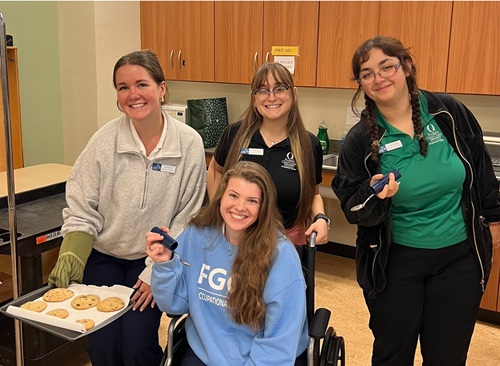
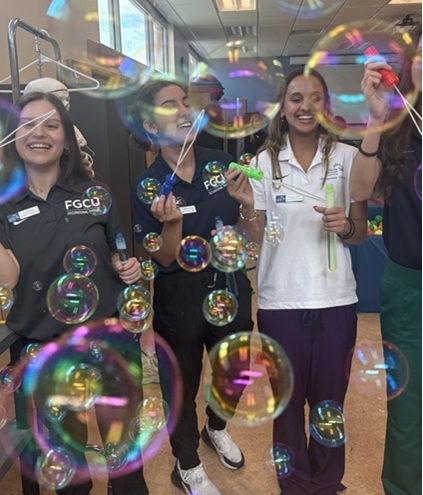
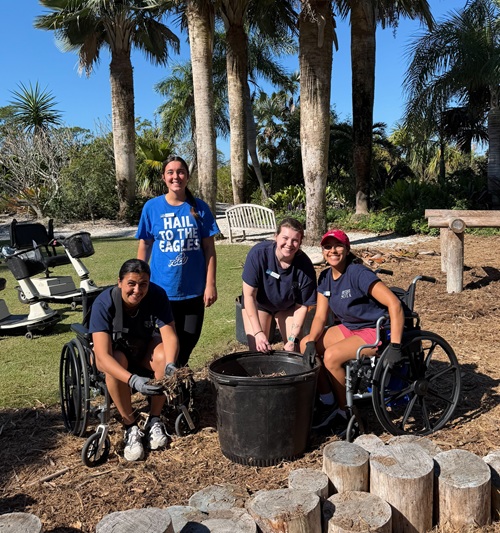
Knowledge, skills, and abilities taught in a hands-on environment from a variety of faculty and clinical preceptors in the classroom, laboratory, and clinical education setting.
-
Board of Certification: 100% Overall Pass Rate for the past 11 years!
-
Students are engaged in simultaneous classroom and clinical education allowing the seamless acquisition of knowledge and skill development.
-
Development of competency to practice in an evidence based manner.
In addition to the above reasons, students learn in an atmosphere that is conducive to learning in state-of-the-art laboratories and classrooms with small class sizes. Finally, high level students have also enjoyed the opportunity to work on faculty projects and research.


