This website stores cookies on your computer to improve your browsing experience.
The university does not collect personal information as you browse. Learn about our
Privacy and GDPR statements.
Explore what makes our campus unique and how to visit. Meet our leadership team and
learn about our history, mission, values, accreditations, and policies.
Start your path to an undergraduate or graduate degree by exploring programs taught
by world-class faculty. Find all the resources and support services to ensure your
academic success.
Apply for undergraduate or graduate admission and explore financial aid options to
support your goals. Get an early start through our Accelerated Collegiate Experience.
Discover state-of-the-art residence halls, dining, student organizations, health services,
recreation, and more. Grow through service-learning programs and leadership opportunities.
FGCU is actively engaged with Southwest Florida through cultural activities, educational
programs and exciting athletics. We’re also home to WGCU Public Media.
The Lucas Center for Faculty Development promotes excellence and innovation in teaching
and learning at FGCU. We offer programs for new faculty and their seasoned colleagues
that aim to transform classrooms and careers. While most of our initiatives are targeted
to faculty, we offer a robust selection of programming that supports, facilitates,
promotes and advances best practices within our diverse learner-centered campus community.
Academies
COURSE DESIGN ACADEMY
Participants will meet to explore learner-centered design principles, discuss ideas
in small learning teams, and collaboratively design more intentional, transferable,
and transformative learning experiences. Throughout the week, participants will experiment
with AI-supported design strategies and engage with student partners to reflect on
how course design decisions shape the student experience. The goal is for participants
to end the week with new and improved courses designed to engage all students and
promote their success.
Who Should Attend? Faculty, instructors, and instructional staff who are designing or revising a course
and are interested in learner-centered course design, student perspectives, and thoughtful
experimentation with AI tools.
Participants will learn about the Transparency in Learning & Teaching (TILT) framework
& apply it in the revision or creation of an assignment they plan to use in an upcoming
semester. Greater transparency has been shown to improve the quality of students’
work & improve success.
Who Should Attend? Faculty, instructors, and instructional staff who would like to revise or strengthen
an assignment and are interested in clearer expectations for students, thoughtful
assignment design, and collegial feedback on teaching practices.
Participants will engage in a week-long mentored experience designed to aid in the
development of an organizational framework for an upcoming promotion portfolio. Feedback
is intended to help you showcase your strengths & accomplishments & offer guidance
on how to organize your portfolio to meet university standards. Full-time faculty members are eligible to participate.
Who Should Attend? Full-time faculty planning to submit a promotion portfolio within the next one to
two years who would benefit from structured time, mentorship, and guidance on organizing
and presenting their accomplishments in alignment with university standards.
Peer observation of teaching is a supportive and developmental process to encourage
dialogue about teaching among collaborative peers. Research suggests that the peer
observation process can benefit the teaching of both observer and observed (Hendry
& Oliver, 2012). Therefore, by participating in this workshop you will 1) increase
your capacity to provide a valuable service to your peers and the university, and
2) engage in professional development to enhance your own teaching.
The Adjunct Academy is a professional development opportunity for adjunct instructors
who are in good standing with their department and have taught for two consecutive
years at FGCU. The purpose of the Adjunct Academy is to provide evidence-based pedagogy
training to adjunct instructors who wish to enhance their skills and knowledge in
teaching and learning best practices. Upon completion of all components of the Adjunct
Academy compensation will be increased by $700 per three credit hour course. Note: this academy will be available twice per academic year, depending on demand.
Over a 12 month timeframe, the following components must be completed:
Four two-hour, in-person pedagogy workshops, (including preparation for each session
and a post-session assignment to be submitted on Canvas).
Completion of Canvas online workshop
Participation in one additional Lucas Center or Digital Learning academy or program
OR three single session pedagogy workshops/presentations.
One peer observation of teaching, documented by an observation report written by the
peer observer.
These academies are available according to faculty/staff interest.
EARLY CAREER ACADEMY
Climbing the Ladder to Successful Teaching, Scholarship and Service
Since the inception of the New Faculty Academy, we have had requests to develop similar
experiences for faculty members who have been at FGCU for some time. The Lucas Center
for Faculty Development has developed an annual academy to support faculty at early
career (Instructor I, Assistant Professor, Assistant Librarian). The topics we cover
and the tools we will provide will prepare, lead, guide, and challenge you to define
your goals for the next 3-5 years, to support the attainment of your goals and identify
how to integrate the three areas of faculty work with your personal and professional
life. Imagining what your career can look like will prepare you to be an agent for
your own growth and development. We hope you join fellow faculty members as they explore
and plan their future career path.
ESTABLISHED CAREER ACADEMY
Managing your Career as Running a Marathon: Reflection & Transformation
Since the inception of the New Faculty Academy, we have had requests to develop similar
experiences for faculty members who have been at FGCU for some time. The Lucas Center
for Faculty Development has developed an annual academy to support faculty at established
career (Instructor II & III, Associate Professor/Associate Librarian, Professor/University
Librarian). The goal of this academy is to maintain instructional vitality, explore
the role of advocacy and leadership, and to develop ways to engage in the reciprocal
nature of mentoring. You will participate in a community of scholars and collaborate
with a colleague across disciplines.
Book Clubs
Book Clubs are scheduled for fall and spring terms. Faculty and staff members can
sign up for one club and must commit to reading assigned pages and participating in
every discussion. The Lucas Center provides a copy of the book for participants to
keep.
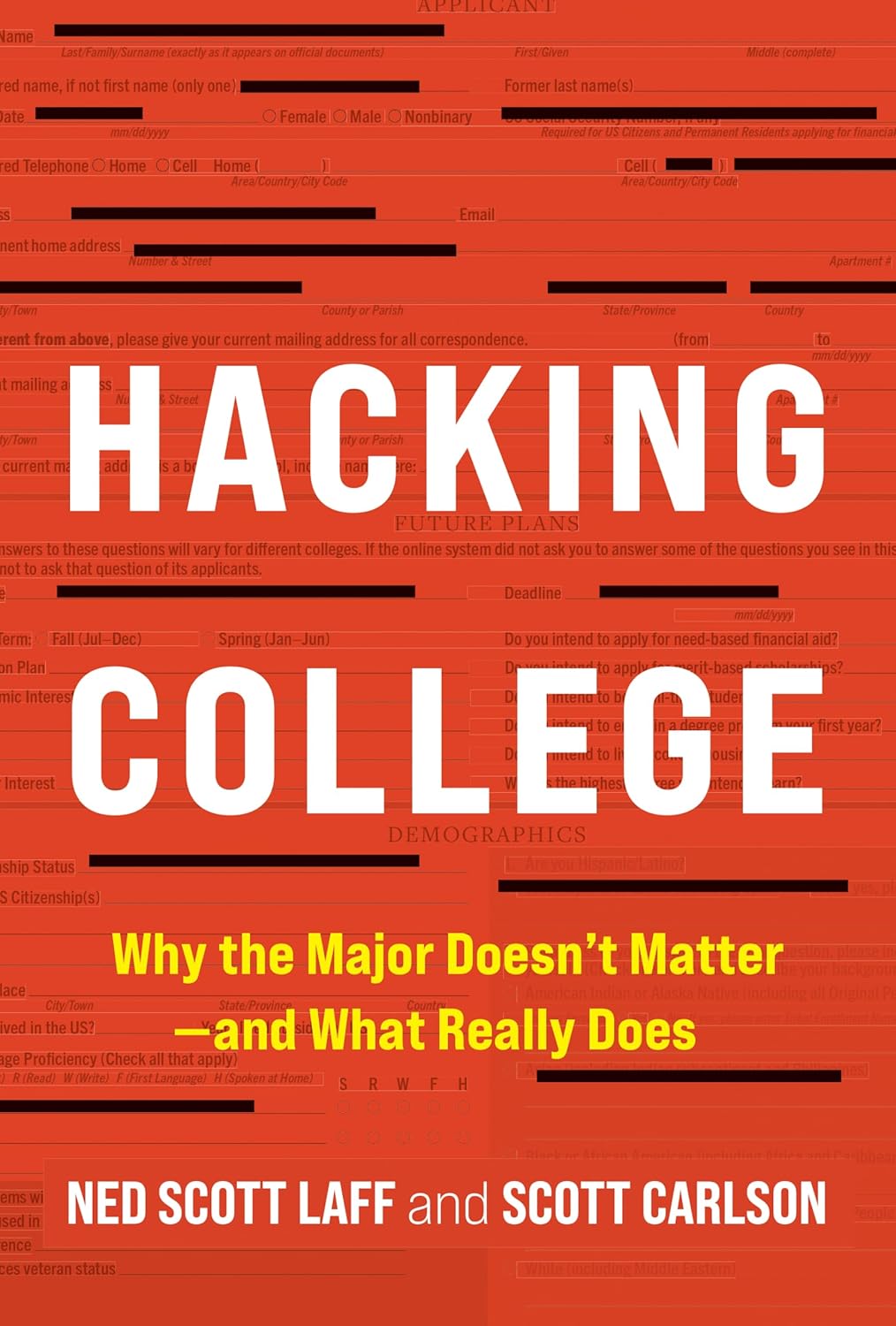
Hacking College: Why the Major Doesn't Matter—and What Really Does
By: Ned Scott Laff & Scott Carlson
Hacking College offers practical, student-centered strategies to help learners navigate the expectations
of college more effectively. The book focuses on building habits, mindsets, and approaches
that support academic success, from managing time and engaging in class to making
use of campus resources and feedback.
Facilitated By: Glenn Whitehouse Dates: Tuesdays: 9/8, 9/22 & 10/20 Time: 12:00p-1:00p Location: Lucas Center (LIB 221) Modality: In-Person
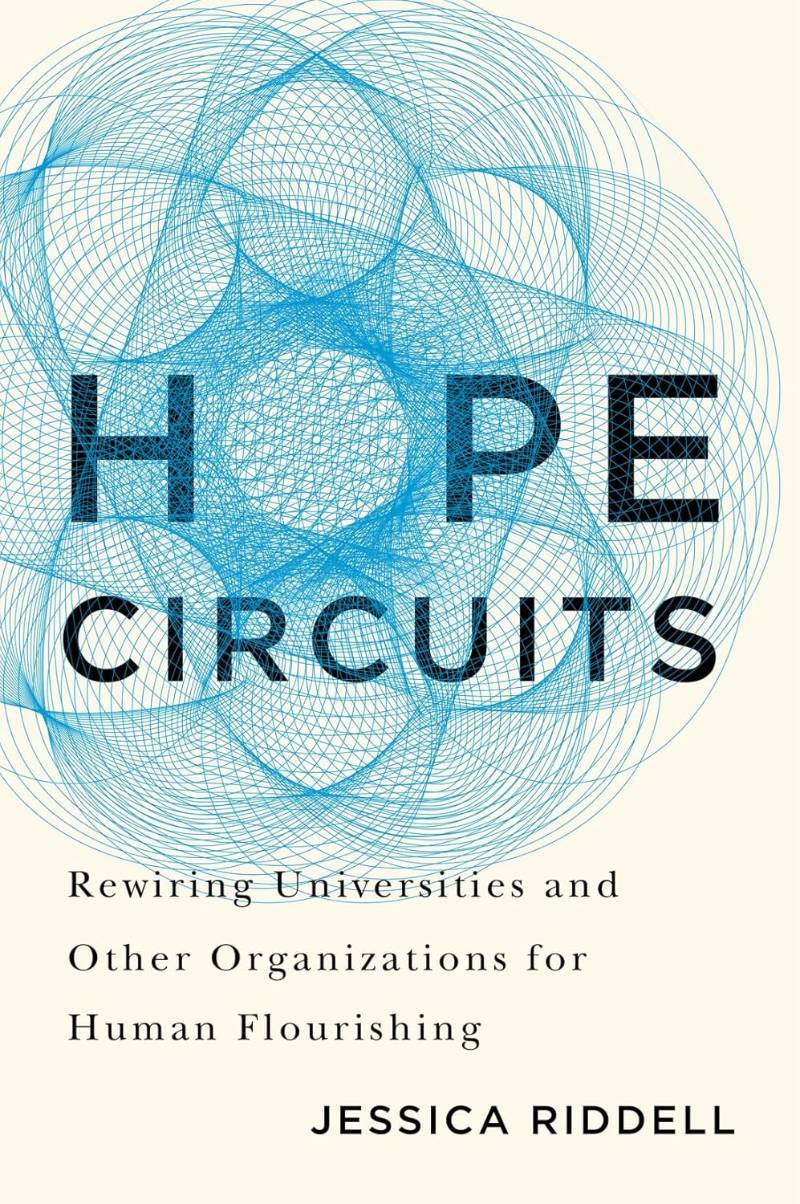
Hope Circuits: Rewiring Universities and Other Organizations for Human Flourishing
By: Jessica Riddel
Hope Circuits explores how higher education can foster abundance, generosity, and meaningful change
even in times of constraint. Drawing on research, interviews, and lived experience,
the book offers practical tools to support more intentional, hopeful approaches to
teaching, leadership, and institutional transformation, encouraging educators to rethink
systems and practices in ways that promote equity and sustainability.
Facilitated By: Laura Frost Dates: Mondays: 9/14, 10/5 & 11/2 Time: 2:30p-3:30p Location: Lucas Center (LIB 221) Modality: In-Person
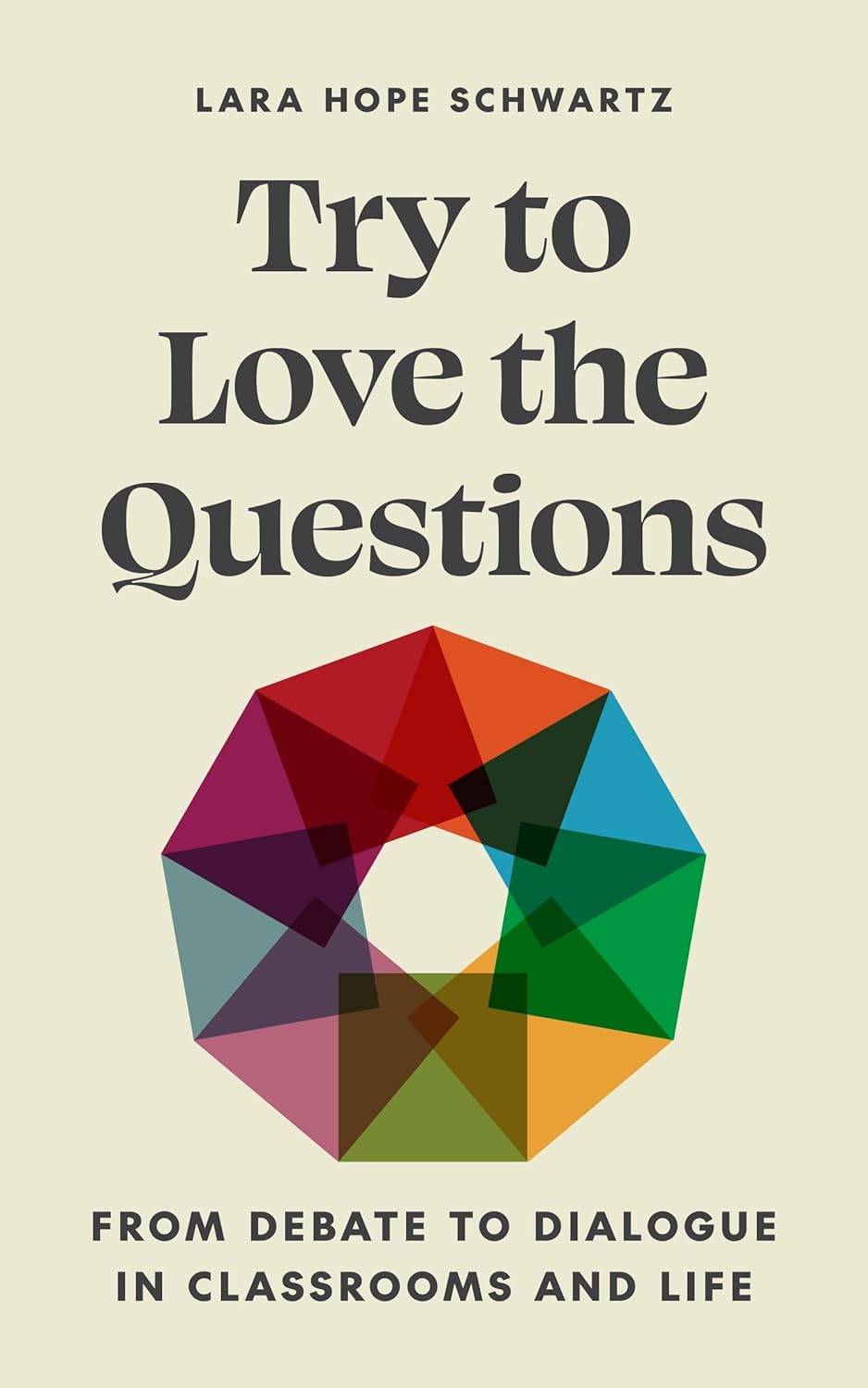
Try to Love the Questions: From Debate to Dialogue in Classrooms and Life
By: Lara Schwartz
Try to Love the Questions offers a practical framework for engaging in thoughtful, respectful dialogue across
difference in college settings. The book introduces key principles of free expression
and academic dialogue while encouraging a mindset of inquiry, helping students and
educators develop the skills to listen, communicate, and learn with openness and integrity.
Facilitated By: Maggie Hohne & Ney Arias Dates: Tuesdays: 9/15, 10/13, 11/3 & 11/17 Time: 11:00A to 12:00P Location: Lucas Center (LIB 221) Modality: In-Person
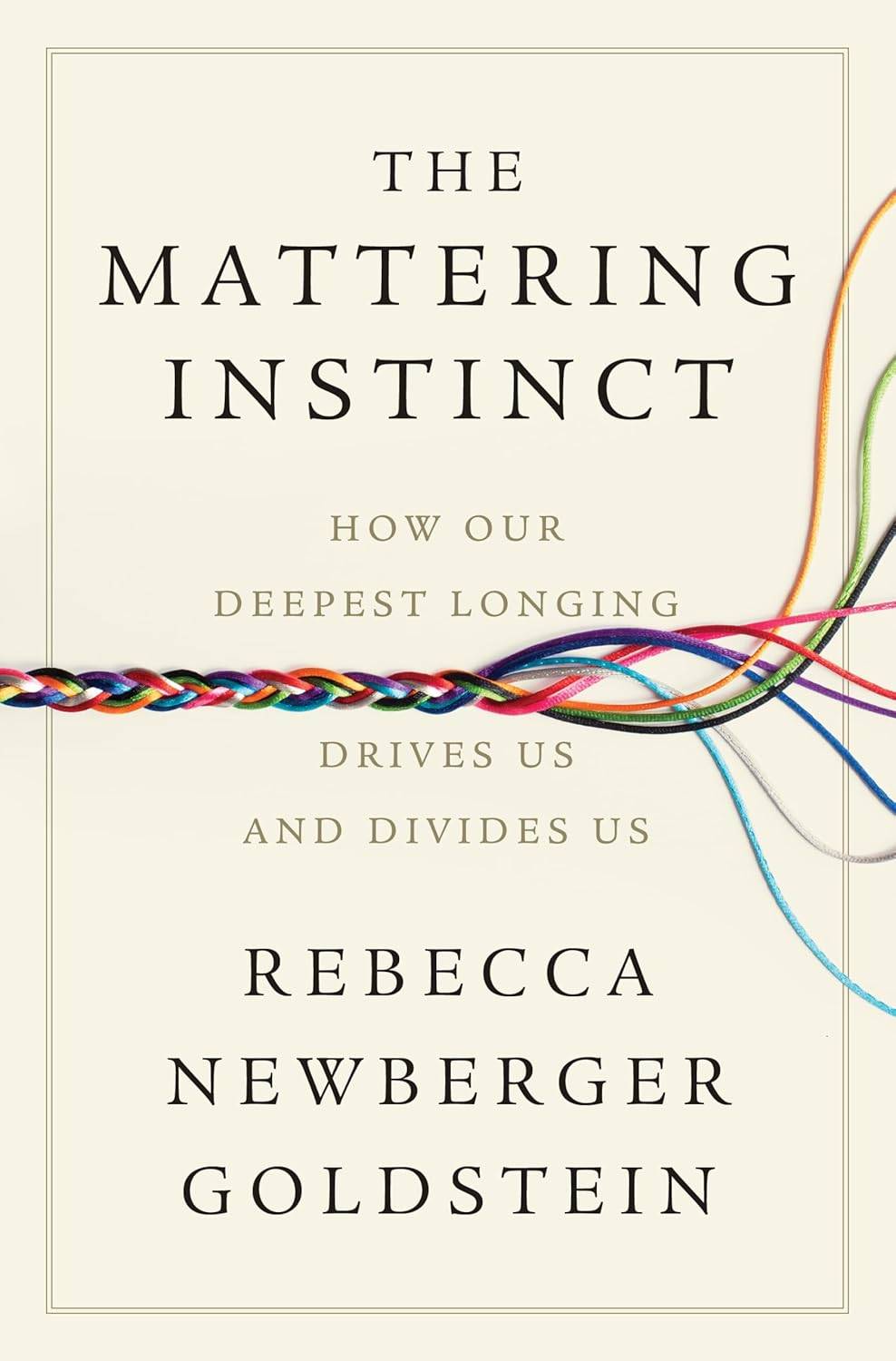
The Mattering Instinct: How Our Deepest Longing Drives Us and Divides Us
By: Rebecca Newberger Goldstein
The Mattering Instinct explores the fundamental human drive to feel that we matter and how this instinct
shapes both personal purpose and social conflict. Drawing on interdisciplinary insights
and compelling stories, the book invites readers to reflect on how meaning, identity,
and connection influence our actions—and how a more expansive view of “mattering”
can support more thoughtful and inclusive ways of engaging with others.
Facilitated By: Bill Reynolds Dates: Thursdays: 9/10, 10/1, 10/22 & 11/12 Time: 12:00p-1:00p Location: Lucas Center (LIB 221) Modality: In-Person
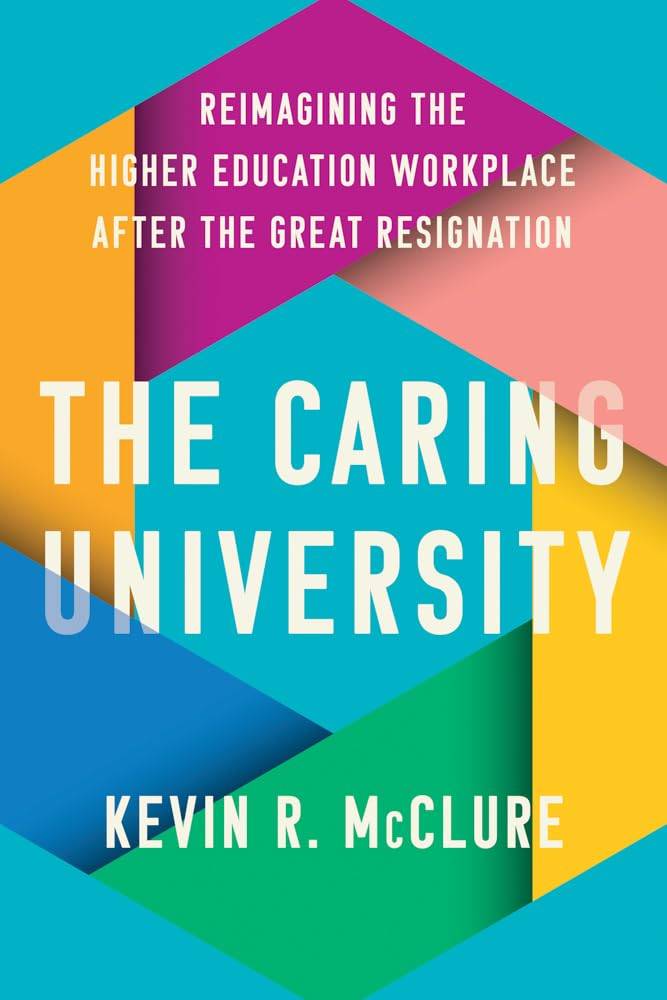
The Caring University: Reimagining the Higher Education Workplace after the Great
Resignation
By: Kevin McClure
The Caring University examines how higher education institutions can create workplace cultures that support
the well-being and growth of all employees. Drawing on research and practitioner insights,
the book offers practical strategies for addressing burnout, strengthening leadership,
and fostering environments where faculty and staff can thrive.
Facilitated By: Daniel Hoover Dates: Thursdays: 9/17, 10/15, 11/5 & 11/19 Time: 12:00P to 1:00P Location: Lucas Center (LIB 221) Modality: In-Person
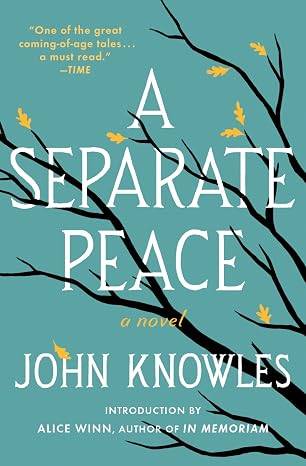
Ready to catch up on your high-school reading—or read a few books your English teacher
didn’t get around to assigning? In this book club, we’ll read three short novels that
deal with some of the feelings teenagers like FGCU’s own freshman and sophomores still
grapple with: jealousy and its repercussions, feelings of isolation and that adults
don’t understand you, and more. We’ll do that by reading and discussing John Knowles’s
A Separate Peace, S.E. Hinton’s The Outsiders, and Stephen Chbosky’s The Perks of Being a Wallflower.
The Dialogues on Culture & Community are open to faculty, staff, and students who
are interested in thinking together about our individual and collective roles in shaping
our community and contributing to the culture of FGCU. We encourage and welcome participation
from members of all of these groups, and we hope you will bring a friend or student
and end your month in dialogue with engaged and committed colleagues. Click here for more information on the Dialogues on Culture and Community sessions.
Dialogues sessions take place on the final Friday* of each month from 12:00p-1:15p
in the Lucas Center (LIB-221). Feel free to bring a lunch. Drinks and snacks will
also be available in the center.
*Sessions are rescheduled to alternate Fridays when the final Friday occurs during
a break, holiday or a conflict within the Lucas Center. If you are not receiving our
emails regarding these sessions, please reach out to lucascenter@fgcu.edu and we will add you to our email list so you can stay up to date on the Dialogues
sessions!
Here's what participants in the Dialogues have to say about the experience:
"The Lucas Center’s monthly Dialogues on Culture and Community sessions have become
an important part of my schedule here at the university. I look forward to the sessions
and always encourage others to attend. I am a naturally curious person, and the conversations
encourage curiosity about all kinds of things happening in our lives, both on campus
and beyond. These dialogues encourage faculty, staff, and students to discuss pivotal
issues and engage in meaningful conversations in an atmosphere that is safe from judgement,
where different viewpoints are not only heard but truly listened to and deeply discussed.
Encouraging curiosity about people with different views and openly discussing these
experiences can go a long way to promote mutual respect, building community with others.
The Dialogues on Culture and Community promote a sense of community that I don't find
anywhere else on campus."
"It is rare that we have the chance to have opportunities for open dialogue about
the nature of our campus culture with such a diverse group of individuals. I have
found these sessions stimulating, insightful, and hopeful. I would love to see more
colleagues from across campus attend as each person brings such an important and unique
perspective."
"My ongoing experience with the Lucas Center Dialogues on Culture and Community has
been a blessing. It allows me to share my hopes and dreams of creating a better home
for students, staff, and faculty to enhance lifelong learning. The group comprises
enthusiastic collaborators who are welcoming, understanding, and passionate about
our work. The dialogues inspire everyone to better serve our FGCU family and local
community. They remind us to be responsible, productive, and engaged in daily activities
and to see how our work enhances FGCU's culture. Please join us and bring a friend!"
"The Lucas Center's Dialogues on Culture and Community sessions have been an invaluable
forum for connection and growth within our university community. Each monthly gathering
has offered a unique opportunity to hear diverse perspectives from colleagues across
campus, enriching my understanding of our shared experiences at FGCU. These sessions
have not only strengthened my sense of belonging within the university but have also
fostered meaningful connections with colleagues I might not have otherwise met. The
open, welcoming environment has encouraged authentic dialogue and helped build bridges
across different departments and roles. Having participated in these sessions over
time, I've come to appreciate how they contribute to creating a more connected and
inclusive campus culture."
"To me, the Lucas Center Dialogues on Culture and Community is a place to come together
to connect without expectation or assumption. I never know who will be there (though
I love to see familiar faces from month to month) nor do I know what we will talk
about, but I know that when I leave, I feel full (not just from the snacks and seltzers!),
and more grounded in the campus community. The bonds I have created have been meaningful,
thoughtful, and long-standing. I'm grateful to the Lucas Center for holding the space
and keeping it a regular offering without judgement. I know if I miss a month or two
due to conflicts, I will be welcomed back fully and joyfully."
Faculty Learning Communities
Faculty Learning Communities(FLCs) are informal groups of faculty members who meet on a regular basis to explore
topics of common interest. Groups may discuss relevant articles and classroom examples.
Some groups may pose questions for the group to answer or seek problem solving help.
Other groups may develop research projects or begin scholarly writing groups.
Lucas Faculty Fellows
The Lucas Faculty Fellows program is paused for the 2025-2026 academic year. We welcome
you to explore previous Fellows' resources below.
Jason empowered faculty across the university to level up their writing instruction
via workshops, interdisciplinary partnerships, research, and publishing.
Elizabeth researched and demonstrated how Universal Design for Learning can be used
to increase student engagement, performance, and instructor satisfaction.
Jessie created teaching resources to increase active learning strategies within high
enrollment and DFW courses. Additionally, she created and co-facilitated the Lucas
Center's Adjunct Academy.
Brenda's fellowship focus was twofold: encouraged and supported scholarship related
to the Student-Faculty Partnership Program and encouraged and supported the Scholarship
of Teaching and Learning more broadly.
Georgia represented and advocated for adjunct faculty, starting with research about
the Florida University System while learning how different departments on campus support
their adjunct faculty.
John surveyed adjunct faculty and did research on the relationship between department
leaders and adjunct faculty at FGCU. That research has been sent in for publication.
In his second Fellowship, he will utilized his past work and focused on investigating
the support other higher educational institutions give adjunct faculty and advocated
best practices at FGCU.
Between weeks four and seven of the semester is a terrific time to seek feedback from
your students about how they are experiencing your class. The Small-Group Instructional
Diagnosis (SGID) is a focus group led by a trained facilitator who speaks directly
with your students to provide formative feedback concerning ways learning can be enhanced.
A post-SGID consultation between facilitator and instructor is part of the procedure.
The SGID session takes about 30 minutes of class time. As an alternative, you can administer a mid-term feedback survey.
Mentors are full-time faculty members at FGCU who have been with the university for
at least three years. Faculty members who have successfully completed the Course Design
Academy will be given preference as mentors because of their work in best practice
pedagogy. Mentors have skills in many areas but do not profess to be a “guru” about
all things but rather are a “coach” who can support early career faculty members and
help a new faculty member find the resources either on-campus or in the wider academic
community to be a successful faculty member. Although these mentors will be expected
to primarily support the new faculty members with classroom pedagogy, they may be
called upon for advice and support in other areas. A mentor may not be from the same
discipline or department as the mentee; however, the mentor will help the mentee find
the advice and resources they need.
New Faculty Academy (NFA) is for new (and relatively new) faculty members at FGCU,
who are referred to NFA by their department chair upon being hired. During the fall
semester, we will focus on best practices for teaching effectiveness. In the spring
we introduce an intentional, holistic approach to shaping your career. All new resident
faculty hires at FGCU with less than two years of university teaching experience (not
including graduate assistantships, teaching assistantships or adjunct teaching) are
required to enroll. Other new faculty may enroll, if there is space available.
Teaching Effectiveness: The first half of NFA is built upon the belief that while no one can make you be a
better teacher, you can be given the tools to develop your own “teacher persona” through
reading, discussing, reflecting, and practicing. Along the way you’ll have opportunities
for feedback from your NFA facilitators, other faculty members and your peers. The
goal is to equip you with skills that will set you on the path of teaching effectiveness.
Shaping your Career:The second half of NFA recognizes that there are multiple demands on faculty members
and that preparation to work in the academy does not always a) address the full range
of professional responsibilities faculty engage in, b) clearly outline expectations
for success, or c) acknowledge the challenge of finding a healthy balance between
professional and personal responsibilities. The goal is to equip you with skills
that set you on the path to overall success as a faculty member at FGCU.
NFA is offered bi-weekly during the fall term on Friday mornings from 9:00a-11:00a
and monthly on Fridays during the spring term in LIB 221.
For more information, please contact us at lucascenter@fgcu.edu or 239-590-1282.
Peer Observation of Teaching
Purpose
Formative Feedback
Process
At the Lucas Center we view peer observation of teaching (POT) as an effective mechanism
for assisting faculty to achieve their professional goals related to the art and science
of teaching. Research strongly suggests that POT (being observed and observing others)
can provide an opportunity for collegial conversations about teaching, while also
enabling reflective practice and providing opportunities for the provision of developmental
advice (Drew et al., 2016; Hammersley-Fletcher & Orsmond, 2005; Hendry & Oliver, 2012;
Pressick-Kilborn & te Riele, 2008).
In order to most closely align POT with the mission, vision, and goals of the Lucas
Center, we employ a coaching model that conceptualizes POT as a formative, collaborative,
and developmental series of activities conducted between a Lucas Center representative
and a faculty member who wishes to engage in a dialogue about her/his teaching (in
contrast to a summative, more formally evaluative approach used by some institutions).
In this spirit of mutuality, all observers commit to opening their classrooms to observation
by those they observe.
Despite our intention to enact a process that is useful and fulfilling for both the
faculty member being observed and the observer, we acknowledge that vulnerability
and concerns about judgment are inherent in the process. Therefore, we ensure that
confidentiality is built into the POT procedure, and written reports are provided
directly and only to the observed faculty members when requested. Peer observers are
encouraged to share their experiences of and feelings about being observed in their
own classes in order to foster trust and mutuality in the observation process.
The Lucas Center will not provide letters or reports attesting to the quality or effectiveness
of one’s teaching based on a single observation. However, when faculty members provide
a clear set of learning objectives for a given lesson during the pre-observation meeting,
observers can comment on the extent to which those objectives have been achieved.
Procedure
Faculty wishing to schedule an observation should follow these steps.
Contact your chosen observer to request an observation at least three weeks before
the date of the class session you would like observed and arrange a pre-observation
consultation.
Email your observer the course syllabus and any materials you believe would help her/him
better understand your goals for the class and how you intend to accomplish them.
Attend a brief (typically 15 – 30 minutes) pre-observation meeting, during which you
will a) discuss your general approach to teaching and any specific elements of your
lesson (e.g., teaching methods, style, student engagement) about which you would like
feedback and b) learn about the observer’s approach to conducting an observation.
Within a week of the observed class, participate in a post-observation meeting, during
which you and the observer will discuss your respective perceptions of the class,
and the observer will provide feedback and suggestions (often including detailed descriptive
notes) typically in direct response to the areas of focus discussed in the pre-observation
meeting.
We strongly believe that peer observation of teaching can play a valuable role for
all faculty who engage in a reflective process of professional improvement. We hope
to visit many of your classrooms and encourage you to observe the teaching of Lucas
Center personnel at your convenience.
Dr. Denise Allen is an Associate Professor of the Occupational Therapy Program in
Marieb College of Health and Human Services. She has completed many Lucas Center programs
and workshops such as Course Design Academy, the Student-Faculty Partnership Program,
Academic Portfolio Workshop, and the Peer Observation of Teaching Workshop. She has
received teaching awards including the Dr. Elaine Marieb Faculty Excellence in Teaching
Award and the Florida Gulf Coast University Junior Faculty Teaching Excellence Award.
She has also served on the committee for the FGCU teaching excellence award for several
years.
She has found through her many courses, readings and experience that reflection of
teaching is an important component of innovative teaching that helps students learn.
Although there are many ways of gaining insight on teaching, Dr. Allen believes that
peer observation with an open discussion of desired outcomes and reflection after
the process can help both new faculty and experienced faculty alike. She is committed
to providing a rewarding, positive experience for teaching growth through peer observation.
Enthusiastic teacher of Computing Science and Software Engineering topics that includes
entry to advanced level programming, computer architecture, embedded technologies,
and data engineering. I have significant experience in industry and higher education
as an application developer, business systems' analyst, and application development
manager. I bring my background into my teaching, relating real world scenarios and
methodologies. I strive to make class interactive and exciting through use of hands-on
activities and facilitate exploration of algorithms and standard development practices
through small projects such as the development of retro video games.
I have been with FGCU since it first began, as one of the inaugural graduates of the
class of 1998, and then as a business application support and manager staring in 2003.
I began teaching as an adjunct in 2015 and became a full-time instructor in 2021.
I earned an MBA from FGCU in 2014, and am now working on a doctorate in Engineering
and Computing Engineering at FIU.
Christina Anaya is an Assistant Professor in the Department of Biological Sciences
where she teaches wildlife classes including mammalogy and invertebrate zoology. Christina
also has a robust research program, training students in parasitological techniques
using invasive reptiles and amphibians in Florida. In the classroom, Christina uses
a research-supported pedagogy of making students active participants in the learning
process. Her goal as an educator is to help students become independent thinkers and
learners as they develop their critical thinking skills which prepare them for their
future careers. She is dedicated to fostering student engagement through various active
learning strategies. She enjoys learning from her colleagues as they navigate the
active learning classroom. Therefore, POT offers an opportunity to not only provide
a service to her colleagues but also learn from them in the process. Christina has
been recognized for her teaching abilities 3 times as a graduate student and most
recently she received FGCU’s Junior Faculty Teaching Excellence Award (2023-2024).
Dr. Dan Bacalzo is an Associate Professor of Theatre and the Assistant Director of
the Bower School of Music and the Arts. He has participated in numerous Lucas Center academies,
programs, and workshops inclusive of New Faculty Academy, Course Design Academy, Student-Faculty Partnership Program, Mentor Coach Program, Academic Portfolio Workshop, and
the Peer Observation of Teaching Workshop. He is the recipient of multiple professional
development and innovative assignment design award grants, as well as Seidler undergraduate
scholarly collaboration fellowships and an Aquila Award for Outstanding Student Scholarship
Support.
Alayde Barbosa (Alli) started teaching at Florida Gulf Coast University as an instructor
of Geology in 2014. She is now an instructor III who has been an active participant
of the Lucas Center Programs to improve her teaching. She is a geologist with a masters
and a PhD in Geochemistry. She is very passionate about Geology and teaching. She
is originally from Brazil and enjoy the opportunity to be helpful to other faculty
with their teaching.
Dr. Cara Brooks is an Associate Professor in the Department of Mathematics. During
her time at FGCU, she has observed the teaching of roughly 20 faculty across five
colleges through her various roles: elected member of FGCU’s Teaching Excellence Award
Committee, participant in the Whitaker Center’s STEM Professional Academy to Reinvigorate
the Culture of Teaching, and mentor for the Lucas Center’s New Faculty Academy. She
has taught upper- and lower-division college mathematics courses for over 20 years,
was observed numerous times, and received training at the Lucas Center’s Peer Observation
of Teaching workshop.
Based on readings of the literature and personal experience, she has found that peer
observation (as an observer and being observed) can play a fundamental role in the
development and continued improvement of one’s teaching. She recognizes the trust
required to invite an unknown observer into your classroom. Whether it is a summative
letter for a portfolio or a formative assessment of a new teaching technique, she
provides detailed and purpose-driven observations based on the request of the faculty
member. She is committed to engaging in open discussions during the pre- and post-observation
meetings and to applying her knowledge about peer observation and best practices to
provide kind and constructive feedback.
Dr. Sherdene Brown Simpson is currently an Assistant Professor and the Clinical Mental
Health Counseling Program Director at Florida Gulf Coast University. Dr. Brown Simpson’s
professional trajectory reflects extensive experience as a counselor educator, systemic
clinician, and supervision. She has also worked in higher education as an administrator
and mentor. Dr. Brown Simpson is deeply committed to professional service and exemplifies
the principles of servant leadership through active engagement in local, state, and
national professional associations. She is committed to serving as an observer for
colleagues who need to complete a teaching observation and to provide thoughtful,
collegial feedback.
Dr. Jessica Carter Peer is an adjunct faculty member and lab instructor of the Anatomy
and Physiology Department. Jessica is a double FGCU Eagle graduate with a B.S. in
Exercise Science ('09) and a Doctor of Physical Therapy ('21). She earned the Soaring
Eagle Award in 2015 and was a recent member to the Alumni Association Board of Directors
(2020-2024). As a former student athlete (softball) here at the university, she is
keenly aware of the increase in students' attention to extracurriculars while participating
in their studies and can bring a new observation perspective to any classroom setting
across the campus.
As a 2024 graduate of the Lucas Center's Adjunct Academy and Peer Observation of Teaching
Workshop, Jessica has received recent training in best practices of classroom and
lecture development while being able to provide any summative response or formative
feedback based upon the observation request. She is committed to collaborating with
faculty and adjunct members to provide timely feedback and develop positive outcomes
for student success here at FGCU.
Jahann Cherubin-Brennan is a certified Adjunct Marketing Instructor with the Lutgert
College of Business. She has completed multiple Lucas Center programs and workshops,
including the Adjunct Academy, faculty book clubs, and the Peer Observation of Teaching
Workshop. Jahann views peer observation as a collaborative and formative process that
supports reflective teaching and professional growth. As a peer observer, she aims
to create a comfortable space for instructors to reflect on their instructional choices,
explore new strategies, and consider how small adjustments can enhance student engagement
and learning. She approaches each observation with curiosity, respect, and an appreciation
for the many effective ways teaching can look in the classroom.
Dr. Alberto Condori is a Professor of Mathematics at Florida Gulf Coast University,
where he teaches courses from introductory Calculus to graduate-level Analysis and
project-based courses with industry partners. Early in his career, Alberto focused
on content quality, a natural instinct for someone trained in research mathematics.
Through sustained reflection, he came to believe that excellent teaching is defined
not by performance but by deliberate alignment between objectives and methods. Like
many faculty, he has wrestled with helping students become active learners and fostering
critical thinking. That ongoing work reminds him that every teacher, himself included,
is still learning. This evolution stems from Lucas Center programs including the SPARCT
Academy, Course Design Academy, and Peer Observation of Teaching Workshop. He led
the Teaching for Critical Thinking Book Club in 2019, has mentored in the New Faculty
Academy since 2022, and received the FGCU Senior Faculty Teaching Excellence and Excellence
in Mentoring Awards in 2023–2024. Over his career at FGCU, and earlier as a Lead Graduate
Teaching Assistant at Michigan State, Alberto has conducted many peer observations.
He recognizes that being observed feels vulnerable (he has felt it himself) and approaches
every observation as shared inquiry, framing feedback around connections and curiosities
rather than deficits. Alberto is committed to making peer observation a genuine opportunity
for mutual growth.
Dr. Paula-Marie Ferrara is an Associate Professor of the Exercise Science program
in the Marieb College of Health and Human Services. She joined the faculty at FGCU
in 2025 and completed the Lucas Center’s Peer Observation of Teaching workshop in
her first semester. Paula often utilizes mixed methods in her research, which involves
understanding individual’s exercise experiences and developing exercise and physical
activity promotion programs, particularly for retiring, elite athletes. Just as quantitative
and qualitative data can provide holistic understanding of peoples’ lived experiences
and direction on how to intervene on their fitness and wellness, Paula believes the
combination of formative and summative assessments provide the best picture of one’s
teaching and utilizes both in her peer observation process. By collaborating with
those she observes, she is committed to providing a positive and rewarding experience
that will help her and her fellow educators grow in their teaching.
Joy Ann Francis is an Adjunct Clinical Instructor in the nursing department of Florida
Gulf Coast University. Joy Ann has a master’s degree in Advanced Practice Registered
Nursing. She oversees nursing students in the clinical arena facilitating hands-on
patient care learning at the bedside. Although the ambiance supports more of a discussion
style rather than a lecture-type learning, there are instructional strategies that
could be woven into this experience to enhance learning.
Attending the Lucas Center Peer Observation Teaching Workshop has prepared her for
self- reflection and to set goals for improvement when planning the clinical day.
This will also prepare her for constructive suggestions when observing other colleagues
in their roles with the notion of providing an ongoing commitment to professional
development.
Dr. Jen Fulwider is an Instructor II in the College of Education at Florida Gulf Coast
University, where she prepares future educators through coursework focused on classroom
organization, professional teaching practices, and effective instructional design.
She brings over 20 years of experience across K–12 special education and higher education,
with a background that includes clinical supervision, field coordination, and teacher
mentoring. As a trained peer observer, Dr. Fulwider approaches peer observation of
teaching as a collaborative and reflective process grounded in trust, descriptive
feedback, and professional dialogue. She values peer observation as an opportunity
for faculty to clarify instructional goals, examine teaching practices, and engage
in meaningful conversations that support growth across in-person and online learning
environments.
Felicia Goulet-Miller is a higher education instructor with over 20 years of teaching
experience in biology and microbiology. Felicia views peer observation of teaching
as an essential component of reflective and effective instructional practice. She
believes meaningful evaluation of teaching must incorporate self-reflection, student
feedback, and collegial perspectives. Drawing on her experience participating in both
formal and informal peer observations, she values the role of constructive, developmental
feedback in strengthening courses and refining teaching strategies. Aligned with the
Lucas Center’s coaching model, Felicia approaches peer observation as a formative,
collaborative, and confidential process grounded in trust and mutuality. She recognizes
the vulnerability inherent in opening one’s classroom and is committed to fostering
a supportive environment that emphasizes dialogue rather than judgment. Through observing
colleagues, she also seeks to learn new pedagogical strategies and best practices,
making peer observation a mutually beneficial experience that enhances teaching effectiveness
and the student learning experience.
Dr. Shelby Gilbert is an Associate Professor of public health in the Marieb College
of Health and Human Services. The primary focus of her teaching is guided by the behavioral
and social sciences to explore how issues of access—access to educational opportunities,
quality health care, and community resources—impact the health outcomes of people
most negatively impacted by social, political, and economic policies. She has participated
in many Lucas Center activities over the years, and one of the most impactful things
she has learned is to always approach teaching with the question “what do I want my
students to remember from this course five years from now” at front of mind.
Inspired by this question, she understands the importance of assessing our teaching
to determine what has, and has not, worked to engage our students. Evaluation of our
teaching effectiveness is an important component of what we do FGCU, and while student
perceptions of our teaching and our own self-reflection are helpful, each of these
on their own represents a small, flawed view of our teaching practice. It is also
important that we are assessed by our peers who can provide an objective observation
of our teaching to provide valuable feedback of what works well and, more importantly,
what can be improved.
Anthony (Tony) Hoffman is an Instructor I in the chemistry department. He has learned
just how valuable feedback can be through his participation in the New Faculty Academy
in 2023 and The Student Faculty Partnership Program (SFPP) in Fall 2024. Tony strives
to keep improving his courses as he believes that the role of an instructor includes
constant course innovation, seeing as perfection can never truly be obtained. As a
newer instructor, Tony believes he has the ability to bring a fresh perspective that
is both technology forward and student centered to an observation that he produces.
Tony also believes that a peer observation should serve as a reflective process for
both himself and the person he is observing, so in his peer observations he intends
to have both himself and the person observed leave the experienced having gained some
insight into their teaching.
Margaret Hood is an Instructor I in the Department of Biological Sciences at Florida
Gulf Coast University, where she teaches high-enrollment gateway biology courses including
General Biology I with Lab (BSC 1010C) and Introduction to Biology with Lab (BSC 1007C),
a preparatory gateway course that supports students as they build readiness for General
Biology I. With over 24 years of university-level teaching experience, Margaret brings
a strong background in developing and refining large, multi-section gateway courses.
Her teaching emphasizes active learning, structured support, and evidence-based pedagogy
to improve student engagement, persistence, and confidence in introductory and gateway
biology courses. Margaret approaches peer observation of teaching as a reflective,
developmental process grounded in trust and dialogue. She has consistently sought
out peer feedback throughout her career and has been observed by colleagues as part
of her commitment to continuous pedagogical growth. She has also observed and mentored
graduate teaching assistants, instructional assistants, and peers. She has completed
the Lucas Center for Faculty Development New Faculty Academy and Course Design Academy,
and has participated in the Student–Faculty Partnership Program and Skills Advantage
cohort. She looks forward to serving as a peer observer by offering supportive, formative
observations that help colleagues reflect on their teaching and strengthen student
engagement.
Tanya Huffman is a Level III Mathematics Instructor at Florida Gulf Coast University
where she has been teaching undergraduate mathematics and statistics courses since
2007. She is the coordinator of business calculus sections and the recipient of the
2015 FGCU Senior Faculty Teaching Award. Tanya is a member of The FGCU Whitaker Center
for STEM Education Leadership Team and a co-PI on NSF Widening Implementation & Demonstration
of Evidence-Based Reforms (WIDER) Grant for STEM Professional Academy to Reinvigorate
the Culture of Teaching (SPARCT) at FGCU. Her research interests are in mathematics
education with specialty area in project-based learning. She regularly presents her
innovative teaching techniques at the faculty professional development workshops and
conferences. Since 2014, she has been directing enrichment summer programs for middle
school students.
Dr. Nicola Khalaf is an Associate Professor of Anatomy and Physiology (A&P) and serves
as the course coordinator for A&P at Marieb College of Health and Human Services.
She has been teaching at FGCU since 2018, following a 30-year career as a physical
therapy practitioner. Dr. Khalaf’s clinical experience informs her student-centered
approach to teaching, emphasizing active learning, metacognition, and evidence-based
strategies to promote success in historically challenging STEM courses.
Her teaching philosophy is grounded in the belief that all students can succeed when
provided with the right tools, access, and accountability for active engagement. Based
on her experience and research, she finds that structured peer observation and purposeful
reflection are essential components of innovative teaching. Dr. Khalaf’s research
focuses on the Scholarship of Teaching and Learning, with an emphasis on pedagogical
strategies that enhance student performance and retention. She is the recipient of
the Dr. Elaine Marieb Faculty Excellence in Teaching award, Dr. Elaine Marieb Faculty
Excellence in Service award, and the FGCU Junior Faculty Teaching Excellence Award.
Jeff Kleeger is a Professor in the Justice Studies Department of the College of Arts
& Sciences who has participated in several professional development activities and
programs offered by the Lucas Center. He is interested in different teaching and learning
approaches and recognizes the efficacy of mixing and matching to enhance student learning
outcomes. Jeff’s philosophy on teaching is collaborative learning based, but he equally
respects the value of a good traditional lecture. Jeff believes the science and art
of teaching and learning can always be enriched by reflective practice and so he brings
this perspective to his teaching, research and service focus in the sociology of law
and law study.
Dr. Daniel Lambrecht has experience teaching a range of science courses, ranging from
introductory large-lecture classes such as General Chemistry to advanced and more
specialized courses such as Biochemistry and Physical Chemistry. He continually strives
to improve his teaching by incorporating student feedback, peer observation, and professional
development opportunities such as the workshops offered by the Lucas Center. As somebody
who has received valuable teaching feedback from colleagues, he recognizes that an
external, objective mentor is invaluable to analyze and improve one’s teaching approach.
This is particularly important to ensure one’s teaching approach is rooted in best
practices and focuses on objective, measurable learning outcomes as appropriate within
the discipline and across fields.
Joyce LaOrden is an Instructor III of Spanish in the Department of Language and Literature
at Florida Gulf Coast University. Joyce has participated in several Course Design
Academies with the Lucas Center for Faculty Development, and many other workshops
provided there. The most beneficial experience was Student Faculty Partnership (SFP).
She believes in the benefits of actively engaging in the process of refining and improving
her pedagogy to best accommodate her students’ varied learning styles. Reflective
dialogue, teaching and learning from peers shape her focus. Joyce teaches Spanish
courses of all levels and actively works on the development of the Spanish program
in the Department of Language and Literature in CAS. She obtained her doctorate from
Middlebury College where she focused on methodology. Joyce has attended and presented
strategies for second language acquisition at conferences both locally and nationally.
Reid Lennertz, MBA, MA, is a recently promoted Instructor II in the Daveler & Kauanui
School of Entrepreneurship where he has taught since 2019. In 2021, he was the recipient
of the Junior Instructor Teaching Excellence Award. Prior to 2019, while serving as
the Director of FGCU Career Services, he was an adjunct Instructor for the Lutgert
College of Business and the College of Arts & Sciences. In 2013, he was nominated
for the Adjunct Faculty Teaching Excellence Award. Reid has attended numerous professional
development program through the Lucas Center, including the Student-Faculty Partnership
Program in Fall 2021. He is presently the Chair of his School’s Promotion and Support
Committee, giving him valuable insight as to the role of Teaching Observations in
the promotion process.
Fangheyue (Fang) Ma is an instructor of sociology in the Department of Justice Studies,
where she teaches a wide range of undergraduate courses from introductory sociology
to upper-division offerings. Her research interests include globalization, social
psychology, gender, and technology, with particular attention to how social meanings
are constructed and negotiated in everyday life.
Trained in Peer Observation of Teaching through the Lucas Center for Faculty Development,
Fang engages in reflective and collaborative approaches to teaching improvement. Through
observing colleagues’ classrooms and welcoming feedback on her own teaching, she continually
refines her pedagogical strategies to enhance student learning and engagement. She
values teaching as an interactive and relational process and views the classroom as
a shared space for inquiry, dialogue, and intellectual growth.
Grounded in a student-centered and inclusive teaching philosophy, Fang emphasizes
critical thinking, sociological imagination, and the connection between course material
and students’ lived experiences. She is committed to creating supportive learning
environments that encourage participation, curiosity, and respectful discussion, and
she prioritizes clear communication, active learning, and meaningful assessment in
her courses.
Jan-Martijn Meij has been in the sociology program since 2011 and has greatly benefited
from the programs and workshops at the Lucas Center. He considers good teaching to
be something that looks different for different people in different situations. Every
teaching situation that is observed offers opportunities for growth for both the observer
and observee. Reflection on one’s teaching is an important part of the process in
improving your pedagogy.
Menaka Navaratna is a Professor of Mathematics at Florida Gulf Coast University, where
he has served as the department chair of mathematics division. His terminal degree
is in the area of applied mathematics where real-life applications are modeled using
differential equations. Since joining FGCU, he has served on many committees and teams.
He was a member of CAS Peer Review and Support Committee (PRSC), University Curriculum
Team (UCT), FGCU Senate and the chair of the CAS Undergraduate Curriculum Committee
(CAS UCC). He has completed several Lucas Center Faculty Learning Communities (FLC)
which are devoted to enhancing teaching, learning, and the university experience.
I currently serve as an Assistant Professor in the Counseling Department within the
Marieb College of Health & Human Services at Florida Gulf Coast University and am
in my third year at FGCU. I teach graduate-level counseling courses focused on preparing
students for professional practice as clinical mental health counselors. I earned
my doctoral degree in Counselor Education from Texas A&M University–Corpus Christi
and am a Licensed Mental Health Counselor in both Florida and Texas. My teaching philosophy
is student-centered. I have presented at professional conferences on teaching and
learning, with a particular focus on integrating mindfulness into the classroom. I
value collaboration with colleagues and view peer observation as an opportunity for
mutual learning, reflective practice, and ongoing growth in teaching effectiveness.
Matt Palmtag is an Instructor III in the department of Biological Sciences, where
he teaches high enrollment introductory courses such as General Biology I and II,
and upper level specialty courses such as Animal Nutrition. Matt’s main goals as an
educator are to combine his experience with evidence-based pedagogical research to
plan for improvement, develop student critical thinking skills required for career
success and lifelong learning, invite and respond to student and peer feedback to
improve student engagement, and reciprocate the value with which his students and
colleagues have treated him. Peer observation of teaching (POT) provides the perfect
opportunity for Matt to continue to reach his goals and support colleagues to reach
theirs. Throughout his time at FGCU he has had the opportunity to co-instruct with
seven of his colleagues. He has also engaged in formative and summative peer observation
both as an observer and observee with over a dozen other colleagues throughout the
university. In 2013 Matt earned the FGCU Junior Instructor Teaching Excellence Award.
He has served as a mentor in the Lucas Center Mentor Coach Program since 2014, this
program fosters professional development through discussion and participation in POT.
He also participated in the Lucas Center Peer Observation of Teaching Workshop in
2022. Matt credits POT as one of the most significant professional development activities
that has shaped his career and teaching philosophy and is eager to share his experience
to support his fellow faculty members.
I am a Professor of Statistics in the Department of Mathematics and have been at FGCU
since 2009. As a trained Peer Observer of Teaching, I take a formative, faculty-centered approach grounded in clearly defined goals established during a
pre-observation conversation. My observation reports emphasize evidence of effective
teaching while offering thoughtful suggestions for improvement, followed by a post-observation
discussion that invites reflection, dialogue, and instructor rationale. When helpful,
I also incorporate space for instructors to reflect on the feedback and identify which
suggestions they plan to pursue. I have experience teaching and observing across a
range of instructional designs—including traditional lecture, flipped classrooms,
mastery-based learning, POGIL, and discovery learning—and primarily work in face-to-face
settings, with some experience in synchronous online courses at both the undergraduate
and graduate levels. While any colleague is welcome to request an observation, faculty
teaching quantitative, analytical, or problem-based courses, or those exploring active
learning approaches, may find my background particularly relevant. I have enjoyed
observing faculty across multiple colleges and departments and value the opportunity
to meet new colleagues, learn about different disciplines, and engage with diverse
and innovative approaches to supporting student learning.
I am a Communication Instructor III at Florida Gulf Coast University. I have been
teaching here since 2010. I am a popular professor on campus and I have had the privilege
of teaching a variety of Communication courses such as Public Speaking, Theories of
Human Communication, Gender and Communication, Interpersonal Communication, Fundamentals
of Communication, Intrapersonal Communication, Nonverbal Communication, Rhetoric of
Social Movements, and others. I believe that my strengths in the classroom lie in
my ability to be vulnerable. Students seem to easily relate to my teaching style and
I am proud to say that each semester my courses have a waiting list.
I have a great working relationship with my colleagues. I have had the privilege of
team teaching with two of them. Through this experience we have honed our teaching
skills and styles, a true gift, as the opportunity to continue to improve is part
of what I love about teaching.
Beyond my teaching role, I helped to establish the Communication Lab on our campus.
I am currently the associate director. The Com Lab is a resource for students of all
disciplines to access help for anything speech or presentation related, including
topic ideas, outlining help, delivery tips, and recording of speeches/presentations.
We also host the Public Speaking competition every year which has become quite popular
and most recently we created Socrates on Stage, a Ted Talk style event which is a collaboration between Communication and Philosophy
students.
Additionally, I serve on several College wide committees such at the College Governance
Team and Student Affairs committee.
The training I received from the Lucas Center during the Peer Observation of Teaching
workshop has been valuable. I look forward to helping co-create a culture at FGCU
that values the ongoing development of our teaching.
Dr. Colleen C. Robb has over 20 years of teaching experience and was recently promoted
to Associate Professor in the Daveler & Kauanui School of Entrepreneurship where she
has taught since 2019. Prior to 2019, she served as an Assistant Professor and Center
Director at California State University, Chico for five years. Prior to that, she
taught as an adjunct professor at undergraduate and graduate levels for Nova Southeastern
University and Florida International University. She won the Experiential Exercise
in Entrepreneurship of the year in 2021 from the United States Association of Small
Business and Entrepreneurship and placed as a finalist for the past four years in
a row. She was awarded the title of Master Teacher at the 2009 Experiential Classroom.
She has published in pedagogical journals such as the Journal of Education for Business
and the Journal of Computing Sciences in Colleges. Dr. Robb has attended numerous
professional development program through the Lucas Center, including the Student-Faculty
Partnership Program in Fall 2022 and Spring 2022.
Patti Sawyer-Simmons, PhD, is an Associate Professor of Exercise Science in the Marieb
College of Health & Human Services. She teaches upper-level courses focused on fitness,
strength, exercise physiology, and professional writing. Her scholarly work and service
include physical activity promotion, "Exercise is Medicine" initiatives, and enhancing
critical thinking within the discipline.
A consistent participant in Lucas Center programming since joining FGCU in 2016, Patti
views the Peer Observation of Teaching (POT) process as a vital tool for professional
growth and enhanced student engagement. Through the Lucas Center’s workshops, she
has developed a versatile toolkit for delivering productive, two-way feedback. Patti
is committed to a collaborative observation style that fosters reflection and dialog
between the observer and the instructor.
A native of France, Tatiana Schuss teaches French courses of all levels and actively
works on the development of the French program in the Department of Language and Literature
in CAS. She serves as faculty adviser to the French Club whose objective is to promote
French language and culture on campus. She studied at the Université de Bourgogne,
in Dijon France where she obtained her Master 1 in the Teaching of French as a Foreign
Language. She also holds a Master of Arts in the Teaching of Languages, with dual
emphases in French and TESOL, from the University of Southern Mississippi. In addition,
she has worked as an interpreter for a private company and the US Department of State.
Her formation in pedagogy has led her to focus on various areas surrounding foreign
and second language teaching, such as second language acquisition, sociolinguistics,
communicative-language teaching, and language learning strategies. She has presented
on teaching pedagogy in various conferences. She is strong believer of collaboration
with peers in teaching and pedagogy development.
Dr. Jaffar Ali Shahul Hameed is a professor of mathematics and the department chair
of Florida Gulf Coast University. With over two decades of experience in higher education,
he is a dedicated educator known for his commitment to student success, faculty mentorship,
and innovative teaching practices. His dedication to academic excellence has earned
him numerous accolades, including the FGCU Junior Scholarship Excellence Award, Senior
Service Excellence Award, and MSU Graduate Teaching Assistant Awards. As a peer observer
of teaching, Dr. Jaffar brings extensive expertise in fostering engaging, inclusive,
and effective learning environments. His teaching philosophy emphasizes cultivating
higher-order critical thinking, problem-solving skills, and a deep understanding of
learning objectives through active learning and collaboration. He is dedicated to
providing constructive feedback and practical strategies that empower colleagues to
refine their teaching practices and align with FGCU’s mission of delivering transformative
learning experiences. Dr. Jaffar approaches peer observation with a collegial and
supportive perspective, recognizing that teaching is both an art and a science. He
aims to inspire continuous improvement and assist faculty in creating meaningful and
impactful learning experiences for students. Beyond his teaching and leadership roles,
Dr. Jaffar has co-founded impactful initiatives such as the Coding Academy, which
integrates technology into K-12 education, and QGenAI, which leverages Generative
AI to enhance teaching and learning. You can learn more about him at https://jaffar.org.
Annie Stout, MBA, M.Ed, is an Instructor II in the Daveler & Kauanui School of Entrepreneurship
where he has taught since 2017. She won the Junior Instructor Teaching Excellence
Award in 2022. Annie has attended numerous professional development programs through
the Lucas Center, including the Student-Faculty Partnership Program. She presently
serves on the General Education Committee and serves as the Chair of the Honor’s Executive
Board. She values feedback from students, peers, and self-reflection to evaluate and
refine her practices.
Georgia Strange has an Ed.D. from the University of Georgia (UGA), an A.B. in Biological
Sciences, an M.S. in Secondary Science Education, and an M.F.A. in Fine Arts from
Indiana University (IU). She served in administrative posts at UGA, IU, and Centre
College of Kentucky. Dr. Strange also taught at The Ohio State University (OSU). She
earned teaching and service awards at IU and was a Senior Teaching Fellow at UGA and
a member of its Teaching Academy. At Florida Gulf Coast University, she teaches Colloquium
as an adjunct and served as a Lucas Center Faculty Fellow in 2022-23. Her decades-long
dedication to the multifaceted importance of teaching began with service in the Peace
Corps in Liberia, West Africa, and continued to develop further in graduate school
and faculty roles at five different institutions of higher education. Her experience
across multiple institutions shaped her approach to peer teaching observations. Dr.
Strange believes the observation process should foster an engaged and reflective dialogue
that enhances the growth of individuals committed to the interconnectedness of teaching
and learning.
Angel Taylor is an Instructor II of English in the Department of Language and Literature
at Florida Gulf Coast University. Angel has participated in several Course Design
Academies with the Lucas Center for Faculty Development, and many other workshops
provided there. She believes in the benefits of actively engaging in the process
of refining and improving her pedagogy to best accommodate her students’ varied learning
styles. Angel has attended several conferences about student centered learning, and
has presented at several conferences, locally and nationally, regarding the successes
of incorporating student centered learning into her curriculum. She is also actively
involved with several assessment initiatives here at Florida Gulf Coast University.
Dr. Jingshun Jason Zhang is a Professor in assessment, evaluation and research at
College of Education at Florida Gulf Coast University. Dr. Zhang has more than 30
years’ experience in teaching, research, and academic service in
USA, Canada, and China. He has taught many courses in assessment, evaluation, measurement,
mathematics, calculate, probability, and computer application face- to face, virtually
for undergraduate, master, doctoral students and other
trainings. He also has many broad studies on the classroom teaching, online teaching
and learning, classroom assessment, large-scale assessment, program evaluation, educational
measurement, etc. Jason has joined many programs of
the Lucas Center such as New Faculty Academy mentor, Student-Faculty Partnership Program,
Course Design Academy (multiple level), Peer Observation Program, and others. Based
on Boyer’s scholar model He always try to do his best to integrate the teaching, research
and service together along with multiple grants such as The Wing for the future, innovative
assessment design awards, COE min-grants and others.
SFPP pairs faculty members with students positioned as pedagogical consultants to
those faculty. The program has been running successfully at FGCU since Fall 2018.
Student-faculty pairs work in semester-long partnerships to analyze, affirm, and revise
the pedagogical approaches employed in a particular course, with participants meeting
regularly one-on-one and in larger groups to discuss their work.
The Student-Faculty Partnership Program is featured by FGCU's news source FGCU360
in the April 28, 2023 edition. Please read the article and watch the video HERE.
oVERVIEW
The model for the SFPP is the Bryn Mawr Students as Learners and Teachers (SaLT) program
(Cook-Sather, 2014), a student-faculty partnership program that has proven effective
for over a decade. Like the SaLT program the SFPP pairs faculty members with students
positioned as pedagogical consultants to those faculty. The program has been running
successfully at FGCU since Fall 2018. Student-faculty pairs work in semester-long
partnerships to analyze, affirm, and revise the pedagogical approaches employed in
a particular course, with participants meeting regularly one-on-one and in larger
groups to discuss their work.
Students apply for the position of consultant; the application process includes writing
a statement about why they want to be a consultant and what would make them good at
the role. Student applicants also secure two letters of recommendation: one from a
faculty or staff member, and one from a student peer. This application process is
not designed to exclude but rather to prompt students to reflect on their experiences
and recognize the ways in which they have expertise and insights to bring to conversations
about teaching and learning. Each student consultant is paid approximately $1,560
for the semester to fulfill the following responsibilities:
Consultants will participate in an orientation and all participants will be given
detailed guidelines for participating in the program.
Consultants will meet with their faculty partners to establish why each is involved,
what hopes both have for the collaboration, and to plan the semester’s focus and meetings.
Consultants will visit one class session of their faculty partner’s course each week
and take detailed observation notes on the pedagogical challenge(s) the faculty member
identifies.
Consultants will survey or interview students in the class (if the faculty member
wishes), either for mid-course feedback or at another point in the semester.
Consultants will meet weekly with their faculty partners to discuss observation notes
and other feedback and implications.
Consultants also participate in weekly meetings with other student consultants and
with the coordinator of the program for support and debriefing.
Additional details of the SFPP are as follows:
Consultants are not enrolled in the courses for which they consult.
The student-faculty partnerships are formed largely based on participants’ schedules
and, where possible, taking into consideration personality and academic experience.
By bringing faculty out of pedagogical solitude and into partnership with students,
the program will invite faculty to reflect critically on their pedagogical practice
in dialogue with those who spend their days in classrooms, and it positions students
as co-producers rather than consumers of educational approaches and knowledge.
Application PROCESS
Mid-way through each semester, the Lucas Center holds an Info Panel with current partners
who share information about their experience in the SFPP.
After the panel concludes, applications open for both student and faculty partners.
Once applications are reviewed, applicants are notified by the end of the semester
if they are accepted into the following semester's group of partners.
At this time, partnerships are limited to 18 pairs, so applications are competitive.
REFERENCES
Cook-Sather, A. (2011). Layered learning: student consultants deepening classroom
and life lessons. Educational Action Research, 19(1), 41–57. https://doi.org/10.1080/09650792.2011.547680
Cook-Sather, A. (2014). Student-faculty partnership in explorations of pedagogical
practice: a threshold concept in academic development. International Journal for Academic Development, 19(3), 186–198. https://doi.org/10.1080/1360144X.2013.805694
Cook-Sather, A. (2015). Dialogue Across Differences of Position, Perspective, and
Identity: Reflective Practice in/on a Student-Faculty Pedagogical Partnership Program.
Teachers College Record, 117(2), 1–42.
Cook-Sather, A., Bovill, C., & Felten, P. (2014). Engaging Students as Partners in Learning and Teaching: A Guide for Faculty. San Francisco, CA: John Wiley & Sons.
Lucas Center Symposium on Teaching and Learning: Exploring the Faculty Role in Student Success
Two-day event for faculty, staff, and students on Thursday, February 18 & Friday, February 19, 2027
This year, the Lucas Center Symposium on Teaching and Learning invites the FGCU community
to explore an important question together: How do faculty contribute to student success?
The Symposium provides an opportunity for colleagues from across FGCU to learn from
one another's experiences, ideas, innovations, and reflections. We invite proposals
that share practices, research, partnerships, challenges, or questions that deepen
our collective understanding of the many ways faculty contribute to student success.
Proposals may explore topics such as:
Building meaningful relationships with students
Creating engaging, accessible, and supportive learning environments
Course, curriculum, or assignment design
Student motivation, belonging, persistence, and wellbeing
Mentoring, advising, and student partnerships
Assessment, feedback, and meaningful learning
Educational technology and artificial intelligence
Experiential, community-engaged, or research-based learning
Innovation, experimentation, and reflective practice
Cross-disciplinary collaborations
Other perspectives on the faculty role in student success
Presentations may take many forms, including workshops, teaching demonstrations, panel
discussions, research presentations, roundtable conversations, interactive sessions,
posters, or other formats that encourage dialogue and engagement.
Whether you are sharing an established practice, an emerging idea, a collaborative
initiative, or an experience that has shaped your thinking, we invite you to join
colleagues from across FGCU in exploring the faculty role in student success.
Proposals will be reviewed based on their alignment with the Symposium theme, connection
to teaching and learning, the potential impact on student success, and the extent
to which the proposal provides meaningful takeaways or opportunities for participants
to apply what they learn. Reviewers will also consider the clarity and feasibility
of the proposed session, as well as the potential to engage participants through an
interactive or otherwise meaningful learning experience. Proposals that meaningfully
include students as co-presenters or contributors are welcomed and encouraged. Every
effort will be made to select proposals representing a range of disciplines, perspectives,
and topic areas from across the university. If you’re interested in submitting a proposal
but are unsure if your topic fits the Call for Proposals or the review criteria above,
we encourage you to reach out to lucascenter@fgcu.edu to discuss further.