

QM AI Summer Camp
September 15, 2026 / Digital Learning / Tags: Quality Matters, Digital Learning, AI
Over the summer, FGCU Instructional Designers participated in a two-part Quality Matters (QM) AI Summer Camp exploring the evolving role of artificial intelligence in higher education. Through discussions of AI foundations and engagement-focused strategies, participants examined:
-
- Intentional design and framework-driven decision-making for AI integration
-
- The importance of instructor presence and student engagement
-
- Bias awareness, transparency, and responsible AI use
-
- Critical evaluation of AI-generated content for accuracy, credibility, and fairness
-
- Strategies for creating meaningful, accessible, and authentic learning experiences
The training reinforced using AI as a thinking partner that supports, rather than replaces, human expertise. AI-generated content can contain inaccuracies, bias, or "workslop" that lacks meaningful pedagogical value. Instructors were encouraged to critically evaluate outputs and intentionally align AI-generated materials with course goals, student learning outcomes, and quality learning experiences.
Key Takeaways
1. Use Frameworks to Guide Decisions
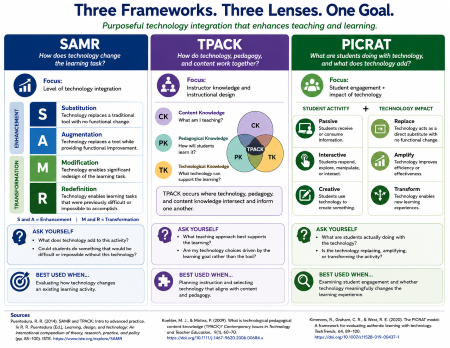
SAMR, TPACK, and PICRAT provide lenses for determining how AI supports learning and whether its use adds meaningful pedagogical value. These frameworks can help educators make informed decisions about when and how AI can enhance learning experiences. Rather than simply asking whether AI was used, participants were encouraged to focus on how AI supports student learning and why its use matters from a pedagogical perspective.
2. Prioritize Presence Over Technology
A key message throughout the training was that presence matters more than technology. The Three-Layer Presence Model highlighted three types of presence that contribute to student success: instructor, social, and cognitive presence. These are also present in the Community of Inquiry framework. When used intentionally, AI can support these areas by helping instructors create welcoming course introductions, foster community, and provide personalized learning experiences that help students feel supported and connected.
3. Create Authentic Learning Experiences
Authentic learning requires authentic thinking, and interactive content should be realistic, actionable, and meaningful. AI can assist instructors by generating role-specific examples, scenarios, and activities that connect course concepts to students' experiences, professional goals, and future careers. The training emphasized auditing all outputs for alignment, accessibility, and intentionality. Universal Design for Learning (UDL) principles can be used to evaluate whether content offers multiple ways to engage with material, demonstrate learning, and remain relevant to diverse learners.
Overall Message
Effective AI integration requires intentional design, human oversight, critical evaluation, and a continuous focus on student learning, engagement, accessibility, and instructional quality. The QM Summer Camp reinforced that effective AI integration begins with purposeful, student-centered design. When thoughtfully implemented and carefully evaluated, AI can strengthen engagement, support meaningful learning experiences, and help instructors build stronger connections with their students. If you have any questions, reach out to your Instructional Designer for support.


