

Elevate with AI: Role-Playing with Sesame AI's Personal Agents
February 27, 2026 / Digital Learning / Tags: Digital Learning, elevate with AI, AI
Role-Playing with Sesame AI’s Personal Agents
While text-based AI tools have supported scenario simulations for some time, Sesame AI’s personal agent introduces a new dimension: voice-based, emotionally responsive interaction.
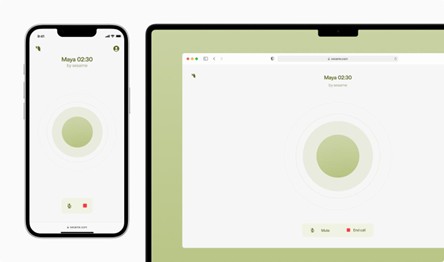
Through Sesame AI’s preview experience, users can speak with digital companions, Maya or Miles, and prompt them to assume specific roles. Unlike traditional chat interfaces, these agents respond with a natural-sounding tone and emotion, creating a more immersive, conversational experience.
For faculty interested in helping students build communication skills, this tool may offer a low-stakes environment for practice and reflection.
Why Consider Voice-Based AI Role Play?
You might consider using Sesame AI to support:
-
Practicing patient bedside conversations in health-related programs
-
Simulating difficult workplace conversations
-
Pitching ideas to a mock review board or investor panel
-
Preparing for interviews
-
Navigating ethical dilemmas from multiple perspectives
Because the interaction is spoken rather than typed, students may experience a more authentic rehearsal of real-world communication. The emotional tone embedded in responses can also prompt students to consider how delivery, perspective, and framing shape outcomes.
This type of simulation can help students:
-
Build confidence before high-stakes real-world interactions
-
Experiment with different conversational approaches
-
Develop awareness of tone and audience
-
Reflect on how perspective influences knowledge and response
Encouraging Meaningful Reflection
As with any generative AI tool, the learning value increases when students critically reflect on the experience. You might consider incorporating guided reflection questions, such as:
-
What surprised you most about your conversation with the AI agent?
-
In what ways was this type of practice helpful (or not helpful) in your field of study?
-
How did you structure your prompt or scenario? Did you revise your approach based on the agent’s responses?
-
How did tone and emotional cues affect your communication strategy?
-
What would you do differently in a real-world version of this conversation?
These reflections can deepen metacognitive awareness and reinforce that AI is not the endpoint, but rather a rehearsal space for human interaction.
Important Notes
-
Sesame AI is currently in preview mode.
-
Conversations are limited to five minutes at a time.
-
If you remain in the same browser window—or log in—the agent can recall previous interactions.
-
The tool is free to try during the preview period.
You may find it helpful to experiment with the tool yourself before introducing it to students. To begin, navigate to Sesame’s homepage and select “Preview.”
If you choose to explore Sesame AI in your course, we would welcome hearing about your experience. Consider sharing in the FGCU Gen AI Community Resources Group AI Use Cases & Faculty Exchange Padlet. If you’re not yet a member, you can self-enroll in the community group.
Transparency Statement
This blog post was developed with the assistance of generative AI (ChatGPT). AI was
used to help refine ideas, organize structure, and enhance clarity for a faculty audience.
All final editorial decisions, contextual framing, and instructional recommendations
were reviewed and approved by the Digital Learning team.
Tag Cloud
Share Post


