
Dr. Matt Ware
Assistant Professor of Conservation Biology
Department of Biological Sciences
 |
Dr. Matt Ware, an Assistant Professor of Conservation Biology, specializes in wildlife conservation using in situ, remote sensing, and computational methods. He oversees the sea turtle nesting program partnership between FGCU and the Florida Department of Environmental Protection, in addition to other student-integrated projects investigating sea turtle bycatch in recreational fisheries, habitat use and environmental modeling for charismatic megafauna, and applications of environmental DNA. |
Contributions to Biology Research
|
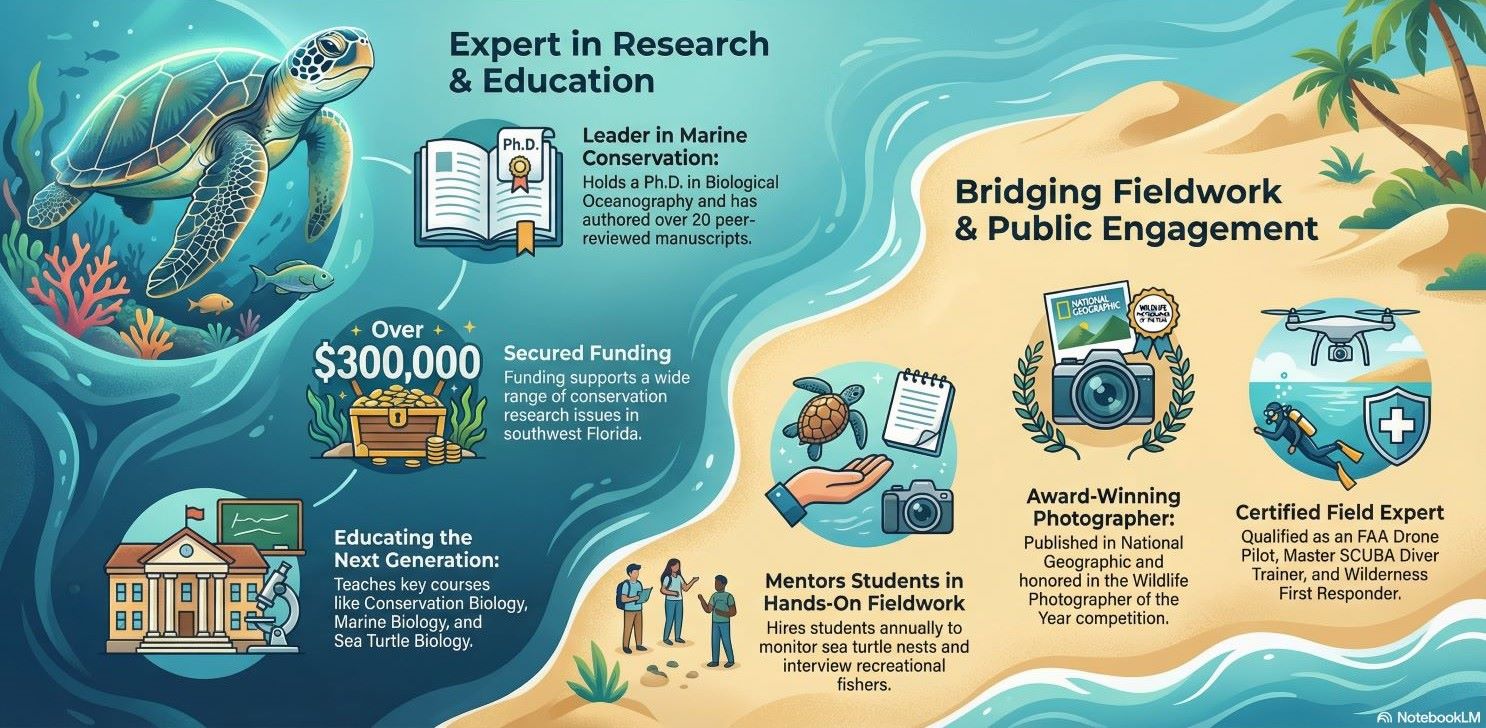
Dr. Matt Ware is a coastal ecologist whose research focuses on the interaction between coastal change and animal behavior, population dynamics, and conservation management. He earned his Ph.D. in Biological Oceanography from Florida State University in 2019, where his doctoral research investigated the impacts of beach and species management on sea turtle nesting environments in the northern Gulf of Mexico. He also holds an M.Sc. in Marine Biology and Marine Environmental Science from Nova Southeastern University (2015), specializing in coral reef restoration in the Florida Keys. As an Assistant Professor at FGCU, Dr. Ware collaborates with students, faculty, staff, citizen science groups, and government agencies to investigate critical conservation issues in southwest Florida. His work has resulted in over 20 peer-reviewed manuscripts and more than $300,000 in research funding. Internationally recognized for his expertise, he has served as program chair for the 41st International Sea Turtle Symposium and as a lead author for several IUCN Marine Turtle Specialist Group publications. In the classroom, he teaches courses such as Conservation Biology, Marine Biology, Sea Turtle Biology, and Scientific Writing and Communication. |
|
Student-Centric Research
|
|
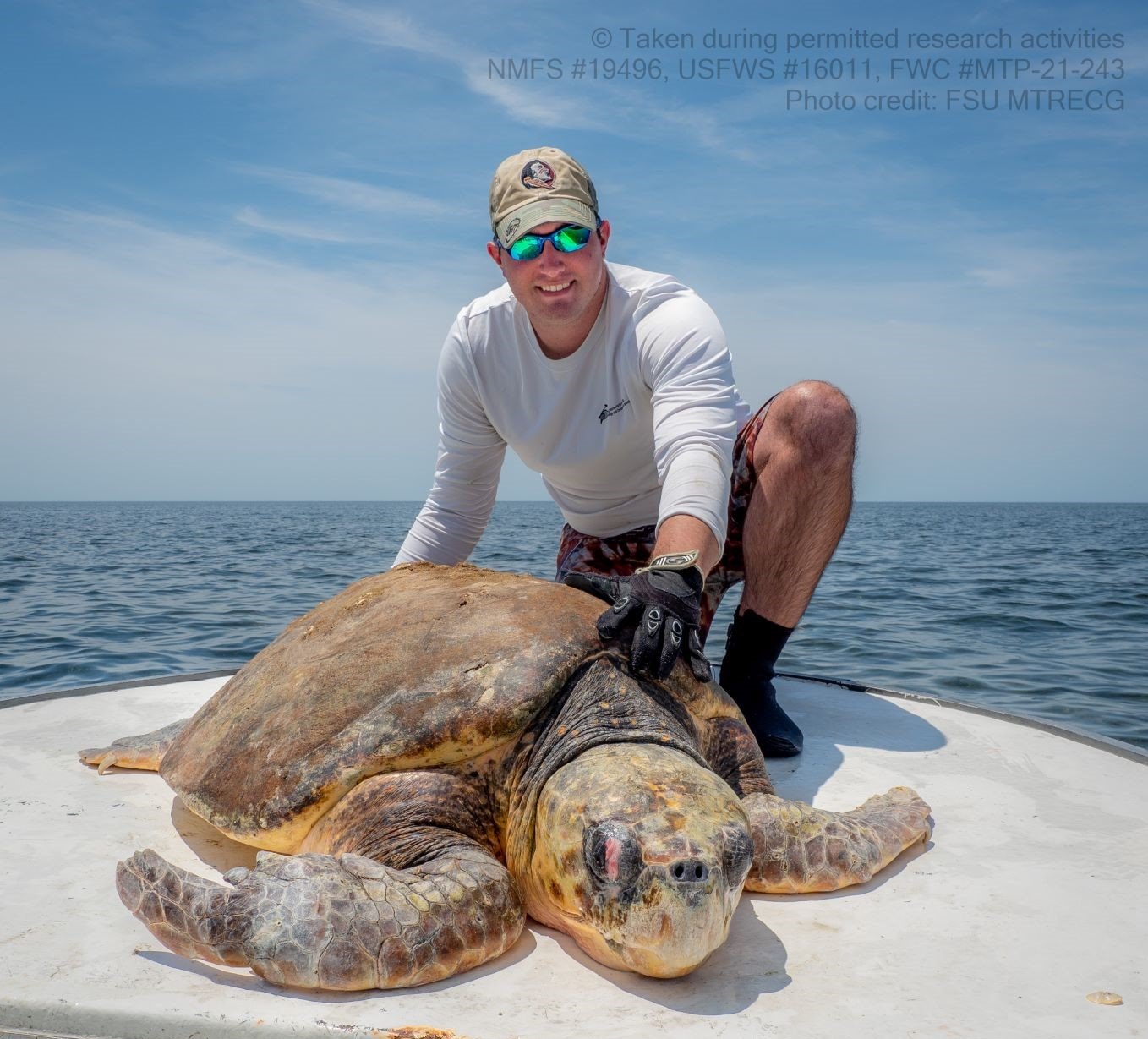
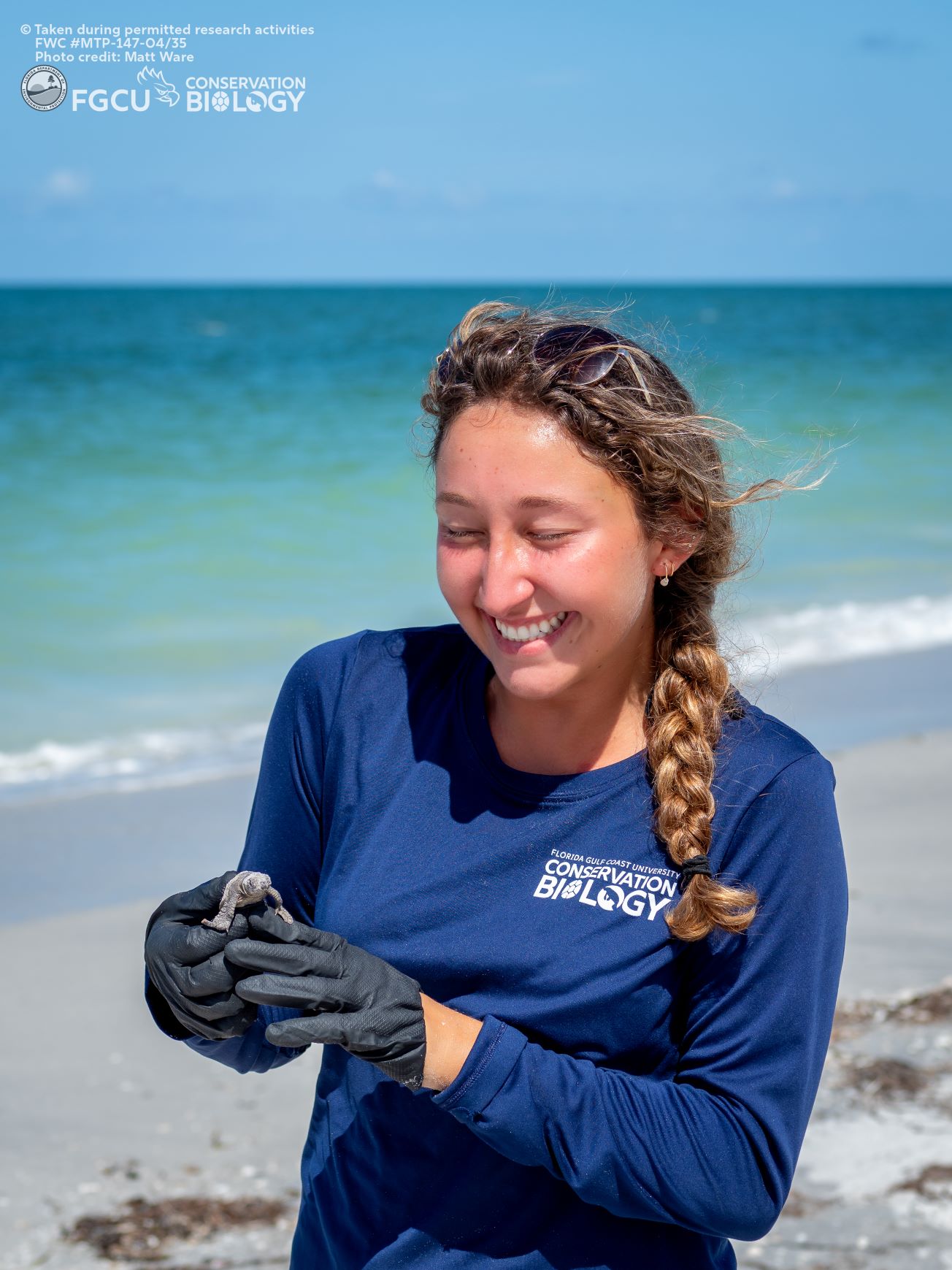
Dr. Ware actively involves students in all aspects of his research program, providing hands-on field and analytical experience often in remote environments. Through a partnership with the Florida Department of Environmental Protection, students monitor nesting sea turtles each summer at Cayo Costa and Don Pedro Island State Parks, contributing to statewide monitoring programs.
|
Technical Expertise & Professional Training
|
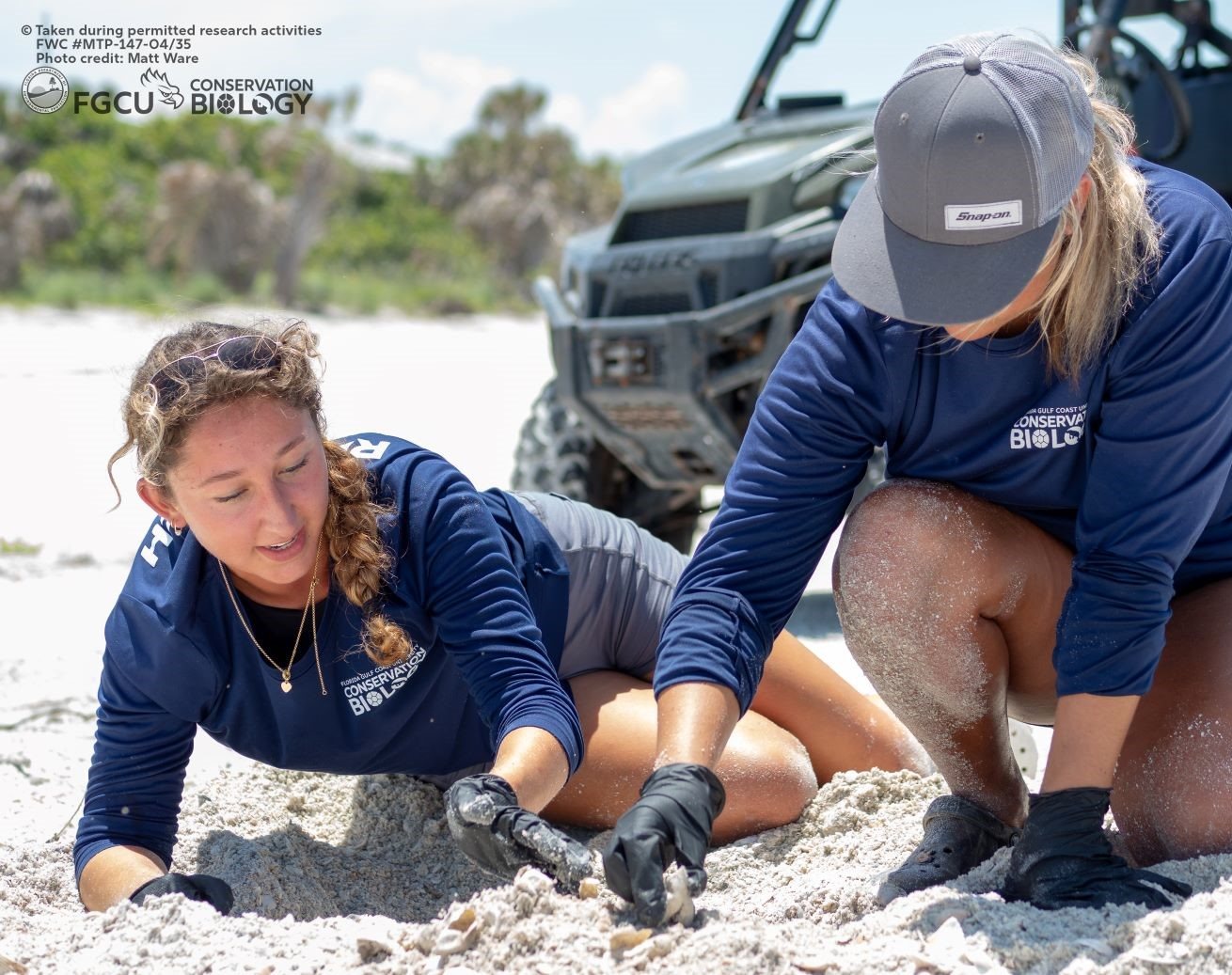
Dr. Ware possesses a broad range of technical skills and certifications supporting complex field operations. He is a licensed FAA Part 107 Remote Pilot, using drones for remote sensing, habitat mapping, and environmental modeling. His maritime and diving qualifications include PADI Master SCUBA Diver Trainer, AAUS Scientific Diver, DAN Instructor, and specialized training in SCUBA cylinder inspections, cleaning, and valve repair. He is also trained in small boat operations and marine mammal and sea turtle stranding and salvage response. To ensure the safety of all participants in the field under his supervision, Dr. Ware holds a NOLS Wilderness First Responder certification and works with students on appropriate emergency procedures and training. Analytically, Dr. Ware is proficient in R, Python, and ArcGIS, which he employs to study distribution and behavioral patterns in various organisms. |
|
Outside the Classroom
|
|
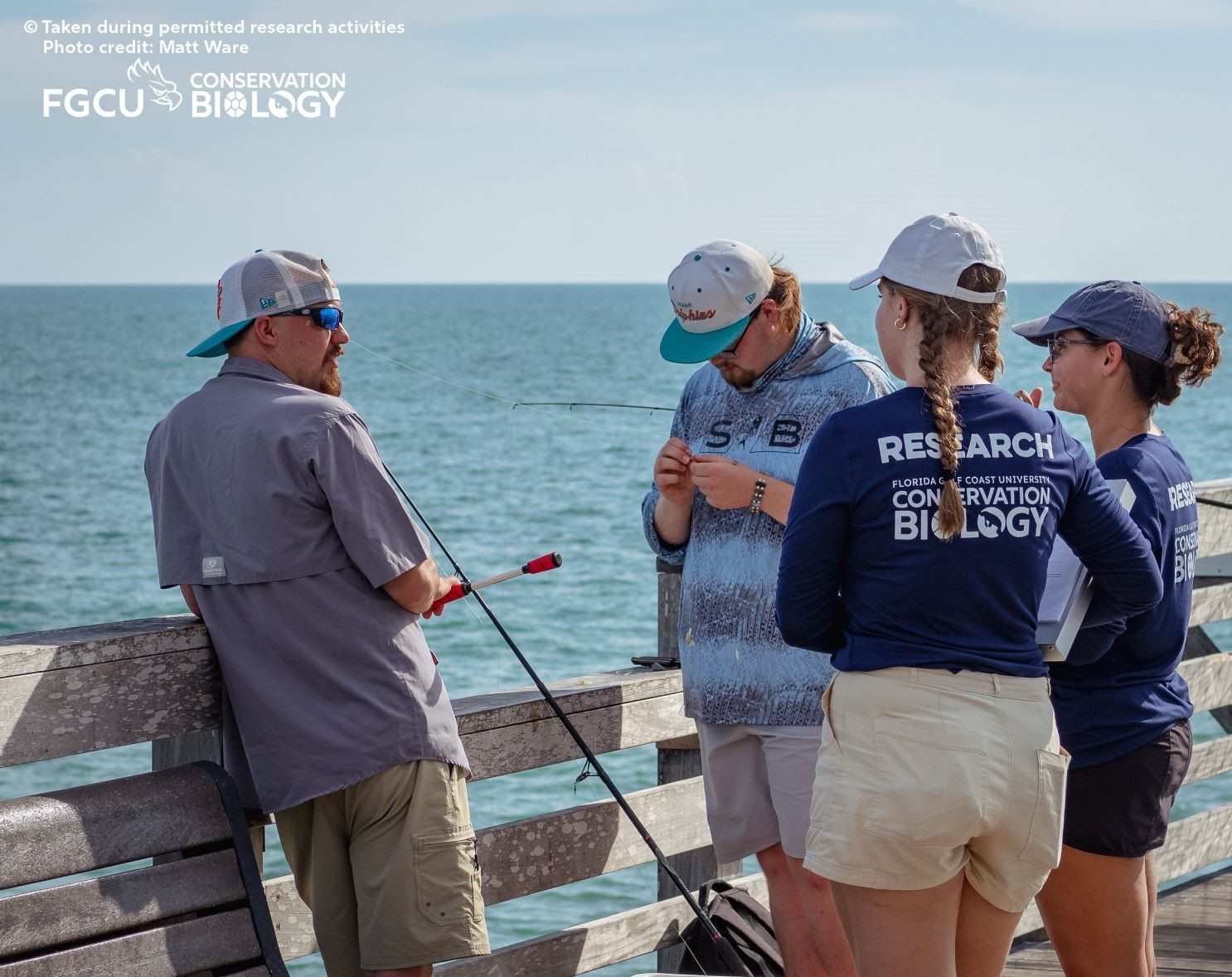
Dr. Ware leverages his technical expertise to mentor students outside the classroom and engage the public in conservation efforts. As an FAA-qualified drone pilot, PADI Master SCUBA Diver Trainer, and DAN Instructor, he provides students with practical field skills while enhancing public awareness of coastal and marine conservation issues. An avid photographer, his work has been published in outlets such as National Geographic and The Guardian, exhibited at the British Natural History Museum, and honored in the international Wildlife Photographer of the Year competition. These activities serve as both outreach and inspiration for students pursuing careers in conservation science. |